PTO Installation Guide: How US Solar Contractors Get Approved Faster
By PTOEdge
11 Views
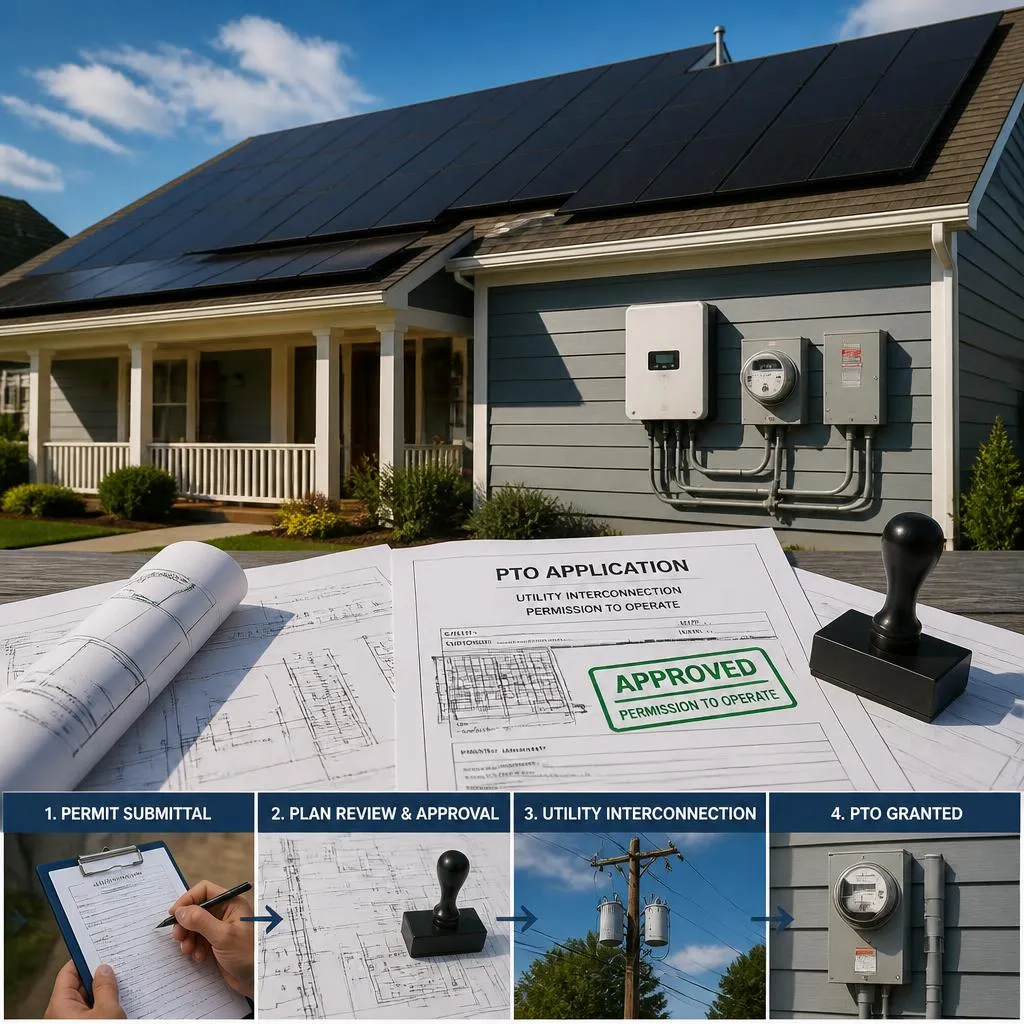
A finished array earns nothing until the utility approves it. Therefore, every US contractor needs a clear plan for PTO installation support services before the first module goes on the roof. Moreover, this final approval controls customer savings and your last payment. PTOEdge helps installers reach that milestone with fewer delays. In this guide, you will learn how the process works and why utilities reject files. Additionally, you will see how design, engineering, and permitting shape the result.
Stuck waiting on a utility? Get your free quote and let specialists review your file today.
What PTO Installation Means for US Solar Projects
PTO stands for permission to operate. The utility grants it after reviewing your completed system. Until that moment, the customer must keep the array switched off. As a result, a missed approval leaves a working system idle on the roof.
Utilities protect the grid through this review. They confirm that equipment meets safety and interconnection rules. They also check that the built system matches the application. Consequently, PTO installation acts as the final gate between construction and production.
Many homeowners confuse this approval with the building inspection. However, the two steps serve different goals. The city or county checks code compliance and workmanship. The utility checks grid impact and metering. Both approvals must arrive before the system can run.
Utility Approval Versus Building Inspection
An inspection tells the customer the work is safe. In contrast, the utility approval tells the customer the system may connect to the grid. Different offices handle each decision, and each office follows its own rules. For this reason, installers cannot treat them as one task.
Building departments review structural and electrical safety. Utilities review interconnection details and equipment settings. Therefore, your documents must satisfy two separate audiences. Clear coordination between both reviews saves weeks of confusion.
The PTO Installation Process Step by Step
The workflow follows a predictable sequence. First, the installer files an interconnection application before or during construction. Next, the utility reviews the design and sends a preliminary response. Then, the crew finishes the installation and passes the local inspection. Finally, the installer uploads the closing documents and waits for the decision.
Each stage carries its own risks. An incomplete application stalls the first review. A mismatched design confuses the second. Missing inspection records block the third. Accordingly, strong teams track every milestone from day one.
Our complete PTO submission handling follows this exact sequence for every client. We confirm each document before upload. Then we monitor the utility portal until approval arrives. This discipline keeps projects moving without constant manual follow-up.
Documents Needed for PTO Installation
Requirements vary by utility, yet most ask for a similar package. Expect to provide the signed interconnection agreement, the single-line diagram, and the equipment datasheets. Additionally, utilities often request inspection sign-offs and final system photos. Some also ask for label photos and meter details.
Always read the current utility checklist before you submit. Outdated forms rank among the most common causes of rejection. For a deeper breakdown, read our guide on utility PTO requirements explained.
Utility Rules That Shape PTO Installation
Every utility publishes its own interconnection handbook. These documents explain size limits, protection needs, and metering rules. Some utilities cap system size relative to customer usage. Others require extra hardware for larger arrays.
Read the handbook before design begins. Then build the drawings around those rules. Otherwise, the utility may demand a redesign after installation. That mistake costs more than any early review.
Net metering adds another layer. Applications often request the same data as your drawings. Therefore, copy values directly from approved documents instead of retyping them. Our team offers reliable interconnection approval assistance that handles these details every day.
Why PTO Installation Gets Delayed Across the US
Delays rarely come from one big failure. Instead, small errors pile up and push the file into repeated review. A wrong meter number here and a missing signature there can add weeks. Meanwhile, the customer grows frustrated.
Utility workload also plays a role. Peak seasons flood interconnection departments with applications. Reviewers then take longer to respond. Consequently, clean submissions matter even more during busy months.
Installer habits make a difference too. Teams that rush paperwork after installation often forget key records. By contrast, teams that gather documents during construction submit complete files. If your process feels chaotic, expert utility approval management can build a reliable routine for you.
Common Rejection Reasons in Utility Approval
Utilities reject files for consistent reasons. Mismatched equipment models top the list. Unsigned agreements follow close behind. Unclear diagrams and missing inspection records round out the usual suspects. In addition, wrong customer details trigger instant corrections.
Each rejection restarts the clock. A review that should take two weeks can stretch to two months. Therefore, preventing errors costs far less than fixing them. You can avoid utility approval setbacks with a short audit before every upload.
Design Quality and PTO Installation Success
Approval starts with the design, not the final upload. Utilities compare your finished system against the drawings you filed. If the two differ, the reviewer flags the mismatch. Therefore, accurate drawings protect the entire timeline.
Your drawings must follow the National Electrical Code and local amendments. Reviewers expect correct conductor sizing, labeled disconnects, and clear interconnection points. Our designers prepare code-compliant solar plan drawings that reviewers read quickly. Each sheet matches the equipment you actually install.
Local jurisdictions add their own twists. Some require extra notes or special label formats. Others demand specific sheet layouts. For this reason, we also build jurisdiction-ready solar plan packages tailored to each office. Fewer corrections at the permit stage mean fewer surprises at the utility stage.
Rapid Shutdown and PTO Installation Reviews
Rapid shutdown rules appear on nearly every rooftop design. Utilities and inspectors both look for compliant devices and clear labels. Missing details raise questions at both stages. Consequently, designers should show shutdown equipment clearly on the diagram.
Our article on NEC rapid shutdown rules walks through each requirement. Read it before you finalize a roof design. Moreover, add detailed electrical plan sheets that show every device location.
Engineering Review Before PTO Installation
Some utilities request stamped documents for larger systems. Others require engineering letters for unusual interconnections. Furthermore, certain states demand a licensed seal for commercial projects. A missing stamp can freeze the entire file.
A licensed engineer verifies calculations and protects your reputation. Our clients rely on a state-certified PE stamp service whenever a jurisdiction or utility asks for one. Each engineer holds the credentials the project state requires.
Early review prevents late surprises. If a problem appears after installation, the fix costs money and time. Instead, request a licensed engineer review stamp during the design phase. This approach keeps the design stable from permit to utility sign-off.
Why Engineering Experience Matters for PTO Installation
Experienced engineers spot risks early. They understand how structural limits, electrical loads, and local rules interact. Moreover, they communicate clearly with reviewers when questions arise. This skill shortens review cycles.
For a broader view, explore our professional solar engineering insights. The article explains how engineering fits into the full project lifecycle.
Permitting Steps That Support PTO Installation
A smooth permit stage sets up a smooth utility stage. Delays at the building department push back construction and shrink your schedule. Consequently, the utility review often starts late as well. Strong permit work protects every later milestone.
Each jurisdiction demands different forms, fees, and attachments. Some accept online uploads, while others still want paper. Therefore, tailored submissions beat generic ones every time. Our jurisdiction-specific permitting package support adapts each file to the receiving office.
We also help teams manage the back-and-forth with reviewers. When an office requests corrections, we respond quickly and accurately. In addition, our city-level permit filing help includes clear narratives that answer common questions up front.
Shortening Permit Time Before Utility Approval
You can shorten the permit phase with smart preparation. Submit complete drawings, correct forms, and readable documents on the first try. Additionally, track each application and answer questions within a day. Quick responses keep your file moving.
For tactical advice, read about solar permit expediting strategies. The guide covers follow-up habits and common reviewer requests.
PTO Installation Across Major US States and Cities
The United States has no single utility rulebook. Each state, city, and territory brings its own utilities and local habits. Therefore, installers must adapt every submission to the project location. Below, you will find practical notes for several busy markets.
PTO Installation in California Cities
California installers in Los Angeles, San Diego, and Sacramento work with large investor-owned utilities and municipal utilities. Pacific Gas and Electric, Southern California Edison, and San Diego Gas and Electric each publish their own interconnection steps. Moreover, state net billing rules shape how customers view savings. Consequently, accurate paperwork matters for approval and for customer expectations.
PTO Installation in Texas Cities
Texas has a competitive retail market, yet the local wires utility still handles interconnection. In Houston, that role belongs to CenterPoint Energy. In Dallas, installers often deal with Oncor. Austin Energy, a municipal utility, uses its own process. As a result, a Texas team may follow three checklists in one week. Our faster utility activation approvals process keeps those checklists separate.
PTO Installation in Arizona and Florida
Phoenix installers usually work with Arizona Public Service or Salt River Project. Both utilities publish detailed application guidance. Meanwhile, Miami and Tampa projects face different pressures. Florida Power and Light and Tampa Electric review many applications, and hurricane wind loads shape the drawings. Therefore, designers should show wind ratings clearly.
PTO Installation in the Northeast
New York City projects involve Con Edison and strict local fire requirements. Newark and other New Jersey cities involve Public Service Electric and Gas. In addition, dense rooftops create tight setback and access challenges. Because of these constraints, early engineering review pays off.
PTO Installation in Hawaii and Puerto Rico
Honolulu installers work with Hawaiian Electric, which manages interconnection across the main islands. Meanwhile, San Juan and the rest of Puerto Rico involve LUMA Energy for grid interconnection. Island grids face unique stability concerns. Accordingly, equipment settings and documentation deserve extra care. Always confirm current rules with the local utility before you submit.
Sales Accuracy and PTO Installation Outcomes
Approval problems often begin during the sales call. Overpromised system sizes force redesigns later. Wrong utility rate assumptions create unhappy customers. Consequently, accurate proposals protect both revenue and reputation.
Good proposals use real site data. They reflect roof space, shading, and utility rules. When the final design matches the proposal, the utility file stays consistent. Our data-backed proposal creation services give sales teams reliable numbers.
Better proposals also win more customers. Buyers trust detailed, transparent numbers. Moreover, they cancel less often when expectations match reality. Learn how to close more solar deals with accurate quotes.
Workflow Tools for PTO Installation
Software now helps teams handle documents, deadlines, and reminders. Some jurisdictions also use instant permit tools for residential projects. However, these tools still depend on accurate inputs. Clean data passes automated checks without delay.
Our all-in-one solar workflow platform brings drawings and submissions together. Teams avoid duplicate entry and reduce human error. In addition, combined design permit software keeps every document consistent from design to final approval.
Federal Resources for Utility Approval Planning
Federal agencies publish useful background on solar deployment and grid integration. For example, the federal clean energy resources offer context on technology and market trends. Use them for planning, but always follow your utility's specific rules.
Practical Ways to Speed Up PTO Installation
Speed comes from preparation, not luck. Start by assigning one person to own each utility file. That person tracks deadlines, answers questions, and updates the customer. Clear ownership prevents dropped tasks.
Next, build a standard document checklist. Include every item your utilities usually request. Review it before each submission. Additionally, create naming rules for files so reviewers find each document easily.
Then, follow up on a schedule. Check the portal every few days. Contact the utility when a review exceeds the stated timeline. Polite persistence often moves a stuck file. Our PTO documentation review service includes this kind of proactive tracking.
Finally, learn from every rejection. Record the reason, fix the root cause, and update your checklist. Over time, your first-pass approval rate climbs. As a result, you energize more systems and receive payment sooner.
Strong documentation habits also help. First, store every file in one shared folder with clear names. Second, record each utility contact and response date. Third, save screenshots of portal confirmations. Moreover, keep a log of correction requests and fixes. Therefore, new team members can pick up any project without confusion. Additionally, managers can spot patterns and train crews accordingly. As a result, small improvements add up quickly. Meanwhile, customers notice the smoother communication and share positive feedback with neighbors. Consequently, referrals grow, and your marketing costs drop.
A Practical PTO Installation Checklist
A simple checklist prevents most errors. First, confirm the customer name, address, and account number on every form. Second, verify that equipment models match the datasheets and the drawings. Third, collect signed agreements before installation ends. Fourth, store inspection sign-offs in the project folder.
Next, photograph the inverter, the meter, and every required label. Then, review the single-line diagram against the as-built system. Finally, upload the package in the format the utility requests. Teams that need extra hands can request post-installation utility approval help for busy weeks.
Learning More About PTO Installation
Many installers want a bigger picture before they refine their process. Our complete USA PTO guide covers the full approval path from application to energization. Moreover, a clear step-by-step PTO roadmap inside that article helps new team members learn quickly.
Utility-focused readers should also review utility requirements for approval. Together, these resources shorten the learning curve. Consequently, your crews and office staff make fewer mistakes.
Setting Customer Expectations During PTO Installation
Customers feel anxious while they wait. They see a finished system and wonder why it stays off. Therefore, clear updates build trust and reduce support calls. Send a short message when you submit the file. Then send another when the utility responds.
Honest timelines matter more than optimistic promises. Instead of guessing, explain what the utility reviews and why it takes time. Additionally, describe the steps you take to keep the file moving. Customers appreciate transparency, and they often mention it in reviews.
Residential and commercial projects follow different timelines. Residential files usually move faster because utilities see them daily. Commercial files take longer since reviewers examine larger loads and protection schemes. Consequently, set separate expectations for each project type at contract signing.
Small teams often struggle to manage every file alone. Dedicated help frees staff for sales and installation work. Our dedicated PTO filing specialists track every submission and answer utility questions directly. In addition, on-time utility energization support keeps customers informed from upload to approval.
Finally, remember that field details still matter. Review rapid shutdown label guidance before inspection day. Moreover, study faster permit approval tactics and rooftop engineering best practices to prevent surprises on every job.
Choosing a Partner for PTO Installation
Not every provider delivers the same results. Some move fast but ignore accuracy. Others produce polished files that still fail utility review. Therefore, evaluate partners carefully before you commit.
Look for several qualities. First, the partner should understand utility rules, not only building permits. Second, they should know current NEC editions. Third, they should offer licensed engineering support. Fourth, they should communicate clearly. Finally, they should correct errors at no extra charge.
Ask for references from other US installers. Request average turnaround times. Additionally, start with a small batch of projects. The results will reveal how well the partner performs under real pressure.
The PTOEdge Approach to PTO Installation
PTOEdge combines design, engineering, permitting, and utility support under one roof. Our team checks every document against code, equipment data, and utility checklists. Then we submit the package and track it until approval. Moreover, we keep installers informed at every milestone.
Experience guides each decision we make. Our team supports residential and commercial projects across the United States. We know which details cause rejections and which notes speed reviews. As a result, clients energize their systems sooner and with fewer headaches.
Final Thoughts on PTO Installation
Final approval shapes cash flow, customer satisfaction, and company growth. A strong process turns it from a bottleneck into a routine step. Weak habits do the opposite. They create delays, rework, and unhappy homeowners. Furthermore, a dependable process lowers stress for your crews and office staff.
Therefore, invest in quality from the start. Verify design details, align every document, and plan the utility step early. Additionally, track each file until the utility confirms approval. Clean submissions lead to quick results.
Installers who master this approval grow faster. They energize more systems, collect payment sooner, and earn better reviews. Ultimately, a reliable approval process becomes a real competitive advantage. Strong habits compound over many projects and busy seasons.
Ready to stop chasing utility approvals? Speak with PTO experts and get your systems switched on sooner.
FAQs About PTO Installation
1. What is PTO installation?
PTO installation covers the steps that lead to the utility's permission to operate a completed solar system. Without approval, the customer cannot generate power.
2. How long does PTO installation usually take?
Many utilities respond within a few days to several weeks. Complete, accurate files move fastest, while errors extend the timeline.
3. Why do utilities reject PTO applications?
Common reasons include mismatched equipment data, missing signatures, outdated forms, and unclear diagrams. Careful review before upload prevents most rejections.
4. Does every system need a PE stamp?
No. Requirements vary by state, jurisdiction, and utility. Larger or unusual systems often need a licensed engineer's seal.
5. Can design quality affect approval timing?
Yes. Utilities compare the installed system to your drawings. Accurate designs reduce questions and speed final approval.
Related Reading
Top 10 Hidden Secrets About Business & Finance You Need to Know
Welcome to our in-depth exploration of Business & Finance. In an era defined...
Why Business & Finance is Transforming the Global Industry Landscape
Welcome to our in-depth exploration of Business & Finance. In an era defined...