Protecting Warehouses with Multi-Camera Surveillance Systems
By Abdus Salam
18 Views
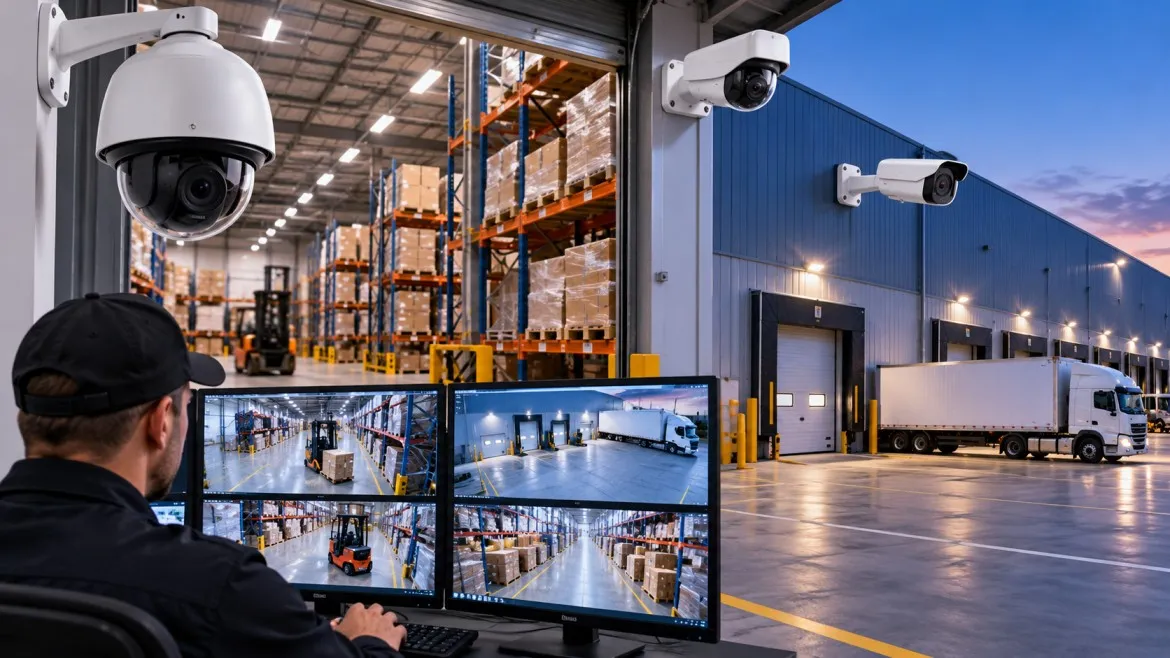
Warehouses and distribution centers present unique physical security challenges due to their expansive footprints, high ceilings, continuous movement of inventory, and frequent foot and vehicle traffic. Protecting these facilities requires a strategic approach that goes beyond basic perimeter monitoring. A comprehensive multi-camera surveillance system serves as an essential operational tool, providing continuous oversight across storage aisles, loading docks, staging areas, and administrative spaces to mitigate inventory loss, prevent unauthorized entry, and support workplace safety.
Unique Physical Security Challenges in Industrial Warehouses
Industrial logistics environments operate under conditions that can hinder simple surveillance setups. Understanding these spatial and environmental factors is critical when designing a high-coverage monitoring strategy.
Key operational vulnerabilities in warehouse facilities include:
- High Vertical Shelving and Visual Obstructions: Tall pallet racking structures create deep shadows and narrow corridors that obstruct long-range camera lenses, generating blind spots where theft or workplace accidents can go unnoticed.
- Active Loading Docks and High Logistics Turnover: Freight bays experience constant movement of external delivery drivers, third-party contractors, and warehouse staff, creating opportunities for cargo shrinkage and unauthorized facility access.
- Complex Environmental Conditions: Dust accumulation, high temperature fluctuations, and varied indoor and outdoor lighting levels require industrial-grade camera enclosures and specialized optical sensors.
- Large Floor Areas and Broad Angles: Wide open spaces demand elevated resolution and targeted focal lengths to capture distinct details, such as shipping labels, driver faces, and equipment serial numbers, over extended distances.
Designing a Multi-Layered Camera Architecture
Eliminating coverage gaps across thousands of square feet of industrial space requires deploying specialized camera types tailored to specific operational zones rather than relying on a single uniform camera model.
Perimeter and Exterior Access Zones
Securing the building perimeter begins at gate entrances, parking lots, and exterior building walls. Long-range bullet cameras equipped with infrared night vision monitor fence lines, while high-definition Pan-Tilt-Zoom (PTZ) units allow operators to track suspicious activity across large outdoor staging yards. Integrating license plate recognition (LPR) cameras at vehicle gates creates an automated digital log of every truck entering and exiting the property.
Loading Docks and Shipping Bays
Loading bays represent the primary point of inventory transfer, making them high-risk areas for inventory loss and cargo damage. Overhead dome cameras positioned directly above bay doors capture the interior of trailers as goods are loaded and unloaded. High-resolution wide-angle cameras cover the staging floor, providing verifiable video records that resolve inventory count disputes and freight damage claims.
Storage Aisles and High-Value Inventory Racks
Protecting interior inventory requires cameras designed to handle narrow, deep perspectives. Corridor-mode cameras orient the video frame vertically, maximizing coverage along narrow aisleways without wasting resolution on static rack walls. For areas housing high-value electronics, pharmaceuticals, or hazardous materials, multi-sensor panoramic cameras provide 360-degree continuous oversight without visual gaps.
Implementing tailored warehouse surveillance systems allows site directors to integrate these diverse optical formats into a single interface, ensuring complete visibility across both interior aisles and exterior loading zones.
Leveraging Intelligent Analytics for Inventory and Safety Oversight
Modern multi-camera surveillance extends beyond passive video collection. Advanced video management software incorporates artificial intelligence to assist facility managers in identifying operational risks in real time.
Edge analytics embedded within warehouse cameras can be configured to trigger automated alerts for specific events:
- Restricted Zone Intrusions: Systems send immediate alerts if unauthorized personnel cross digital perimeter lines around high-value storage cages outside operating hours.
- Loitering and Unattended Objects: Cameras flag individuals remaining motionless in sensitive zones or detect boxes left in emergency exit pathways, helping maintain compliance with safety codes.
- Equipment and Vehicle Safety Tracking: Video analytics track forklift traffic patterns, alerting supervisors to unsafe driving speeds, near-miss collisions, or pedestrian pathway breaches.
Streamlining Loss Prevention and Dispute Resolution
The financial value of multi-camera surveillance in distribution settings is most evident during internal audits and incident investigations. When inventory discrepancies occur, security managers can cross-reference warehouse management system (WMS) time logs with time-stamped video archives.
Tracing a pallet's movement from receiving dock to rack storage and final dispatch provides undeniable visual evidence of handling procedures. This visibility resolves shipping disputes with suppliers, verifies cargo condition prior to dispatch, and protects businesses against fraudulent workers' compensation claims by documenting actual workplace events.
By combining strategic camera positioning, specialized optics, and intelligent video analytics, industrial property operators establish a resilient security framework that protects physical inventory, safeguards personnel, and maintains operational continuity.
Related Reading
Expert Insights: Navigating the Complex World of Home Improvement
Welcome to our in-depth exploration of Home Improvement. In an era defined by ra...
Why Home Improvement is Transforming the Global Industry Landscape
Welcome to our in-depth exploration of Home Improvement. In an era defined by ra...