Private Investigator Beverly Hills Guide to Background Investigations
7 Views
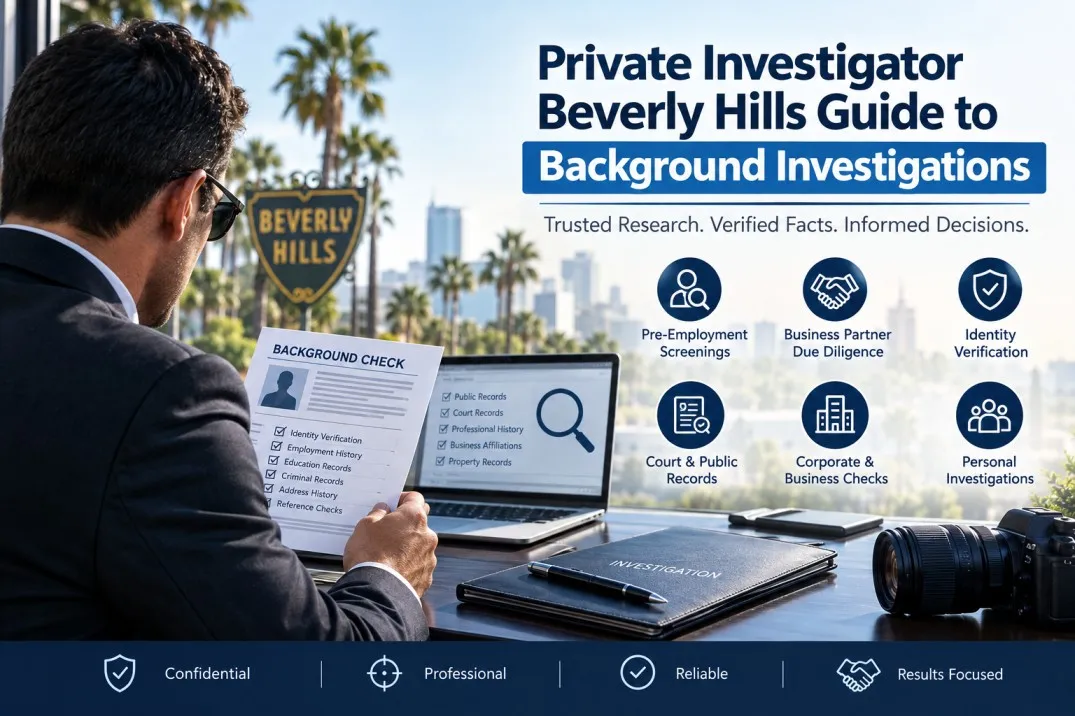
Background investigations can provide valuable information when you need to make an important personal, professional, or business decision. Whether you are considering a new employee, evaluating a potential business partner, dealing with a personal concern, or trying to verify information about someone, a professional investigation can help organize facts from lawful and reliable sources.
A private investigator Beverly Hills professional can assist with gathering and evaluating information while maintaining discretion throughout the process. The goal of a background investigation is not simply to collect as much information as possible. Instead, it is to identify relevant facts, verify available information, and present findings in a clear and useful format.
What Is a Background Investigation?
A background investigation is a structured process used to research information about an individual or, in some cases, a business. The scope can vary considerably depending on the purpose of the investigation.
A professional investigator may research publicly available records, business information, court-related records, professional history, address information, or other lawful sources. The exact information that can be reviewed depends on the circumstances and applicable laws.
California recognizes investigative work involving areas such as a person's identity, business, occupation, and character, as well as gathering evidence for use in legal proceedings.
This makes a professional background investigation different from a casual online search. An investigator can approach the assignment with a defined objective, document sources, and help distinguish verified information from assumptions.
Why People Request Background Checks
There are many legitimate reasons someone may want a background check.
Businesses may want additional information before hiring an employee, entering a partnership, working with a contractor, or establishing a relationship with a vendor. Individuals may also need information for personal or legal reasons.
Some common situations include:
- Pre-employment research
- Business partner due diligence
- Identity verification
- Professional history research
- Civil and court record research
- Address and location research
- Fraud-related investigations
- Litigation support
- Personal relationship concerns
- Verification of information supplied by an individual
A Beverly Hills private investigator may tailor the investigation to the specific questions a client needs answered rather than conducting an unnecessarily broad search.
What Information Can Be Investigated?
The information examined during a background investigation depends on the purpose and legal boundaries of the assignment.
Potential areas may include identity information, publicly available records, business affiliations, professional history, property-related information, and relevant court records. Investigators may also examine other lawful sources when those sources are appropriate to the case.
For businesses, due diligence can be particularly useful. Before entering a significant commercial relationship, an organization may want to verify whether information provided by a prospective partner or executive is consistent with available records.
A background investigation service in Beverly Hills can therefore support both personal decision-making and business risk assessment.
However, clients should understand that investigators cannot legally access every type of information. Password-protected accounts, confidential databases, protected communications, and certain personal records may be restricted. Professional investigators must work within applicable privacy laws and other legal requirements.
Personal Background Investigations
Personal investigations can involve sensitive circumstances. Someone may want to verify a person's identity, understand their history, or investigate information that does not appear consistent.
In these situations, discretion is important. A professional investigator should establish the purpose of the investigation before determining which methods are appropriate.
A Beverly Hills background check investigator may use lawful research techniques to verify information and prepare findings for the client. The investigation should focus on relevant facts rather than unnecessary intrusion into someone's private life.
This distinction is especially important when an investigation could affect personal relationships, family matters, or legal proceedings.
Business Background Checks and Due Diligence
Businesses often conduct background research to reduce uncertainty before making important decisions.
For example, a company may want to learn more about a potential business partner before signing a major agreement. An investor might want to verify information about an executive. A business owner may also need to investigate concerns involving fraud, workplace misconduct, or questionable credentials.
A private investigator for background checks in Beverly Hills can help organize the investigative process around specific business objectives.
The investigator may begin by identifying what the client already knows and what still needs to be verified. From there, appropriate sources can be reviewed and the relevant findings documented.
The result can give decision-makers a clearer picture before they commit money, enter contracts, or take other significant action.
The Importance of Legal and Ethical Investigations
A background investigation should always be conducted responsibly. Investigators need to understand the legal restrictions surrounding personal information, surveillance, consumer reports, and other investigative activities.
For example, the Beverly Hills Police Department's published policy materials emphasize compliance with the Fair Credit Reporting Act and California's Investigative Consumer Reporting Agencies Act in certain background-investigation contexts. The same policy also stresses protecting privacy and verifying information obtained through online or social-media research.
This is why choosing an appropriately licensed professional matters. California's Bureau of Security and Investigative Services provides licensing requirements and explains the scope of work associated with private investigators in the state.
Clients should ask about licensing, experience, confidentiality, investigative methods, expected costs, and how findings will be reported before beginning an investigation.
How the Background Investigation Process Works
Although every case is different, the process often follows several basic stages.
1. Initial Consultation
The investigator first discusses the reason for the investigation. This helps establish what information is relevant and what the client hopes to accomplish.
2. Defining the Scope
The investigator determines which questions need to be answered and which investigative methods may be appropriate.
3. Information Gathering
Relevant lawful sources are researched according to the objectives of the case.
4. Verification
Information is evaluated and, where possible, cross-checked against additional sources. This helps reduce the risk of relying on outdated or inaccurate information.
5. Documentation
Findings are organized into a report or other agreed format. Depending on the assignment, documentation may include relevant records, observations, or supporting evidence.
6. Final Review
The investigator discusses the findings with the client and explains relevant information, limitations, or areas that could require additional investigation.
Choosing the Right Investigator
When searching for private investigator services in Beverly Hills, avoid choosing a provider based only on a low advertised price. The quality and scope of an investigation can vary significantly depending on experience, resources, and the nature of the assignment.
Consider asking these questions before hiring an investigator:
- Are you properly licensed in California?
- Have you handled cases similar to mine?
- What sources can you legally investigate?
- How will confidential information be handled?
- How will the findings be documented?
- What costs should I expect?
- Will I receive a written report?
- What happens if additional investigation becomes necessary?
Kinsey Investigations, for example, describes investigative services that include background investigations along with personal, business, surveillance, and other investigative matters.
The best investigator for your situation should be transparent about the scope of work and should explain what can realistically be accomplished before the investigation begins.
When a Background Investigation May Be Worth Considering
A background investigation can be useful when the available information is incomplete, inconsistent, or difficult to verify independently.
For businesses, it may provide an additional layer of due diligence before entering a relationship. For individuals, it may help clarify questions surrounding identity, history, or other legitimate concerns.
The key is to establish a clear investigative objective. Instead of asking an investigator to "find everything," identify the specific information you need and why you need it. This makes the investigation more focused and can help control unnecessary costs.
Related Reading on Culver City Investigations
Readers interested in investigative services beyond Beverly Hills can also explore the guide Private Investigator Culver City Services for Personal and Business Needs. The article discusses personal investigations, background checks, missing-person searches, surveillance, business investigations, fraud-related matters, and other investigative services.
It provides additional context for readers who are comparing investigative needs across the greater Los Angeles area.
Final Thoughts
A background investigation can be a valuable tool when important decisions depend on accurate information. Whether the concern involves employment, business due diligence, personal matters, or legal support, a structured investigation can help separate verified facts from assumptions.
A professional private investigator Beverly Hills service should prioritize lawful research, confidentiality, careful documentation, and clear communication. Before hiring anyone, verify their credentials and discuss the scope of the investigation in detail.
With the right approach, a background investigation can provide useful information while respecting privacy and legal boundaries.
Frequently Asked Questions
1. What does a background investigator do?
A background investigator researches relevant information about an individual or business using lawful investigative methods and appropriate sources. The investigator may verify identity, professional information, business affiliations, records, and other details relevant to the assignment.
2. How long does a background investigation take?
The timeframe depends on the complexity of the case, the amount of information available, the number of sources that need to be reviewed, and whether additional verification is required. A simple investigation may take less time than a detailed due-diligence assignment.
3. Are private investigators allowed to access private accounts?
No. Private investigators must follow applicable laws and cannot simply access password-protected accounts or restricted information because a client requests it. Investigations should rely on lawful sources and permissible investigative techniques.
4. Can a background investigation be used for a business decision?
Yes. Businesses may use background research as part of due diligence involving employees, contractors, executives, vendors, or potential business partners. The scope should be appropriate to the business purpose and comply with applicable legal requirements.
5. How should I choose a background investigator?
Look for a properly licensed California investigator with relevant experience, transparent pricing, clear communication, confidentiality practices, and a demonstrated understanding of the legal limits surrounding investigative work. Ask what information can realistically be obtained and how the final findings will be documented.
Related Reading
Top 10 Hidden Secrets About Business & Finance You Need to Know
Welcome to our in-depth exploration of Business & Finance. In an era defined...
Why Business & Finance is Transforming the Global Industry Landscape
Welcome to our in-depth exploration of Business & Finance. In an era defined...