Is Poor Soil Quality Increasing Your Road Construction Costs?
By Henry White
11 Views
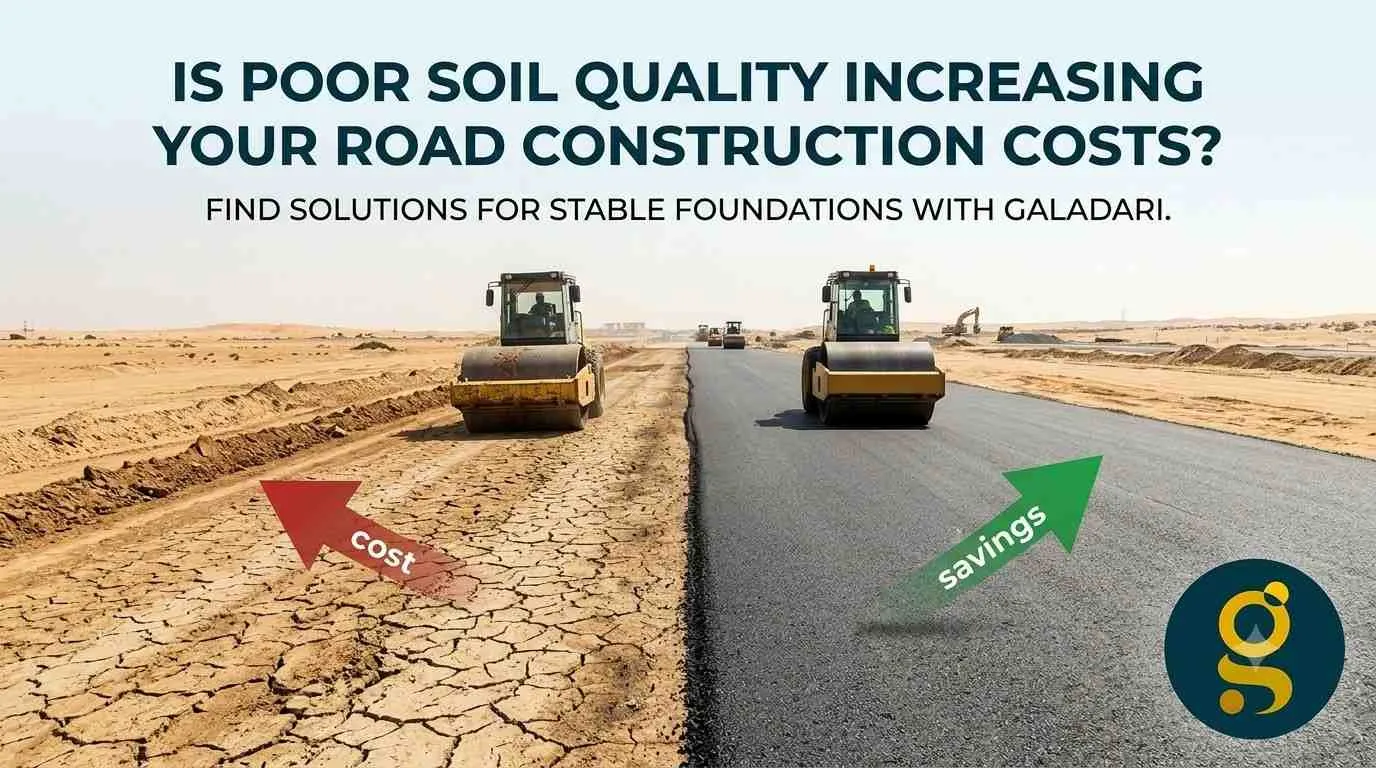
A road project that looks straightforward on paper can become a financial nightmare if the site's soil composition isn't what was expected. Poor soil quality is a hidden cost multiplier and one that affects far too many road construction projects in the UAE and across the Gulf region.
When unsuitable soil is discovered mid-project, decisions cascade quickly: excavate deeper, import new material, compact and test repeatedly, deal with settlement issues, or rework sections that fail inspection. Each choice adds weeks and tens of thousands of dirhams to your budget. But there's a middle path. Modern soil stabilization technology, and specifically, soil stabilizer machines for sale in UAE can help offset these costs when site conditions allow it. Understanding when and how depends on knowing what poor soil actually costs you.
The True Cost of Poor Soil Quality
Poor soil doesn't announce itself politely. It shows up as:
Inadequate bearing capacity — soil that won't safely support pavement layers without excessive settlement.
High plasticity or expansivity — soil that swells when wet or shrinks when dry, causing cracking and rutting.
Contamination — organic matter, clay pockets, or debris embedded in what was supposed to be uniform subgrade material.
Poor drainage characteristics — soil that retains water, undermining base course integrity.
Any of these triggers a sequence of expensive interventions. Here's what a typical poor-soil scenario looks like in cost terms:
🔨
Additional Excavation
AED 150–300/m³ × volume removed
🚚
Imported Fill Material
AED 200–500/m³ delivered & placed
⚙️
Extra Compaction Cycles
AED 50–100/m³ per additional pass
📋
Testing & Verification
AED 500–2,000 per location
⏳
Schedule Delay
AED 5,000–20,000+ per week
🔧
Rework & Remediation
AED 100–300/m² of affected area
For a 500-metre road section with a 6-metre width and 1.5-metre stabilization depth, poor soil can easily cost an additional AED 300,000 to AED 800,000, and that's not counting schedule impact or contractual penalties.
Why Soil Conditions Deteriorate (Or Disappoint)
Geotechnical surveys are standard before major road projects, but soil isn't always uniform across a site. What a bore hole captures at one location may not represent conditions 50 metres away. Seasonal groundwater fluctuations, buried construction debris, and variations in deposit thickness can all create pockets of unsuitable material that testing didn't predict.
In the UAE, specific challenges arise:
Sabkha soils — highly cemented, brittle, and prone to differential settlement.
Calcareous clays and silts — unstable when saturated, common in coastal and low-lying areas.
Gypsiferous soils — dissolve or soften when exposed to water, a hidden risk in drainage-heavy road designs.
When these materials appear unexpectedly during excavation or early construction, your options narrow quickly.
Cost Reality
Removing and replacing poor soil is the most expensive option. A cubic metre of unsuitable material means excavation costs, disposal costs, imported fill sourcing, transportation, placement, and compaction verification. Multiply that across hundreds or thousands of cubic metres, and you're looking at project-threatening budget impact.
In-Place Stabilization: A Cost-Effective Alternative
Not all poor soil needs to be removed. In-place stabilization modifies the soil where it sits, improving bearing capacity and reducing plasticity — without the excavation and import costs. The most common approach uses a soil stabilizer machine to mix cement, lime, or bitumen into existing material to specified depth and width.
How it works:
📊Test existing soil conditions and design the stabilization recipe
🚜Deploy soil stabilizer machine for sale in UAE-type equipment to mill and mix
💧Add water (or binder) to achieve target moisture and consistency
🔧Compact in passes and cure (cement requires 7–14 days, lime requires 1–2 weeks)
The cost per square metre typically runs AED 15–35 depending on depth, binder type, and soil condition. Compare that to AED 100–300+ per square metre for excavation and import, and the savings are immediate. For a 500-metre × 6-metre road, stabilization might cost AED 45,000–105,000. Full excavation and replacement could exceed AED 600,000.
When Stabilization Makes Sense (And When It Doesn't)
Stabilization isn't a universal fix. It works best when:
— The soil is unsuitable but not heavily contaminated with organic debris.
— The unsuitable layer is shallow (up to 1.5–2 metres) — deeper problems usually require excavation.
— Time and access allow for adequate curing (critical for cement- and lime-stabilized materials).
— Project specifications permit in-place treated material (some clients or standards require virgin imported material).
It doesn't work well when:
— Contamination is severe or includes hazardous material requiring removal.
— Soil is heavily saline or gypsiferous and will continue to weaken despite treatment.
— The project has zero schedule flexibility for curing time.
— Local regulations or contract terms mandate virgin, certified import material.
The right decision depends on site testing, cost modelling, and clear communication with clients or contract administrators. But when conditions align, soil stabilizer machines in UAE projects, whether rented or purchased consistently deliver better economics than the excavate-and-replace default.
The Equipment Factor: Renting vs. Owning
A quality soil stabilizer machine represents significant capital investment — typically AED 250,000 to over AED 1 million depending on size and capability. For most road contractors, renting is more practical. Daily rental rates run AED 1,500–3,500 for standard pavers; specialized, larger equipment costs more.
The economics work when you stabilize enough area roughly 2,000–3,000 square metres at depth makes rental cost-effective. Ownership makes sense only for contractors running continuous stabilization work across multiple projects per year.
Frequently Asked Questions
How much of a road project cost does poor soil typically add? We're surprised by the overrun?
Poor soil can add anywhere from 10% to 40% (or more) to subgrade and base course costs, depending on the extent. A 500-metre road project budgeted at AED 2 million might see AED 300,000–800,000 in unexpected costs if poor soil is discovered mid-construction. The worst cases where entire sections require removal and replacement can double the foundation work budget. This is why pre-construction soil testing is critical, but even comprehensive testing sometimes misses local variation. The key is budgeting a contingency (15–25%) and having a clear protocol for when poor soil is discovered does the contract allow stabilization, or is removal mandatory?
Can you stabilize soil in-place and still meet UAE road specifications? Or do inspectors always require imported material?
It depends on the project specification and client. UAE authorities (RTA, municipalities) increasingly accept cement-stabilized or lime-stabilized soil when properly designed, tested, and documented. The key is specification compliance: the stabilization must achieve required CBR (California Bearing Ratio), density, and durability standards. Some contracts explicitly allow stabilization; others mandate virgin, imported material. Your engineer and the contract document control this. If stabilization isn't explicitly permitted, you'll need a variation order or contract amendment to use it. That said, more forward-thinking projects now specify "imported or in-place stabilized to achieve X bearing capacity" which gives the contractor flexibility and cost savings.
If we rent a soil stabilizer machine for a week, how much area can we realistically cover?
A standard soil stabilizer machine (pavement recycler type) can cover 400–600 square metres per day at typical road width and depth, depending on soil type, mobilization distance, and curing requirements. So a week (assuming 5 working days) might cover 2,000–3,000 square metres. Larger, more powerful machines can do more, but cost proportionally more to rent. Weather matters too wet, sticky soil slows production; dry, suitable conditions speed it up. Factor in mobilization time (0.5–1 day) and curing time (not the machine's time, but your schedule). A realistic week-long rental nets you maybe 1,500–2,500 square metres of completed stabilization when all logistics are included.
We've heard that cement-stabilized soil can crack. Is that a real concern, or is it project management?
Cracking in cement-stabilized material is real and happens for two main reasons: (1) shrinkage during curing if the stabilized layer dries too quickly, especially in UAE heat, and (2) inadequate moisture during compaction, leading to a weaker layer that cracks under load. Good practice minimizes this through proper mix design (right cement content for soil type), adequate moisture content during placement, protection from rapid drying (curing compound or wet burlap), and appropriate curing time. Cracking that occurs post-construction (several months later) usually indicates either improper initial construction or ongoing water infiltration causing differential movement. With proper technique, cement-stabilized road bases perform excellently for 15–20+ years. The issue arises when budgets force contractors to rush curing or skip moisture management steps.