Plastic Recycling Business in India: Plant Setup, Licenses, Cost & Profit Guide
21 Views
Meta description:
India generates millions of tonnes of plastic waste every year, and much of it is never recycled. For entrepreneurs, that gap is an opportunity. A plastic recycling plant turns scrap, bottles and polythene into reusable flakes and granules. Before you buy any machine, though, you need to understand the licenses, costs and market. Here is a practical walkthrough.
Why the Plastic Recycling Business in India Is Growing
Producers, importers and brand owners must meet Extended Producer Responsibility (EPR) targets under the Plastic Waste Management Rules. They buy EPR certificates from registered recyclers, which creates steady demand for compliant plants. Add the rising use of recycled granules in pipes, crates, furniture and packaging, and recycling becomes a serious industrial opportunity.
Types of Plastic Recycling Plants
Your plant type decides your machinery, investment and buyers:
- PET bottle recycling plant: crushes and washes bottles into flakes for fibre, strapping and recycled pots.
- Polythene recycling plant (LDPE/HDPE): washes and pelletizes film, carry bags and packaging waste.
- Rigid plastic recycling unit: processes crates, buckets and containers into granules.
- Mixed plastic scrap recycling: needs stronger segregation and quality control.
Beginners usually do best by starting with one polymer and mastering it.
Licenses Needed to Start a Plastic Waste Recycling Plant
Requirements vary by state and capacity, but most plants need:
- Business registration (Pvt Ltd, LLP or proprietorship), Udyam and GST
- Consent to Establish (CTE) from the State Pollution Control Board before construction
- Consent to Operate (CTO) before production begins
- Registration as a recycler on the CPCB EPR portal
- Fire safety NOC, factory or local trade license, and labour registrations
Skipping any of these can lead to closure notices, so sort out compliance before installing machines.
Plastic Recycling Plant Cost in India
There is no single number, because cost depends on capacity, automation, land and the plastic you process. A small unit handling about a tonne a day can start in the tens of lakhs of rupees. Larger plants with washing lines and pelletizing can run past ₹1 crore. Budget for:
- Shredder, washing line, dryer, extruder and pelletizer
- Shed, power connection and an effluent treatment plant (ETP) for wash water
- Working capital for scrap purchase, wages and electricity
Get multiple machinery quotes and treat any figure as indicative until you have your site and capacity finalized.
How to Set Up a Plastic Recycling Plant: Step by Step
- Pick your plastic type and daily capacity.
- Choose a location in an industrial zone with power, water and road access.
- Register your business and Udyam.
- Apply for CTE from the State Pollution Control Board.
- Install machinery and the ETP.
- Apply for CTO.
- Register on the CPCB EPR portal.
- Lock in scrap suppliers and buyers before full production.
Is Plastic Recycling Profitable?
It can be, but margins depend on your scrap purchase price, yield, machine utilization and the selling price of granules. EPR certificates can add another revenue stream. The common mistakes are ignoring the ETP, underestimating working capital and buying poorly segregated scrap. Plants that fix sourcing and compliance first tend to run steadier.
How Corpseed Can Help
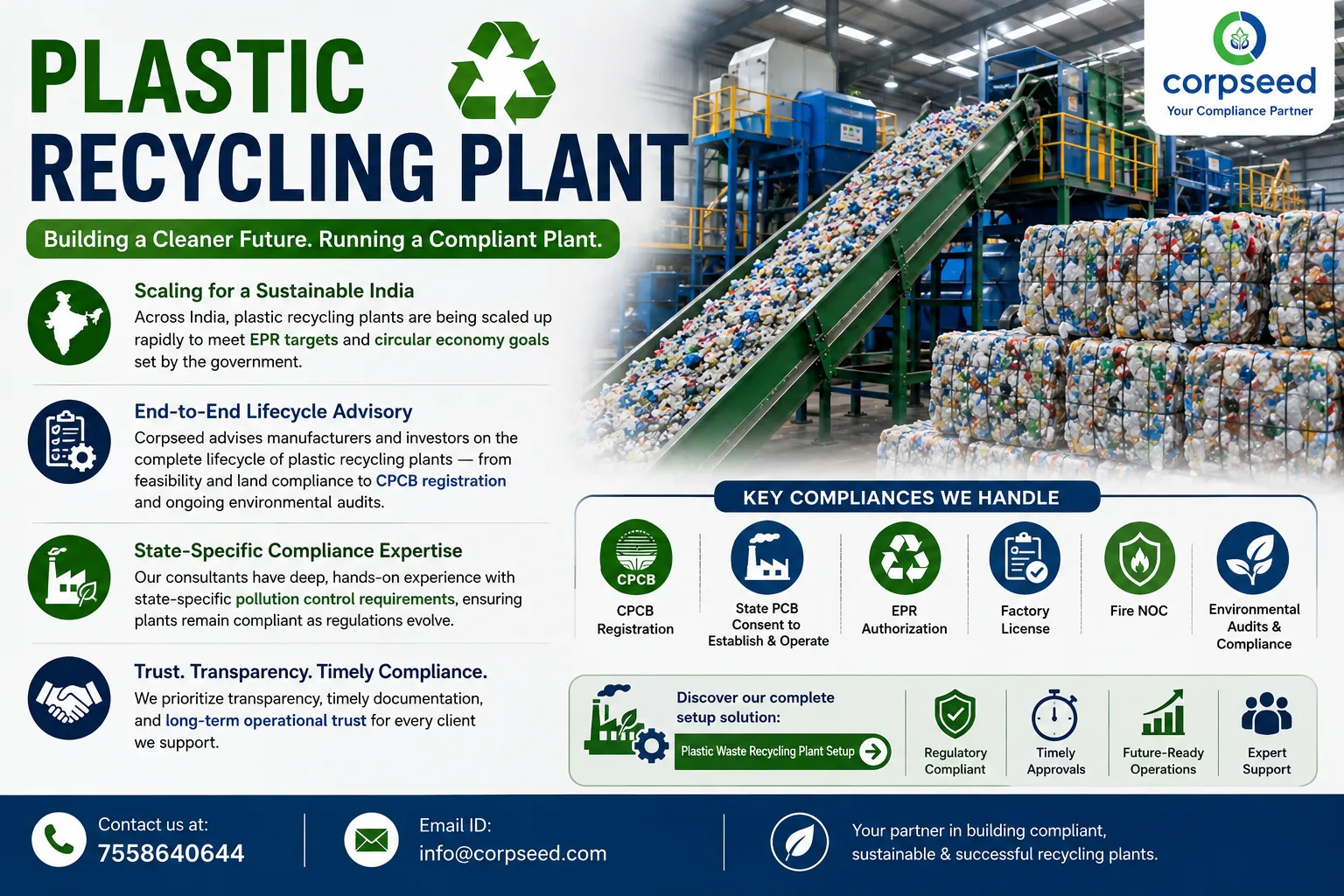
Navigating CTE, CTO and EPR registration takes time, and errors cause delays. Corpseed’s team handles documentation, state board applications and CPCB registration through a dedicated account manager. See the full process on our plastic waste recycling plant setup page.
Contact us at 7558640644 | Email: info@corpseed.com
Frequently Asked Questions
How much does it cost to set up a plastic recycling plant?
A small plant may need tens of lakhs of rupees, while larger washing and pelletizing lines can exceed ₹1 crore. Capacity, automation, land and ETP requirements drive the final figure.
How do I start a plastic recycling plant?
Choose a plastic type, register your business, obtain CTE and CTO from the State Pollution Control Board, install machinery and register on the CPCB EPR portal.
Is plastic recycling business profitable in India?
Yes, when scrap sourcing, yield and compliance are well managed. EPR certificate demand and recycled granule sales support revenue.
Is a license required for a plastic recycling plant?
Yes. You need state pollution board consents (CTE and CTO) and CPCB registration as a recycler, along with standard business and safety approvals.
Which plastic is most profitable to recycle?
PET and HDPE are popular for their steady demand and easier handling. Profitability still depends on local scrap supply and buyers.
Related Reading
Top 10 Hidden Secrets About Business & Finance You Need to Know
Welcome to our in-depth exploration of Business & Finance. In an era defined...
Why Business & Finance is Transforming the Global Industry Landscape
Welcome to our in-depth exploration of Business & Finance. In an era defined...