Pizza Boxes & Pizza Slice Boxes: Packaging That Keeps Pizza Hot and Intact
By Joe Root
67 Views
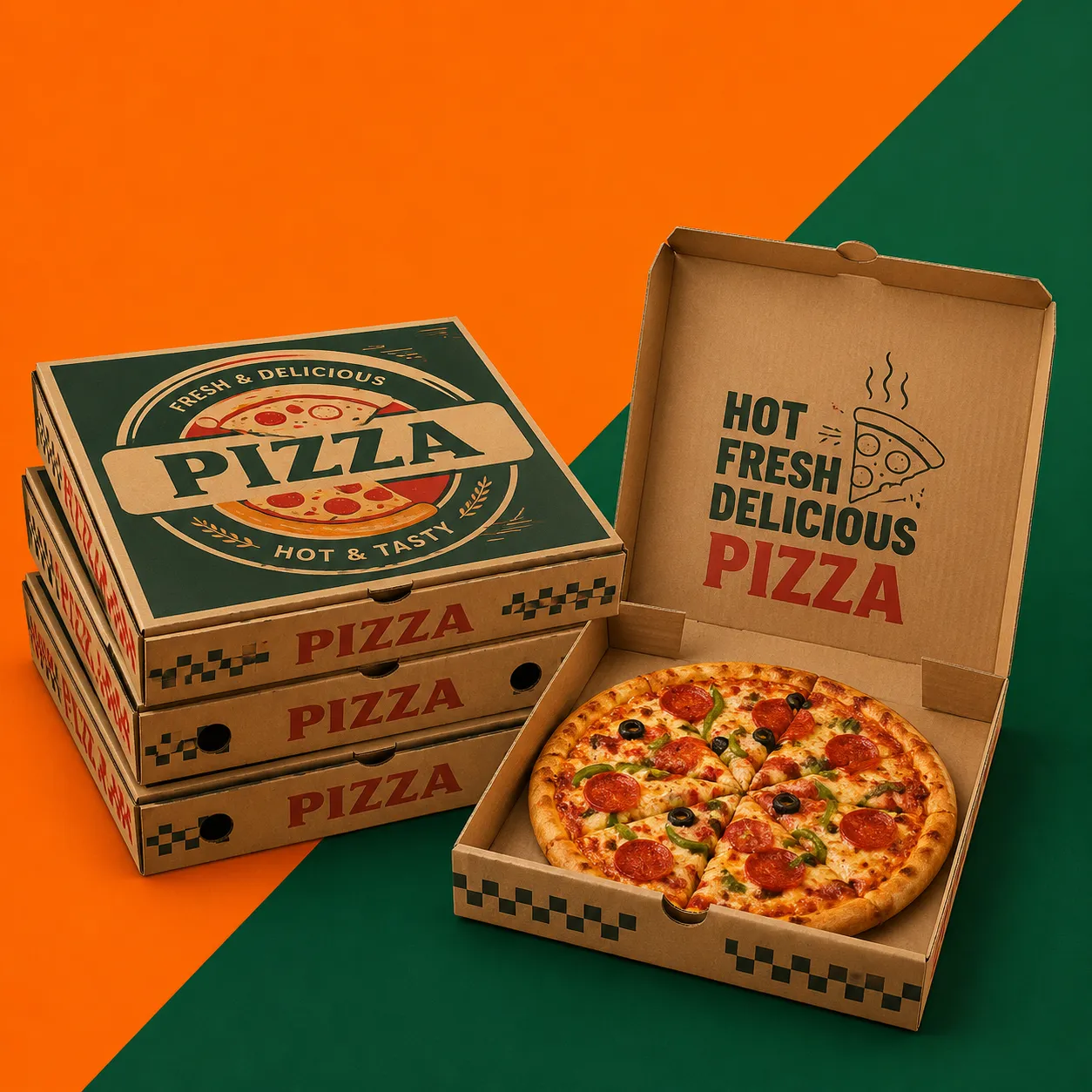
A pizza box has one job that sounds simple and rarely is: get a hot, cheese-loaded, steam-releasing product from the oven to someone's door without going soggy, sagging, or losing heat. Pizza boxes are one of the most functionally demanding formats in food packaging, and the format has quietly branched out — pizza slice boxes now cover a whole segment of the market that whole-pie boxes were never built for. This guide covers what makes pizza boxes work, where slice boxes fit in, and how to choose the right build for your kitchen.
Why Pizza Box Design Is Harder Than It Looks
Pizza is one of the toughest packaging challenges in food service because it fights itself inside the box. Steam needs to escape or the crust goes soft, but too much ventilation and the pizza cools too fast. Grease needs to be contained, but a fully sealed box traps moisture. And the box has to survive a delivery bag, a car seat, a bike pannier, or a stack of five other orders without crushing.
Good pizza packaging balances four things at once:
- Heat retention — keeping the pizza close to serving temperature for as long as possible
- Moisture control — venting steam without letting the crust go cold or soggy
- Structural strength — surviving stacking, transit, and handling without collapsing
- Grease resistance — a liner or coating that stops oil soaking through to hands or bags
Standard Pizza Boxes
The classic corrugated pizza box remains the industry default for a reason — it's cost-effective at volume, rigid enough to stack, and the corrugated flute layer provides genuine insulation against heat loss.
Common Pizza Box Sizes
SizeTypical Use8" – 10"Personal pizzas, single-serve12"Small/medium pies14"Large, most common size16" – 18"Extra-large and party pizzas
Ventilation and Grease Control
Most standard boxes now include steam vents — either die-cut holes or a corrugated micro-flute design that allows airflow without a fully open box. Grease-resistant coatings or liners are increasingly standard, especially for higher-fat toppings like pepperoni or extra cheese, where a plain kraft box alone won't hold up.
Pizza Slice Boxes: A Format Built for a Different Occasion
Pizza slice boxes solve a problem whole-pie boxes were never designed for — selling and transporting single slices rather than a full pizza. They're common across food courts, grab-and-go counters, school cafeterias, and delivery apps that now support single-slice orders.
Key differences from standard pizza boxes:
- Wedge-shaped or rectangular footprint — matched to the shape of a single slice rather than a round pie
- Smaller footprint, faster assembly — designed for high-volume, quick-turnaround service
- Grease-resistant base as standard — a single slice sitting flat means grease contact is concentrated, not spread across a full pie's surface
- Window cutouts — increasingly common on slice boxes sold at retail or grab-and-go counters, where visibility drives impulse purchases
Pizza slice boxes are particularly well suited to any business selling pizza by the piece — pizzerias with a counter-service model, food halls, convenience stores, or catering setups offering mixed slice trays.
Materials for Pizza Packaging
Corrugated Board
The standard for whole pizza boxes — the fluted middle layer traps air, which slows heat loss and adds crush resistance for stacking.
Kraft Paperboard
Common for slice boxes and smaller formats, kraft paperboard is lighter, cheaper per unit, and pairs well with a grease-resistant coating for single-slice service.
Grease-Resistant Coatings
Applied to the interior surface of both box types, these coatings — often water-based rather than the older PFAS-based treatments now phased out across most of the industry — stop oil from soaking through to the exterior print or a customer's hands.
Design and Branding Considerations
Pizza boxes spend real time in front of customers — on the counter, in a delivery bag, sitting on a kitchen table during the meal — which makes them a genuinely useful branding surface, not just functional packaging.
- Full-color print — logo, brand colors, and menu prompts printed directly on the corrugated or kraft surface
- Interior print — some brands print offers, QR codes for reviews, or social handles inside the lid, visible only once the box is opened
- Custom die-cut vents — shaped vents (stars, brand logos) turn a functional necessity into a small branding moment
- Slice box windows — for retail and grab-and-go slice boxes, a window cutout both protects and sells the product simultaneously
Common Mistakes in Pizza Packaging
- Under-ventilating — a fully sealed box traps steam and guarantees a soggy crust within minutes
- Using the wrong size — an oversized box lets the pizza slide and topping shift during transit; undersized boxes crush toppings against the lid
- Skipping grease-resistant coating — a plain uncoated box on a high-fat pizza leads to soaked-through packaging and a messy handoff
- Ignoring stack strength — delivery orders are rarely stacked flat and alone; box strength needs to account for real-world handling, not just a single box on a countertop
- Treating slice boxes as an afterthought — a slice box built like a miniature whole-pizza box, rather than designed for its actual use case, often performs worse on grease control and structural fit
Food Packaging Context
Pizza boxes and slice boxes sit within the much broader category of food packaging, which spans everything from bakery boxes and grazing platters to beverage cartons and takeaway containers. What ties the category together is a shared set of demands — food safety compliance, grease and moisture resistance where relevant, and packaging that survives real-world handling from kitchen to customer. Businesses sourcing pizza packaging often need a consistent supplier across their full food packaging range, from pizza boxes down to napkin and cutlery packaging, so material quality and compliance standards stay uniform across every touchpoint a customer sees.
How to Order Custom Pizza Boxes or Slice Boxes
- Confirm your standard pizza sizes to lock in box dimensions
- Choose corrugated or kraft based on whole-pie vs slice-format needs
- Select ventilation style — die-cut vents, micro-flute, or a window for slice boxes
- Confirm grease-resistant coating appropriate for your typical topping fat content
- Add branding — exterior print, interior print, or custom-shaped vents
- Request a sample run before committing to full production, especially if switching materials or coatings
Frequently Asked Questions
What's the difference between a pizza box and a pizza slice box?
A pizza box is sized and shaped for a whole pie, while a pizza slice box is a smaller, often wedge-shaped format built specifically for single-slice sales and transport.
Why do pizza boxes need vents?
Vents let steam escape so the crust doesn't go soft and soggy from trapped moisture during transit.
Are corrugated pizza boxes better than plain cardboard?
Yes — the fluted layer in corrugated board provides better insulation and crush resistance than flat, single-layer cardboard.
Can pizza boxes be recycled if they have grease stains?
Grease-stained sections generally can't be recycled with standard paper streams, though many facilities can still recycle the clean, unstained portions of the box.
What size pizza box do I need for a 14-inch pizza?
A 14-inch pizza typically needs a box sized to match or very slightly larger, giving enough clearance for toppings without leaving excess room for the pizza to shift.
Final Thoughts
Pizza packaging is deceptively technical — every design choice, from vent placement to coating type, is answering to physics as much as branding. Getting the format right, whether that's a standard corrugated pizza box or a purpose-built slice box, is what keeps a product arriving the way it left the kitchen.
If you're sourcing custom pizza boxes or pizza slice boxes for your business, DODO Packaging AU designs and manufactures packaging built around your menu, order volume, and branding needs. Get in touch for a free design consultation and quote.
Related Reading
Top 10 Hidden Secrets About Business & Finance You Need to Know
Welcome to our in-depth exploration of Business & Finance. In an era defined...
Why Business & Finance is Transforming the Global Industry Landscape
Welcome to our in-depth exploration of Business & Finance. In an era defined...