Permanent Xmas Lights: How They Work and What You Need to Know
30 Views
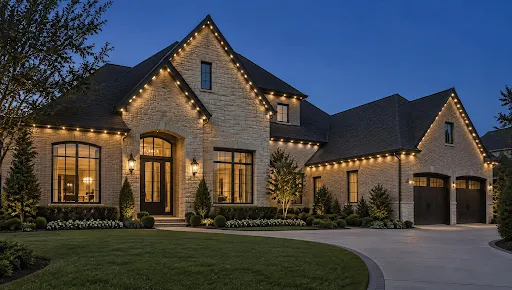
Holiday lighting has traditionally been installed for a few weeks each year and then removed once the season ends. A newer approach is designed around lighting systems that remain installed on a property and can be used repeatedly for Christmas, holidays, celebrations, and other occasions. Permanent xmas lights are typically integrated along rooflines, eaves, architectural edges, or other suitable exterior areas so the lighting hardware does not need to be installed and removed every year.
Understanding how these systems work, what makes them different from temporary string lights, and what factors affect their performance can help homeowners and property managers make informed decisions about outdoor decorative lighting.
What Are Permanent Christmas Lights?
Many systems use small LED light sources installed along rooflines or other architectural features. The wiring and mounting components can be positioned to blend with the structure when the lights are not operating.
Permanent Xmas lights are exterior lighting systems designed for long-term installation rather than seasonal setup and removal. Instead of placing temporary light strings around a building each winter, the lighting components remain attached to predetermined locations throughout the year.
How Do Permanent LED Lights Work?
Most modern permanent holiday lighting systems use light-emitting diodes, commonly called LEDs. An LED produces visible light when electrical current passes through semiconductor material. Unlike incandescent bulbs, LEDs do not rely on a heated filament to produce illumination.
The U.S. Department of Energy explains that LED holiday lights generally use substantially less energy than conventional incandescent holiday light strands. LEDs are also more resistant to breakage and can have longer operating lives, making them particularly suitable for decorative lighting applications. With permanent Xmas lights, individual LED fixtures can be positioned at consistent intervals along a roofline or architectural feature. Depending on the system, controls can allow users to change colors, brightness, patterns, or operating schedules without physically accessing the lights.
How Do Permanent Lights Differ From Temporary Lights?
Traditional Christmas string lights are generally designed to be installed, operated, removed, stored, and reused. This process can require ladders, clips, extension cords, storage space, and considerable time each holiday season.
Permanent Xmas lights, by contrast, are designed around a fixed installation. Once installed, the lighting can remain in position while controls determine when and how it operates.
This does not mean permanent systems require no maintenance. Outdoor electrical equipment remains exposed to weather, temperature changes, moisture, wind, and physical conditions. Periodic inspection can help identify damaged wiring, loose components, failed LEDs, or other issues before they affect the wider system.
What Should You Consider Before Installation?
LED technology can provide energy efficiency, durability, reduced heat, and flexible control, while a permanent installation can simplify seasonal setup and create consistent illumination along architectural features.
Several technical factors should be considered before installing permanent Xmas lights.
First, determine whether the selected products are specifically designed for outdoor use. The U.S. Consumer Product Safety Commission recommends using outdoor lighting that is identified and certified for outdoor applications rather than using indoor products outside. Mounting methods are another important consideration. Fixtures should be secured appropriately for the building and local environmental conditions. Improper fastening can increase the risk of movement, damage, or premature failure.
Important Outdoor Lighting Safety Considerations
Electrical safety is particularly important when lighting remains exposed to outdoor conditions. CPSC guidance recommends checking lighting products for damaged wires, loose connections, cracked sockets, and other visible defects. Outdoor lighting should be appropriate for its intended environment, and electrical connections should be protected from conditions that could create hazards. Professional electrical installation may be appropriate when the project involves new circuits, permanent wiring, complex connections, or other work requiring electrical expertise.
Conclusion
When evaluating Christmas lights, it is important to consider outdoor ratings, electrical requirements, mounting methods, control options, maintenance, and the property's specific structure. TridentPro Lighting can be considered when researching available Christmas LED lighting systems, but product specifications and installation requirements should always be reviewed carefully before selecting a system.
Related Reading
Expert Insights: Navigating the Complex World of Home Improvement
Welcome to our in-depth exploration of Home Improvement. In an era defined by ra...
Why Home Improvement is Transforming the Global Industry Landscape
Welcome to our in-depth exploration of Home Improvement. In an era defined by ra...