What Does a Pedestrian Injury Law Firm Do After an Accident?
By Leo Thomas
22 Views
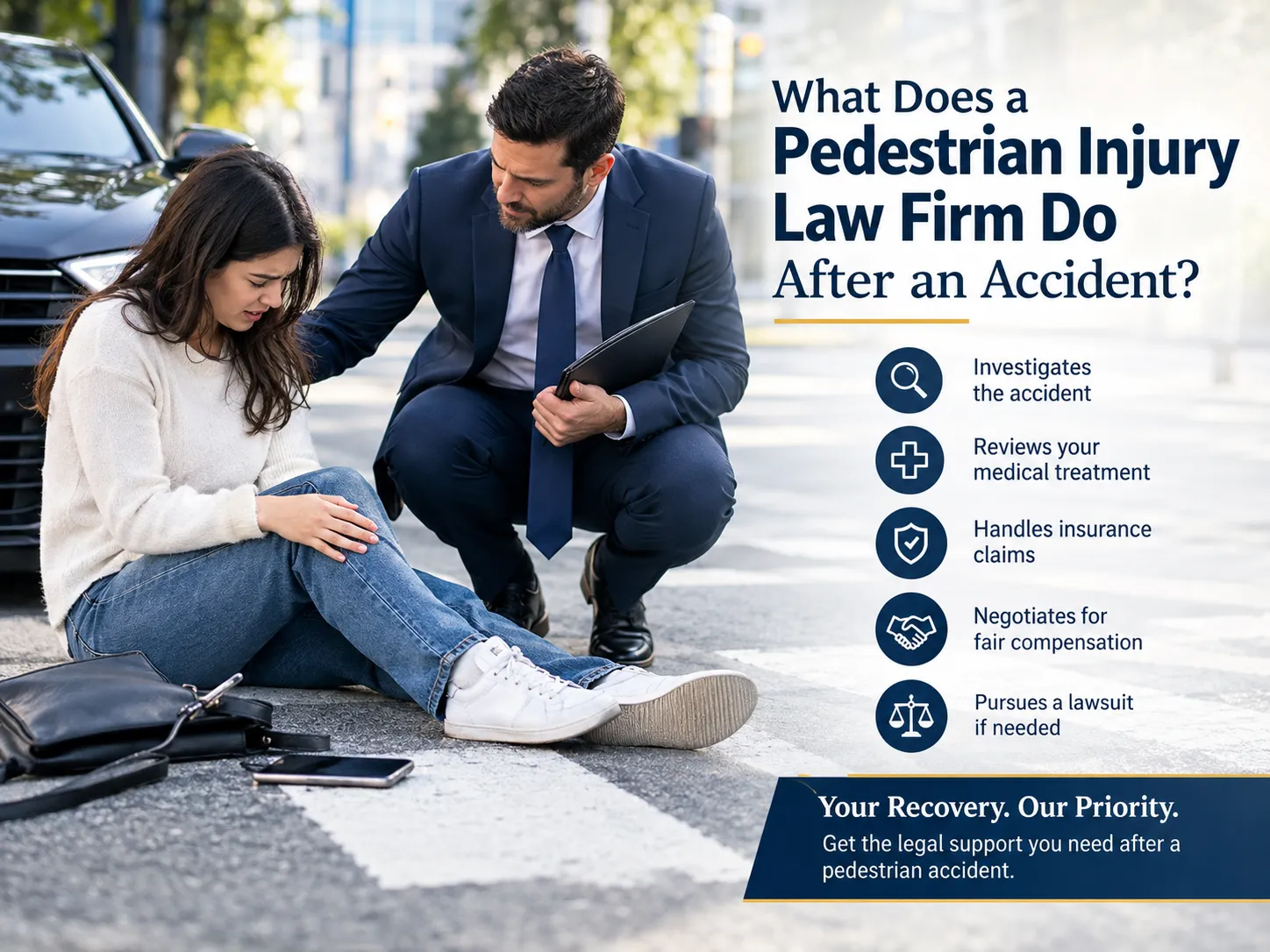
A pedestrian accident can happen in seconds, but the consequences may last for months or even years. A person walking to work, crossing an intersection, or using a marked crosswalk can suffer serious injuries after being struck by a car, truck, motorcycle, or other vehicle.
After an accident, many injured pedestrians are unsure what to do next. Medical treatment, insurance paperwork, lost income, vehicle insurance questions, and potential legal claims can quickly become overwhelming. A pedestrian injury law firm can help organize these issues and protect the injured person's legal interests while a claim is being investigated.
The First Step Is Understanding What Happened
A lawyer will generally begin by learning as much as possible about the accident.
This may include reviewing:
- Where the pedestrian accident occurred
- The date and time of the collision
- Weather and lighting conditions
- Traffic signals and crosswalks
- Statements from witnesses
- Police or incident reports
- Photographs and video footage
- Vehicle damage
- Medical records
- Information about the driver and insurance coverage
These details can help establish how the collision happened and identify the parties or insurance policies that may be relevant to the claim.
The circumstances matter because pedestrian crashes are not always as simple as determining that a vehicle hit someone. The investigation may need to consider traffic conditions, visibility, roadway design, driver behavior, pedestrian positioning, and other evidence.
Investigating the Accident and Preserving Evidence
Evidence can become harder to obtain as time passes. Security footage may be deleted, witnesses may become difficult to locate, and physical conditions at the accident scene can change.
A law firm may therefore work to collect and preserve relevant evidence early in the process.
For example, an investigation may involve obtaining available surveillance footage, photographs, witness information, accident reports, vehicle information, and other documentation.
This step can be especially important in cases involving disputed liability. If an insurance company questions how the accident happened, reliable evidence can help provide a clearer picture of the event.
Reviewing Medical Treatment and Injuries
Pedestrian accidents can cause many different types of injuries, including broken bones, head injuries, back and neck injuries, internal injuries, and soft-tissue damage.
A legal professional may review medical records and bills to understand the nature and extent of the injuries. This can include treatment received at an emergency department, hospital, rehabilitation facility, or through other medical providers.
The goal is not simply to collect medical bills. A claim may also need to account for the continuing effects of an injury, including future treatment, rehabilitation, limitations on daily activities, and time away from work.
Keeping medical appointments and following medical advice is important for both recovery and proper documentation of the injury.
Explaining New Jersey Insurance Issues
Insurance coverage can be confusing after a pedestrian accident.
New Jersey law provides for personal injury protection, commonly called PIP, in qualifying automobile insurance policies. New Jersey's statute specifically provides PIP benefits for certain pedestrians injured in accidents involving automobiles.
A pedestrian may have questions about which insurance policy applies, who pays medical expenses, and whether additional compensation may be available. The answer can depend on the circumstances of the accident and the insurance coverage involved.
A pedestrian injury law firm can review the available policies and explain how the applicable coverage may affect the claim.
This is one reason accident victims should avoid assuming that the first insurance company they speak with is the only source of potential recovery.
Communicating With Insurance Companies
Insurance adjusters may contact an injured pedestrian after a crash. They may request information about the accident, injuries, medical treatment, or other circumstances.
A lawyer can handle many communications with insurers and help make sure important information is presented accurately.
This can also reduce the pressure on an injured person who is already dealing with medical appointments and financial concerns.
A claim may require documentation such as medical records, medical bills, wage-loss information, accident reports, photographs, and other supporting evidence.
Calculating the Potential Value of a Claim
Another important part of a pedestrian injury case is identifying the different types of losses caused by the accident.
Depending on the circumstances, damages may involve:
- Medical expenses
- Rehabilitation costs
- Lost wages
- Reduced earning capacity
- Pain and suffering
- Physical limitations
- Property damage
- Other accident-related financial losses
Every case is different. The severity of the injury, treatment requirements, available insurance coverage, liability issues, and long-term consequences can all affect a claim.
A lawyer may work with medical records, employment information, bills, receipts, and other documentation to develop a clearer picture of the losses.
Addressing Disputes About Fault
Sometimes the driver or insurance company may argue that the pedestrian contributed to the accident.
New Jersey follows a comparative negligence rule for certain injury claims. Under the statute, a person's recovery can be reduced according to the percentage of negligence attributed to that person, subject to the statutory requirements.
That makes evidence particularly important when liability is disputed.
Rather than relying only on one person's version of events, an investigation can examine available evidence such as traffic signals, witness accounts, photographs, video, police records, and accident-scene information.
Negotiating a Settlement
Many personal injury claims are resolved through negotiations rather than a trial.
A lawyer may prepare a demand package explaining the accident, injuries, medical treatment, financial losses, and other damages. The insurance company may respond with questions or an offer.
Negotiations can continue as both sides evaluate the evidence.
Someone searching for the best personal injury lawyer should look beyond marketing language and consider practical factors such as experience with pedestrian accidents, knowledge of New Jersey injury law, communication, and the firm's approach to handling insurance claims.
Filing a Lawsuit When Necessary
If an appropriate settlement cannot be reached, litigation may become necessary.
A pedestrian injury attorney can prepare the required legal documents, manage the litigation process, communicate with the opposing side, conduct discovery, and prepare the case for court.
New Jersey generally requires an action for an injury caused by a wrongful act, neglect, or default to be commenced within two years after the claim accrues, although exceptions can apply depending on the circumstances.
Because deadlines can affect legal rights, an injured pedestrian should not assume there is unlimited time to investigate or pursue a claim.
What Should You Do After a Pedestrian Accident?
If you have been injured as a pedestrian, focus first on your health and immediate safety.
When possible, consider these practical steps:
- Seek medical attention, even if symptoms initially seem minor.
- Report the accident to the appropriate authorities.
- Obtain the driver's insurance and contact information.
- Take photographs of the accident scene and visible injuries if you are able.
- Keep medical records, bills, receipts, and wage-loss documentation.
- Write down what you remember about the collision.
- Identify potential witnesses.
- Be careful about giving recorded statements or signing documents before understanding what they mean.
- Keep following your medical provider's treatment recommendations.
- Consider obtaining legal advice if the injuries are serious or liability and insurance coverage are disputed.
How a Pedestrian Injury Law Firm Can Help
The main role of a pedestrian injury law firm is to help an injured person understand the legal and insurance issues surrounding the accident while building evidence for the claim.
That may involve investigating the collision, reviewing medical documentation, communicating with insurers, identifying damages, negotiating a settlement, and pursuing litigation when appropriate.
The process can be complicated, particularly when injuries are serious or multiple insurance policies may be involved. New Jersey's insurance rules also contain specific provisions affecting pedestrians and automobile-related injuries.
Getting organized early can make it easier to preserve evidence and understand available options.
Final Thoughts
A pedestrian accident is more than a traffic incident. For an injured person, it can lead to medical bills, missed work, physical limitations, and difficult insurance decisions.
Understanding what a law firm actually does after a crash can make the process less confusing. From investigating the accident and preserving evidence to handling insurance negotiations and preparing a potential lawsuit, legal assistance can address many of the issues that arise after a serious pedestrian injury.
If you have been injured, documenting the accident, obtaining appropriate medical care, preserving evidence, and learning about your legal options are important early steps.