OmniMD Alternatives: 10 Best EHR Software Options in 2026
By Oliver
56 Views
Choosing an EHR is rarely just about finding the software with the longest feature list. Medical practices need a system that fits their specialty, budget, clinical workflows, billing processes, patient communication needs, and growth plans.
OmniMD is an established ambulatory healthcare technology platform offering EHR, practice management, billing, RCM, patient engagement, interoperability, and AI-enabled tools. Its current product offering includes specialty-focused workflows across more than 20 specialties, along with AI medical scribing and other automation capabilities.
However, OmniMD may not be the right fit for every organization. This guide compares 10 OmniMD alternatives that healthcare organizations can research in 2026, with a focus on what each type of platform may be best suited for and what to evaluate before making a decision.
What Is OmniMD EMR?
Before comparing alternatives, it helps to understand what OmniMD EMR is and why practices consider it.
OmniMD is an EHR and healthcare technology platform designed primarily around ambulatory care. Its current platform includes electronic health records, scheduling, patient portals, e-prescribing, laboratory connectivity, practice management, medical billing, RCM, AI medical scribing, AI front-desk automation, and other digital-health capabilities. The company also promotes specialty-specific configurations for areas including primary care, cardiology, nephrology, mental health, orthopedics, pediatrics, urology, and other specialties.
That broad scope is one reason organizations researching OmniMD EMR software should compare complete workflows rather than individual features.
Why Consider an OmniMD Alternative?
There is no single reason to switch or look elsewhere. A practice may want an alternative because it needs:
- A different specialty workflow
- More specialized clinical functionality
- A simpler interface
- Different implementation or support options
- A different pricing structure
- Stronger integration with existing systems
- More extensive enterprise capabilities
- A platform designed specifically for smaller practices
- Different AI or documentation capabilities
- More control over billing and RCM workflows
OmniMD's pricing is customized according to factors such as providers, patient volume, specialty requirements, and selected modules. Its current plans range from EHR Essentials to Growth Clinics and Enterprise & Multi-Location offerings.
Therefore, comparing OmniMD EMR pricing with alternatives should focus on total cost of ownership rather than simply looking for the lowest subscription.
10 Best OmniMD Alternatives to Consider in 2026
The following platforms are not ranked as universally "better" than OmniMD. Instead, they represent different approaches to EHR technology and may suit different types of healthcare organizations.
1. Epic
Epic is one of the most recognized names in healthcare information technology and is particularly relevant for hospitals, health systems, and large integrated organizations.
Why consider Epic?
Its strength is its broad ecosystem and ability to connect clinical, administrative, and patient-facing workflows across large healthcare organizations.
Best for: Large health systems, hospitals, academic medical centers, and organizations requiring extensive enterprise capabilities.
Consider carefully: Implementation complexity, organizational requirements, and whether the platform's scale is appropriate for your practice.
2. Oracle Health
Oracle Health is another major enterprise healthcare technology option. It is relevant to organizations looking beyond a traditional standalone ambulatory EHR and considering broader healthcare information infrastructure.
Why consider Oracle Health?
Organizations with complex technology environments may be interested in its enterprise-oriented approach and broader healthcare technology ecosystem.
Best for: Large healthcare organizations and enterprises with complex technology requirements.
Consider carefully: Whether its enterprise capabilities justify the implementation and operational complexity for your organization.
3. athenahealth
athenahealth is a major ambulatory healthcare technology provider and is frequently considered by medical groups evaluating cloud-based EHR and practice-management solutions.
Why consider athenahealth?
Practices looking for an integrated ambulatory platform may compare its EHR, practice management, and revenue-cycle capabilities with those offered by OmniMD.
Best for: Ambulatory practices and medical groups seeking integrated clinical and administrative workflows.
Consider carefully: Pricing, specialty functionality, implementation, and the specific capabilities included in your contract.
4. eClinicalWorks
eClinicalWorks is another established ambulatory EHR platform that practices may consider when comparing OmniMD EMR software with alternatives.
Why consider eClinicalWorks?
Its broad ambulatory feature set makes it relevant to practices that want EHR, practice management, patient engagement, and related healthcare technology in one ecosystem.
Best for: Small to mid-sized practices, medical groups, and ambulatory organizations.
Consider carefully: Workflow usability, support, integrations, and the total cost of the selected configuration.
5. NextGen Healthcare
NextGen Healthcare is particularly relevant for organizations that need ambulatory EHR and practice-management functionality with specialty-oriented workflows.
Why consider NextGen?
Specialty practices often need more than generic charting. They may require templates, reporting, patient engagement, billing workflows, and integrations designed around their particular clinical environment.
Best for: Specialty practices and growing ambulatory medical groups.
Consider carefully: Specialty fit, implementation requirements, reporting, interoperability, and pricing.
6. Tebra
Tebra is aimed strongly at independent healthcare practices and combines EHR, practice management, patient engagement, and related business tools.
Why consider Tebra?
Independent physicians often need software that supports both patient care and the business side of running a practice.
Best for: Independent practices and smaller medical organizations.
Consider carefully: Whether its workflows and capabilities match your specialty and whether its business-management features provide value for your practice.
7. AdvancedMD
AdvancedMD is another option worth investigating for medical groups looking for integrated EHR, practice management, scheduling, and revenue-cycle capabilities.
Why consider AdvancedMD?
The platform's focus on connecting clinical and operational processes makes it relevant when a practice wants fewer disconnected systems.
Best for: Independent practices and growing medical groups that need integrated operational tools.
Consider carefully: Specialty functionality, implementation, usability, and the complete pricing structure.
8. DrChrono
DrChrono is a cloud-based healthcare platform that can be relevant to smaller practices and organizations looking for flexible ambulatory workflows.
Why consider DrChrono?
Smaller organizations often prioritize ease of use, mobility, patient engagement, scheduling, and straightforward practice operations.
Best for: Independent physicians and smaller medical practices.
Consider carefully: Specialty-specific functionality, billing requirements, integrations, and scalability.
9. Practice Fusion
Practice Fusion is another name practices may encounter when researching ambulatory EHR options.
Why consider Practice Fusion?
Its positioning makes it relevant to practices that want an EHR-oriented solution without necessarily adopting a large enterprise healthcare platform.
Best for: Smaller ambulatory practices researching straightforward EHR options.
Consider carefully: Available functionality, specialty requirements, integrations, support, and current pricing before making a decision.
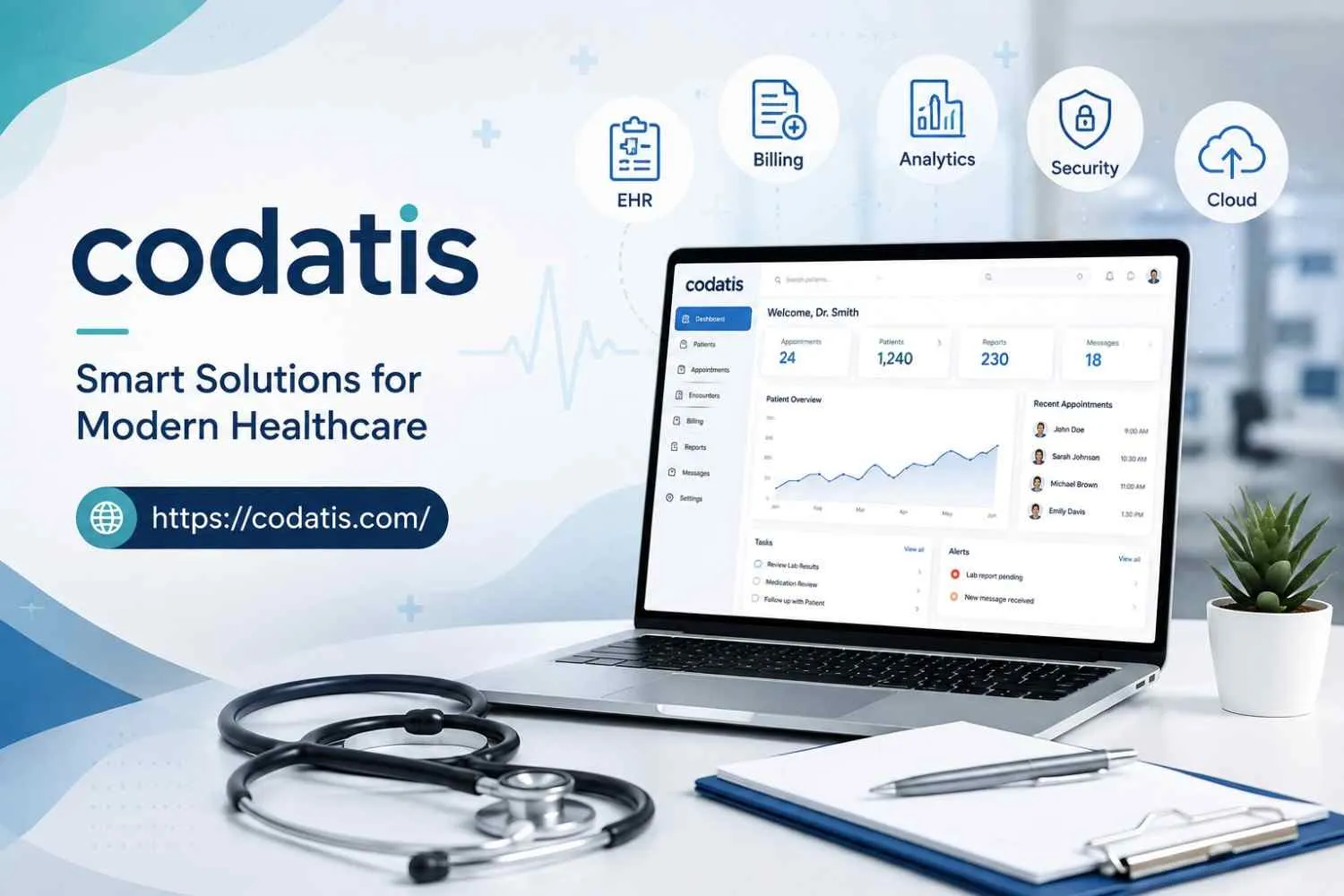
10. Codatis
Codatis is another healthcare software option worth including in an OmniMD alternatives comparison, particularly for organizations researching specialty-focused and practice-oriented EHR solutions.
Rather than evaluating software purely by the number of advertised features, practices should examine how well the platform supports their actual workflows—including documentation, scheduling, patient management, billing, reporting, interoperability, and specialty-specific requirements.
Best for: Healthcare organizations looking for a focused EHR technology partner and evaluating alternatives according to specific clinical and operational needs.
Consider carefully: Request a product demonstration and compare the exact workflows, integrations, implementation requirements, and pricing relevant to your organization.
OmniMD Alternatives Comparison
EHR
Potential fit
Key evaluation area
Epic
Large health systems
Enterprise capabilities
Oracle Health
Healthcare enterprises
Complex technology environments
athenahealth
Ambulatory practices
Integrated clinical and administrative workflows
eClinicalWorks
Medical groups
Broad ambulatory functionality
NextGen Healthcare
Specialty practices
Specialty workflows
Tebra
Independent practices
Practice and business management
AdvancedMD
Growing practices
EHR + practice management
DrChrono
Smaller practices
Cloud-based ambulatory workflows
Practice Fusion
Smaller practices
Core EHR requirements
Codatis
Healthcare organizations
Specialty and workflow fit
This table is a starting point, not a substitute for a vendor evaluation. Features, pricing, integrations, and availability can change, so practices should confirm current capabilities directly with each vendor.
How to Choose the Right OmniMD Alternative
Searching for an OmniMD alternative is only the first step. The more important question is which platform fits your organization.
1. Start With Your Specialty
A cardiology practice, nephrology practice, behavioral-health organization, and primary-care clinic may have completely different documentation requirements.
Look for specialty-specific templates, workflows, reporting, coding support, and integrations.
2. Calculate Total Cost
Do not compare subscription prices alone.
Ask vendors about:
- Implementation
- Data migration
- Training
- Support
- Additional providers
- Additional locations
- Billing and RCM
- Integrations
- Telehealth
- Patient engagement
- Optional modules
This is especially important when researching OmniMD EMR pricing because OmniMD currently uses customized pricing based on practice requirements.
3. Test the Clinical Workflow
During an OmniMD EMR Demo or competitor demonstration, ask the vendor to perform a real patient journey from registration through billing.
Do not accept a generic presentation.
Test:
- Patient registration
- Appointment scheduling
- Check-in
- Clinical documentation
- Orders and prescriptions
- Lab results
- Claims
- Patient communication
- Reporting
- Data exchange
4. Review Interoperability
Modern practices rarely operate in isolation. Ask whether the system supports the standards and connections your organization needs.
OmniMD, for example, currently advertises FHIR and HL7 capabilities, along with lab and radiology connectivity.
Your alternative should be evaluated against the same requirements.
5. Look Beyond EHR Features
An EHR is only one component of practice operations.
Consider whether you need:
- Revenue-cycle management
- Medical billing
- Patient portal
- AI documentation
- Telehealth
- Remote patient monitoring
- Analytics
- Scheduling automation
- Patient intake
- Interoperability
The best platform is the one that solves your actual operational problems without creating unnecessary complexity.
FAQ’s
What is the best alternative to OmniMD?
There is no single best alternative for every practice. Epic, Oracle Health, athenahealth, eClinicalWorks, NextGen Healthcare, Tebra, AdvancedMD, DrChrono, Practice Fusion, and Codatis can each be relevant depending on practice size, specialty, budget, and workflow requirements.
Why do practices look for OmniMD alternatives?
Common reasons include different specialty requirements, pricing considerations, workflow preferences, integration needs, implementation expectations, or the need for a different level of enterprise or small-practice functionality.
How should I compare OmniMD EMR software with another EHR?
Compare both platforms using the same real-world workflows. Evaluate clinical documentation, scheduling, billing, interoperability, patient engagement, reporting, support, implementation, and total cost.
Does OmniMD offer specialty-specific EHR functionality?
Yes. OmniMD currently states that it supports more than 20 specialties and provides specialty-oriented configurations.
Does OmniMD offer a demo?
Yes. OmniMD currently promotes customized demonstrations based on a practice's charts and workflows.
What about OmniMD EMR login?
Existing users should use the login process and access credentials provided by their organization and OmniMD. Prospective customers should focus on requesting a demonstration rather than relying on login information when evaluating the software.
Final Thoughts
OmniMD is a broad ambulatory healthcare platform with EHR, practice management, billing, RCM, patient engagement, interoperability, and AI capabilities. Its current offering covers numerous specialties and includes different plans for smaller practices, growing clinics, and enterprise organizations.
But an EHR decision should never be based on brand name alone. The strongest alternative is the one that fits your specialty, staff workflow, budget, interoperability requirements, implementation expectations, and long-term growth strategy.
If you are comparing OmniMD EMR software with other healthcare platforms, include Codatis in your evaluation and focus on practical workflow fit rather than simply counting features. A careful comparison and live demonstration can help your organization choose software that supports both better clinical operations and sustainable practice growth.