Office Safe Buying Tips: Make Security a Business Priority
2 Views
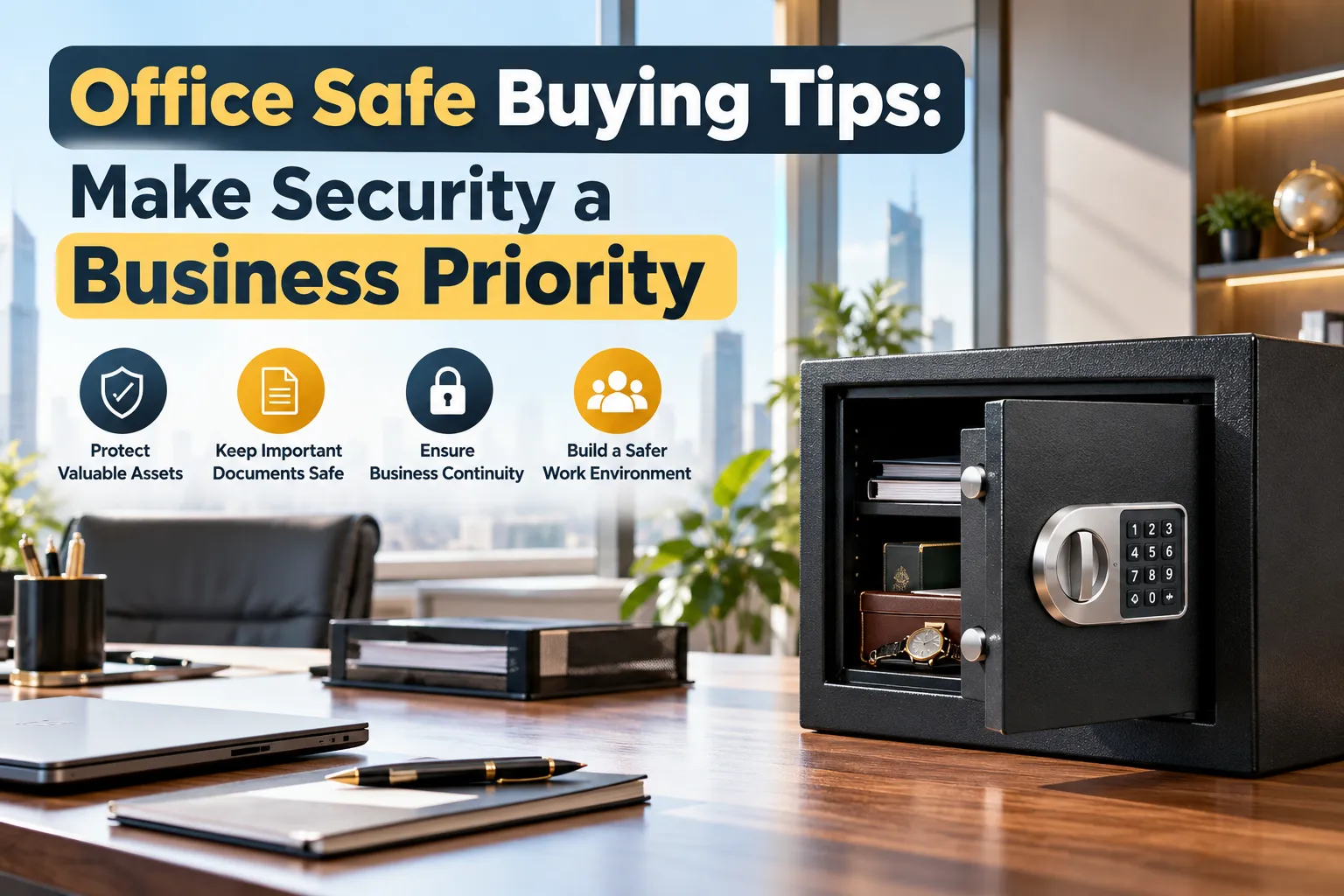
Every business has valuable assets that deserve proper protection, from cash and confidential documents to company records, important keys, and electronic devices. Investing in an Office Safe in Dubai can help businesses protect these essentials while creating a more secure working environment. Whether you operate a small office, a retail store, a corporate workspace, or a growing company, choosing the right safe is an important step towards managing security risks and protecting your business interests.
Why Is an Office Safe Important for Every Business?
Business security involves more than installing CCTV cameras, alarm systems, and access control devices. Physical protection is equally important, especially when employees handle cash, sensitive paperwork, confidential agreements, or valuable equipment.
An office safe provides a designated, secure location for storing items that should not remain accessible to everyone. It can reduce the risk of unauthorised access, accidental loss, and opportunistic theft. It also helps businesses establish better internal procedures for handling important assets.
For example, a retail business might use a safe to store daily cash collections, while an accounting firm may need secure storage for financial records and company seals. Similarly, a management office might keep confidential agreements and essential documents inside a locked safe.
The right solution depends on the nature of your business, the value of the items being protected, and the level of security required.
1. Identify Your Business Security Requirements
Before purchasing an office safe, determine exactly what you intend to protect. This simple step can prevent you from spending money on a product that does not meet your actual requirements.
Start by creating a list of the items that need secure storage. These might include cash, employee records, contracts, property documents, backup storage devices, jewellery, or confidential business information.
Next, consider how frequently these items need to be accessed. A safe used for daily cash handling may require quick and convenient access, whereas one storing confidential legal documents might remain locked for most of the working day.
You should also assess potential security risks. An office located in a shared commercial building may have different requirements from a private office with restricted entry and dedicated security personnel.
Understanding these factors will help you narrow down suitable models and choose a safe that supports your everyday operations.
2. Choose the Right Type of Office Safe
Office safes are available in different designs, sizes, and security configurations. Selecting the appropriate type depends on your business activities and the items you need to protect.
Digital Safes
Digital safes use an electronic keypad to provide access through a PIN code. Many models allow users to change the access code when necessary, making them suitable for offices where authorised personnel may change over time.
Some digital safes also feature emergency access options. However, buyers should check the backup procedure and power requirements before making a purchase.
Key Lock Safes
Key-operated safes use a physical key to unlock the storage compartment. They can be straightforward to operate and may suit businesses that prefer a traditional locking mechanism.
However, key management is essential. Lost, duplicated, or poorly controlled keys can create security problems, particularly when several employees share responsibility for the safe.
Biometric Safes
Biometric safes use fingerprint recognition or other biometric technologies to verify authorised users. Depending on the model, they may provide convenient access without requiring users to remember a combination or carry a key.
Before choosing this option, check the reliability of the biometric reader, backup access arrangements, and the ability to manage authorised users.
Fire-Resistant Safes
Fire-resistant safes are designed to protect specified contents from heat and fire exposure for a tested period. They can be particularly useful for businesses storing paper documents, financial records, and other essential materials.
Always check the product's fire-resistance rating and ensure it is appropriate for the items being stored.
3. Check the Locking Mechanism and Security Features
The locking mechanism plays a major role in determining how effectively a safe controls access. However, a sophisticated lock alone does not guarantee strong security. The construction, door design, locking bolts, and overall build quality also matter.
Look for a reliable locking system that matches your business requirements. If several employees need access, consider whether the safe supports multiple authorised users, individual access codes, or suitable access-management procedures.
Additional features may include automatic locking, incorrect-code lockouts, tamper alerts, and audit trails. These features are not available on every model, so review the specifications carefully.
It is also worth asking the supplier how the safe behaves during a power failure, what happens if an access code is forgotten, and how the locking system can be serviced.
A dependable safe should offer practical security without making authorised access unnecessarily difficult.
4. Select the Correct Size and Storage Capacity
Choosing the right size is another important consideration when buying an office safe. A model that looks spacious in a showroom may not provide enough room for your actual storage needs.
Measure the largest items you intend to store, including folders, document envelopes, cash boxes, and electronic devices. If you regularly handle paperwork, consider a safe with sufficient internal height and width to accommodate documents without folding them.
Think about future requirements as well. A growing business may accumulate additional records, equipment, or financial documents over time.
At the same time, avoid purchasing an unnecessarily large safe if your office has limited space. Larger models may require more floor area, stronger installation arrangements, and additional handling during delivery.
Check both the external dimensions and the usable internal capacity before making a final decision.
5. Consider Installation and Anchoring Options
Even a well-built safe can become vulnerable if it is installed incorrectly. Depending on its design and weight, a safe may need to be secured to a suitable floor or wall to make unauthorised removal more difficult.
Before buying, decide where the safe will be installed. A suitable location should offer convenient access for authorised staff while remaining away from unnecessary public visibility.
You should also consider the building layout, floor strength, available space, and any restrictions imposed by the property owner. Heavy safes may require professional handling and installation.
Ask the supplier whether the model supports anchoring and whether installation services are available.
For rented offices, obtain the necessary permission before drilling into floors or walls. Proper installation can improve security while helping you avoid damage to the premises.
6. Look for Fire and Water Protection
Businesses often focus on preventing theft but overlook damage caused by fire, water, and other environmental hazards.
Important documents may be difficult or impossible to replace after a serious incident. Depending on your industry, losing contracts, employee records, financial documents, or essential business information could interrupt operations.
A fire-resistant safe may help protect specific contents when the product is used within its tested limits. If water exposure is also a concern, check whether the safe has a verified water-resistance rating.
Do not assume that every fire-resistant safe is waterproof or that every waterproof safe can withstand high temperatures.
Pay attention to the type of protection offered, the testing standards, and the duration of the stated protection. For electronic storage devices, confirm that the safe provides suitable protection for their particular heat and moisture requirements.
7. Compare Prices, Quality, and Warranty Coverage
Price is an important part of the buying decision, but choosing the cheapest available safe may not provide the best long-term value.
Compare products based on their construction, locking system, security ratings, storage capacity, installation requirements, and available support services.
A basic safe may be sufficient for low-risk storage, while a business handling substantial cash or sensitive records may need a more robust model.
Ask suppliers for clear information about the warranty, replacement parts, maintenance services, and repair procedures. You should also check whether the warranty covers the locking mechanism and electronic components.
Remember to consider the total cost of ownership rather than the purchase price alone. Delivery, installation, maintenance, and future servicing may affect your overall expenditure.
A carefully selected safe can provide dependable service for years when it is properly installed and maintained.
8. Choose a Reliable Supplier
The supplier you choose can make a significant difference to your purchasing experience. A reliable supplier should provide accurate product information, explain available security features, and help you identify a suitable model.
Look for a seller with a clear product catalogue, transparent pricing, accessible customer support, and relevant experience in business security products.
Ask whether the supplier can explain the safe's security specifications and provide documentation supporting any claimed fire-resistance or security ratings.
It is also useful to understand the after-sales support available if the safe develops a fault, the locking system stops working, or authorised users require assistance.
Avoid making a decision based entirely on promotional claims. Compare specifications and verify important features before placing your order.
Working with an experienced supplier can help you make a more informed investment and reduce the chances of purchasing an unsuitable product.
9. Establish Clear Access and Key Management Policies
Buying a secure safe is only one part of an effective business security strategy. Your internal procedures are equally important.
Start by deciding who is authorised to access the safe. Limit access to employees who genuinely need it for their responsibilities.
For digital models, use strong access codes and change them when an authorised employee leaves the organisation or their responsibilities change. Avoid sharing codes through unsecured messages or writing them in easily accessible locations.
For key-operated models, maintain a record of key holders and establish a procedure for reporting lost keys.
Businesses that store cash should also consider maintaining records of deposits, withdrawals, and transfers between authorised employees.
These straightforward measures improve accountability and help ensure that the safe remains part of a wider, well-managed security system.
10. Maintain Your Office Safe Regularly
Regular maintenance helps keep your safe functional and reliable. Although many safes require limited day-to-day attention, neglecting basic care can create avoidable problems.
Inspect the door, hinges, locking bolts, keypad, and other accessible components periodically. Keep the exterior clean and follow the manufacturer's instructions for maintaining the locking mechanism.
For electronic safes, replace batteries according to the manufacturer's recommendations and respond promptly to low-battery warnings. Understand the emergency access procedure before a problem occurs.
If the lock becomes difficult to operate, the door fails to close properly, or unusual errors appear, contact a qualified service professional rather than attempting an unauthorised repair.
You should also review who has access to the safe whenever your team structure or business requirements change.
A regular maintenance schedule helps identify potential issues early and supports consistent security practices.
Common Mistakes to Avoid When Buying an Office Safe
Several purchasing mistakes can reduce the effectiveness of your investment. One common error is selecting a safe based only on its appearance or advertised price without reviewing its construction and security specifications.
Another mistake is choosing a model that is too small for the documents and valuables you need to store. Poor placement, inadequate anchoring, and weak access-management procedures can also undermine physical security.
Some businesses assume that every safe provides fire and water protection, even when these features have not been verified.
Finally, overlooking warranty conditions and after-sales support can make repairs more difficult when problems arise.
To avoid these issues, compare several suitable models, review the manufacturer's documentation, and ask questions before making your purchase. A little preparation can help you choose a solution that meets your needs without unnecessary expense.
Conclusion
Making security a business priority starts with understanding what needs protection and choosing equipment that fits your operations. From evaluating locking mechanisms and storage capacity to checking fire resistance, installation options, and supplier reliability, every detail contributes to a better purchasing decision. A well-selected safe, supported by clear access policies and regular maintenance, can help protect valuable assets and support smoother daily operations. For businesses looking for an Home Safe in Dubai , the best choice is one that balances dependable protection, practical accessibility, and long-term value.
Related Reading
Expert Insights: Navigating the Complex World of Home Improvement
Welcome to our in-depth exploration of Home Improvement. In an era defined by ra...
Why Home Improvement is Transforming the Global Industry Landscape
Welcome to our in-depth exploration of Home Improvement. In an era defined by ra...