Which New Cataract Treatment Options Can Improve Vision?
By Vikram Singh
33 Views
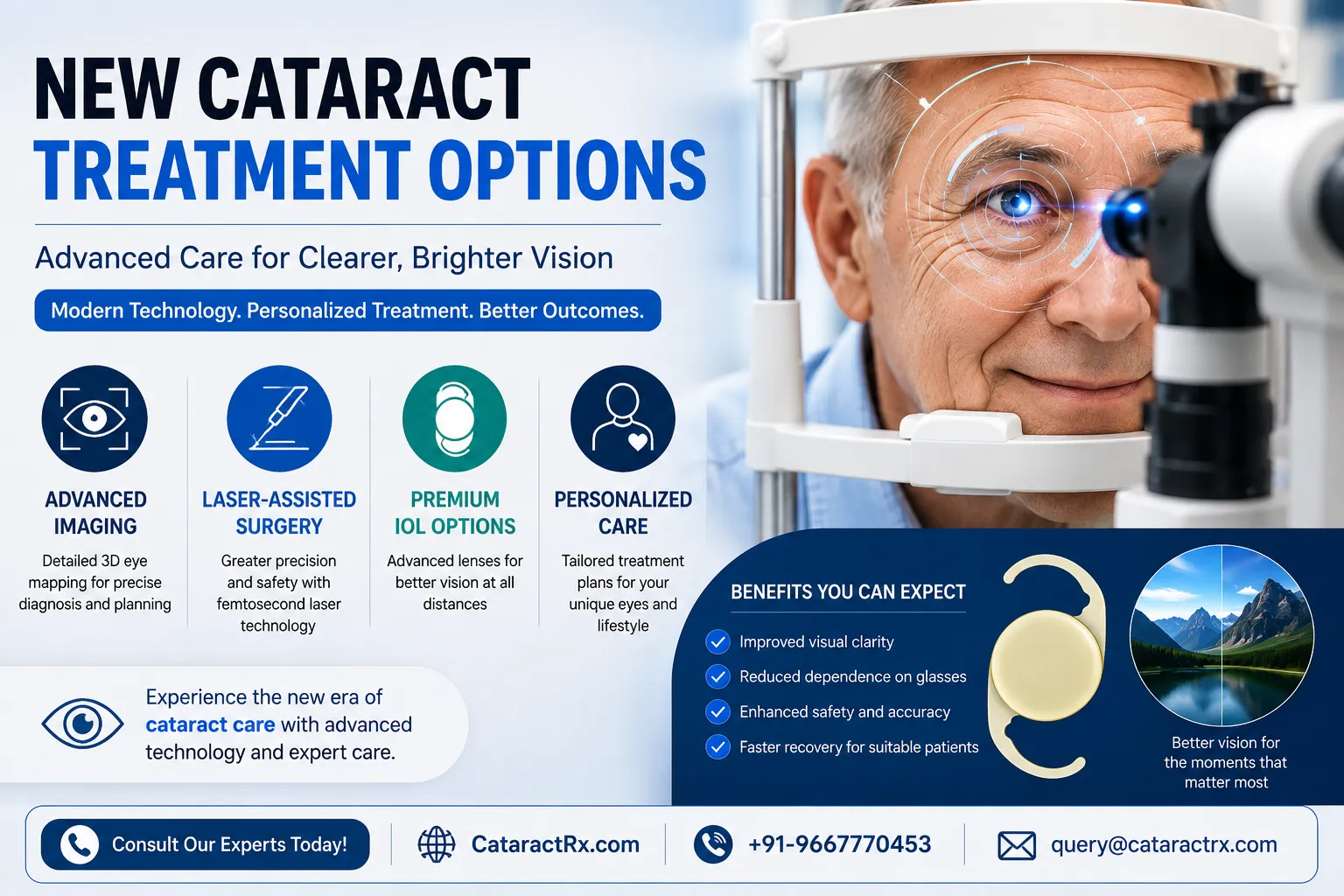
Cataract surgery has entered a new phase where treatment is no longer focused only on removing a cloudy lens. Today, advanced surgical technologies, modern intraocular lenses, detailed eye measurements, and personalized treatment planning can help doctors address a patient’s individual vision goals. For many people, the aim is to achieve clearer vision while also making everyday activities such as reading, using digital devices, driving, and enjoying outdoor activities more comfortable. Understanding the available choices can help patients have a more informed discussion with their eye-care specialist.
What Makes Cataract Treatment More Advanced Today?
The new cataract treatment options focus on precision and personalized care. Femtosecond laser technology, advanced imaging, and 3D eye mapping can support accurate surgical planning and treatment. Small-incision techniques may also help promote smoother recovery for suitable patients. However, the right approach depends on individual eye health, lifestyle, and the surgeon’s clinical judgment.
Which Lens Options Can Support Clearer Vision?
An intraocular lens, or IOL, replaces the eye’s natural cloudy lens during cataract surgery. Different lens designs are intended to provide different ranges of vision, so lens selection is an important part of treatment planning.
Patients may encounter monofocal, extended depth-of-focus, multifocal, and trifocal lens options. The latest intraocular lens designs may provide broader functional vision for selected patients, potentially helping with activities at different distances.
When discussing lens choices, patients should consider:
- Distance vision: Useful for driving, watching television, walking, and outdoor activities.
- Intermediate vision: Helpful for computers, tablets, cooking, and seeing dashboards.
- Near vision: Important for reading books, newspapers, labels, and smartphones.
- Visual comfort: Patients should discuss possible glare, halos, contrast sensitivity, and night-vision concerns.
No single IOL is perfect for everyone. A lens that works well for one patient may not be suitable for another. A detailed examination helps the ophthalmologist match the lens to the patient’s eye condition, expectations, and daily routine.
How Can Technology Improve Surgical Precision?
Advanced cataract surgery combines expert care with technologies such as image-guided systems, detailed eye mapping, and laser-assisted techniques to support precise treatment.Micro-incision approaches may also support smoother recovery for suitable patients. A premium IOL lens can offer a broader range of vision, but its suitability depends on eye health, lifestyle, and visual expectations.The right combination of technology, IOL selection, and clinical expertise can help support better personalized outcomes.
Can Personalized Planning Improve Cataract Care?
Every patient has different vision needs. A computer user, frequent night driver, or regular reader may require different visual outcomes after cataract surgery.During an eye assessment, doctors consider eye measurements, overall eye health, lifestyle, and vision goals to recommend a suitable procedure and IOL.Innovative cataract care combines advanced technology, surgical expertise, personalized IOL selection, and follow-up care. However, results can vary, and advanced technology cannot guarantee complete freedom from glasses.
What Should You Consider Before Cataract Surgery?
Choosing cataract treatment should begin with a comprehensive eye examination. Rather than selecting a lens based only on advertisements or technology claims, patients should understand how each option relates to their own vision and eye health.
Before making a decision, consider these important factors:
- Lifestyle: Think about reading, computer use, driving, hobbies, and outdoor activities.
- Vision priorities: Decide which distances are most important in your everyday life.
- Night-time needs: Tell your doctor if you regularly drive at night or are concerned about glare and halos.
- Eye health: Conditions affecting the cornea, retina, or other parts of the eye can influence IOL suitability.
- Recovery: Ask about healing, follow-up visits, and when you can return to normal activities.
- Long-term expectations: Discuss whether reducing spectacle dependence is an important goal for you.
It is also useful to ask your ophthalmologist about the advantages and limitations of each recommended option. A well-informed decision should balance expected visual benefits, individual eye health, lifestyle needs, and realistic outcomes.
Where Can You Learn More About Modern Cataract Care?
The evolution of cataract surgery gives patients more opportunities to discuss personalized treatment than ever before. Laser-assisted procedures, advanced imaging, micro-incision techniques, extended depth-of-focus lenses, multifocal and trifocal IOLs, and personalized planning can all play a role in modern cataract treatment.
However, having more choices also makes professional guidance more important. The right treatment depends on the condition of the eye and what the patient wants from their vision after surgery. A comprehensive evaluation can help identify suitable options and explain what each approach can realistically achieve.
Looking for Personalized Cataract Guidance?
If you are considering advanced cataract treatment or want to understand which IOL may suit your vision goals, speak with an experienced ophthalmologist. CataractRx can help patients explore suitable cataract treatment and lens options based on individual requirements. Contact +91-9667770453 or query@cataractrx.com to learn more and schedule a consultation.