Natural Dog Chew: Benefits, Types, and Tips for Safe Chewing
By Ugly Chews
12 Views
Chewing is a normal behavior for dogs of all ages. It provides an engaging activity, encourages exploration, and can help keep dogs occupied throughout the day. Providing a suitable chew can also redirect attention away from furniture, shoes, and other household objects. However, not every chew is appropriate for every dog, making it important to consider ingredients, texture, and size before introducing a new product.
A natural dog chew can be an appealing option for pet owners who prefer straightforward ingredients and minimally processed products. These chews may be made from animal hides, dried meat, or other suitable edible ingredients. Depending on the product, they can offer a short treat or a longer chewing activity. The right option depends on your dog's size, age, chewing strength, dietary requirements, and individual preferences. Understanding these factors helps you select a product that fits your dog's routine while prioritizing safety.
What Makes a Dog Chew Natural?
Natural dog chews are generally made from naturally sourced ingredients, sometimes using relatively simple preparation methods. Some contain a single primary ingredient, while others combine several ingredients to achieve a particular texture or flavor.
Pet owners should remember that the term "natural" does not automatically mean a product is completely safe, highly nutritious, or suitable for every dog. Reading the label is essential for understanding the ingredients, preparation process, and intended use.
When comparing products, consider the following characteristics:
-
Simple ingredients: A shorter ingredient list may make it easier to identify potential allergens.
-
Minimal processing: Some products are prepared through drying rather than extensive manufacturing.
-
Suitable texture: Different dogs require different chew textures depending on their chewing habits and dental health.
-
Appropriate sizing: The product should be suitable for the dog's body size and chewing strength.
-
Clear instructions: Packaging should explain how to serve, supervise, and store the chew.
These details can help you make a more informed decision about your dog's treats.
Benefits of Natural Dog Chews
Encouraging Natural Chewing Behavior
Dogs naturally use their mouths to investigate objects and interact with their surroundings. Offering an appropriate chew can give them a suitable outlet for this behavior and help redirect unwanted chewing toward an intended item.
Chews should complement regular exercise, playtime, and training. If your dog frequently destroys objects or attempts to swallow everything they chew, consider alternative enrichment activities and seek veterinary or qualified behavioral guidance when appropriate.
Providing Mental Stimulation
Chewing can keep dogs engaged and provide sensory enrichment. Some dogs enjoy working on an appropriate chew during quiet periods at home, although individual preferences vary.
You can support enrichment by rotating suitable activities, including interactive toys, supervised play, scent games, and training exercises. A chew should never be used as a substitute for attention, exercise, or social interaction.
Supporting Dental Care
The friction created by certain chews may help remove some material from tooth surfaces. However, the benefit depends on the product's design and texture, and ordinary chews should not be treated as a replacement for dental hygiene.
Extremely hard chews can fracture teeth. Regular brushing with dog-safe toothpaste and routine veterinary dental examinations remain important for maintaining oral health.
Popular Types of Natural Dog Chews
Beef-Hide Chews
Beef-hide chews are prepared from cattle hide and are available in different shapes, sizes, and textures. Some products retain natural hair, while others have a smoother finish.
These chews may provide an extended chewing activity for suitable dogs. However, beef hide can create choking and digestive-obstruction risks if large pieces are swallowed. Some dogs may also experience digestive upset.
Choose an appropriate size, supervise your dog continuously, and remove small ends or damaged pieces before they can be swallowed.
Dried Meat Treats
Dried meat treats are commonly used as rewards during training or as occasional snacks. Their nutritional value and texture depend on the ingredients and preparation method.
Check the calorie content and ingredient list, particularly if your dog has food sensitivities or requires a special diet. Introduce unfamiliar treats gradually and monitor your dog for digestive changes.
Smaller Chews and Edible Pieces
Smaller chews may be convenient for certain dogs, but their size must be considered carefully. A piece that fits entirely inside a dog's mouth may present a choking risk, especially for dogs that gulp food.
Choose a suitable product based on your dog's eating and chewing habits rather than selecting a treat simply because it is small or easy to handle.
How to Choose the Right Natural Dog Chew
Consider Your Dog's Size and Age
Puppies, adult dogs, and senior dogs may need different chew textures and sizes. Puppies require age-appropriate products, while older dogs with sensitive teeth may need softer alternatives.
Always follow product-specific age and size guidance. Ask your veterinarian for advice if your dog has dental problems, digestive issues, or other health concerns.
Understand Your Dog's Chewing Style
Gentle chewers may handle certain products differently from powerful chewers. Avoid excessively hard items and products that can break into sharp pieces. If your dog tries to swallow chews quickly, consider safer alternatives recommended by your veterinarian.
Review the Ingredients
Look for clear ingredient information and check whether the product contains anything your dog cannot tolerate. Single-ingredient options can make ingredient monitoring easier, but they are not automatically safer or more suitable for every pet.
Practice Safe Chewing
Always supervise chewing sessions. Inspect the product regularly and remove it if it becomes damaged, develops sharp edges, or shrinks enough to swallow. Never leave a dog unattended with an edible chew, even if the product is marketed as long-lasting.
Ugly Chews as a Suggestion for Natural Dog Chews
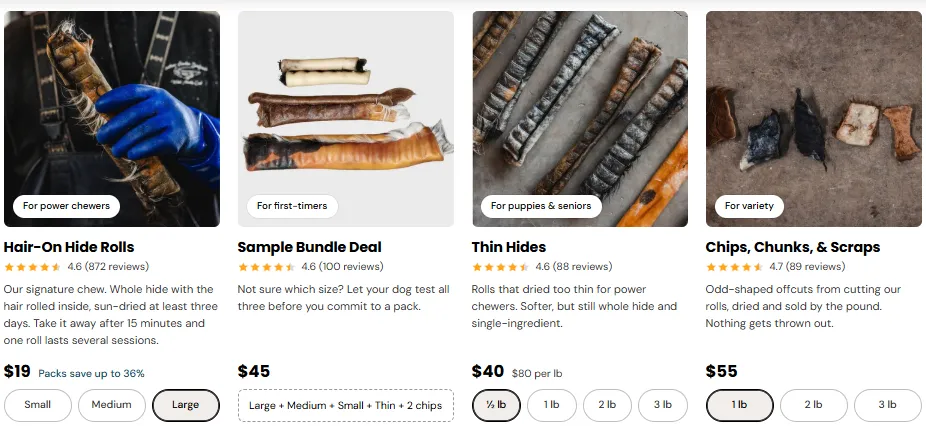
Pet owners looking for minimally processed chewing options can consider Ugly Chews, a family-owned business focused on natural beef-hide chews and single-ingredient dog treats.
Ugly Chews sources cattle hides from ranch partners in Wyoming, Utah, and Idaho. The hides are cleaned with water and dried in direct sunlight without chemical treatments. Available products include hair-on hide rolls and chips, chunks, and scraps, providing different formats for owners to consider.
These products may suit some dogs that enjoy chewing, but beef-hide chews are not appropriate for every pet. Owners should assess their dog's chewing habits, select a suitable size, and supervise every session to reduce the risk of choking or swallowing large pieces.
You can view available options in the Ugly Chews natural dog treats collection and review individual product details before purchasing.
Storage and Feeding Guidelines
Proper storage helps preserve the quality of natural chews. Follow the manufacturer's instructions regarding temperature, airflow, and packaging, especially for minimally processed products.
Keep chews in the recommended storage conditions and inspect them before serving. Discard any product with visible mold, unusual odors, unexpected moisture, or signs of contamination.
Treats and chews should generally account for no more than 10% of a dog's daily calorie intake, with the remainder coming from a complete and balanced diet. Fresh water should always be available.
Frequently Asked Questions
Are natural dog chews suitable for all dogs?
No. Suitability depends on age, size, ingredients, dental health, and chewing behavior. Dogs with medical or dietary concerns may need specific alternatives.
Can natural dog chews clean teeth?
Some chews may help reduce surface debris through friction, but they cannot replace regular brushing and veterinary dental care.
How often should I give my dog a chew?
Frequency depends on the product, calorie content, and individual needs. Follow the manufacturer's instructions and keep all treats within appropriate daily calorie limits.
Are single-ingredient chews a good option?
They can simplify ingredient monitoring, but safety also depends on texture, size, digestibility, and how the dog chews.
Conclusion
A natural dog chew can provide enjoyment, mental engagement, and an appropriate outlet for normal chewing behavior. Choosing the right product requires attention to ingredients, texture, size, and your dog's individual needs. Supervision, proper storage, and moderation are essential for responsible treat use.
For owners interested in minimally processed beef-hide products, Ugly Chews offers several options worth considering. By selecting suitable chews and following safe feeding practices, you can make chewing a more enjoyable and responsible part of your dog's daily routine.