Muscle Pain After Long Hours of Sitting: Causes and Care
By yana James
7 Views
Spending long hours sitting at a desk, working on a computer, driving, or studying can contribute to muscle pain and stiffness. Staying in the same position for an extended period may place continuous stress on the back, neck, shoulders, and hips. Understanding the common causes and simple care strategies can help support better movement and comfort.
Why Does Sitting for Long Hours Cause Muscle Pain?
Long periods of sitting can reduce movement and keep certain muscles under continuous tension. Poor posture can add additional strain, particularly around the lower back, neck, and shoulders.
Several factors may contribute to discomfort, including:
- Sitting in the same position for too long
- Poor sitting posture
- Lack of regular movement
- An improperly adjusted chair or desk
- Limited stretching during the workday
- Existing muscle tightness or weakness
Over time, these factors may contribute to muscle stiffness, soreness, or discomfort when standing and moving.
Common Areas Affected by Prolonged Sitting
Lower Back
The lower back often experiences significant stress during prolonged sitting. Slouching or using a chair without adequate support may increase pressure around the lumbar area.
Neck and Shoulders
Looking down at a laptop or phone for extended periods can place strain on the neck and upper shoulder muscles. This may result in tightness, soreness, or reduced comfort when moving the head.
Hips
Sitting keeps the hips in a bent position for long periods. Limited movement may contribute to tight hip muscles and discomfort when standing after extended sitting.
How to Reduce Muscle Pain From Sitting
Making small changes throughout the day can help reduce the effects of prolonged sitting.
Take Regular Movement Breaks
Try not to remain seated continuously for several hours. Stand up, walk around, or perform gentle movements at regular intervals. Short activity breaks can help reduce stiffness and encourage circulation.
Improve Your Sitting Position
Keep your feet comfortably supported, position your screen near eye level, and avoid excessive leaning forward. Your chair should provide suitable support for your back.
Stretch Gently
Simple stretches for the back, shoulders, neck, hips, and legs can help maintain flexibility. Stretching should be comfortable and should not cause sharp or severe pain.
Stay Physically Active
Regular physical activity can support muscle strength and flexibility. Walking, mobility exercises, and appropriate strengthening activities may help counter the effects of a sedentary routine.
When Muscle Pain May Need More Attention
Occasional stiffness after a long workday is common, but persistent or severe discomfort should not be ignored. Consider speaking with a healthcare professional if muscle pain continues despite rest and movement changes or interferes with normal activities.
Medical evaluation may be especially important when pain occurs with significant weakness, numbness, swelling, fever, or after an injury.
Pain O Soma for Acute Musculoskeletal Discomfort
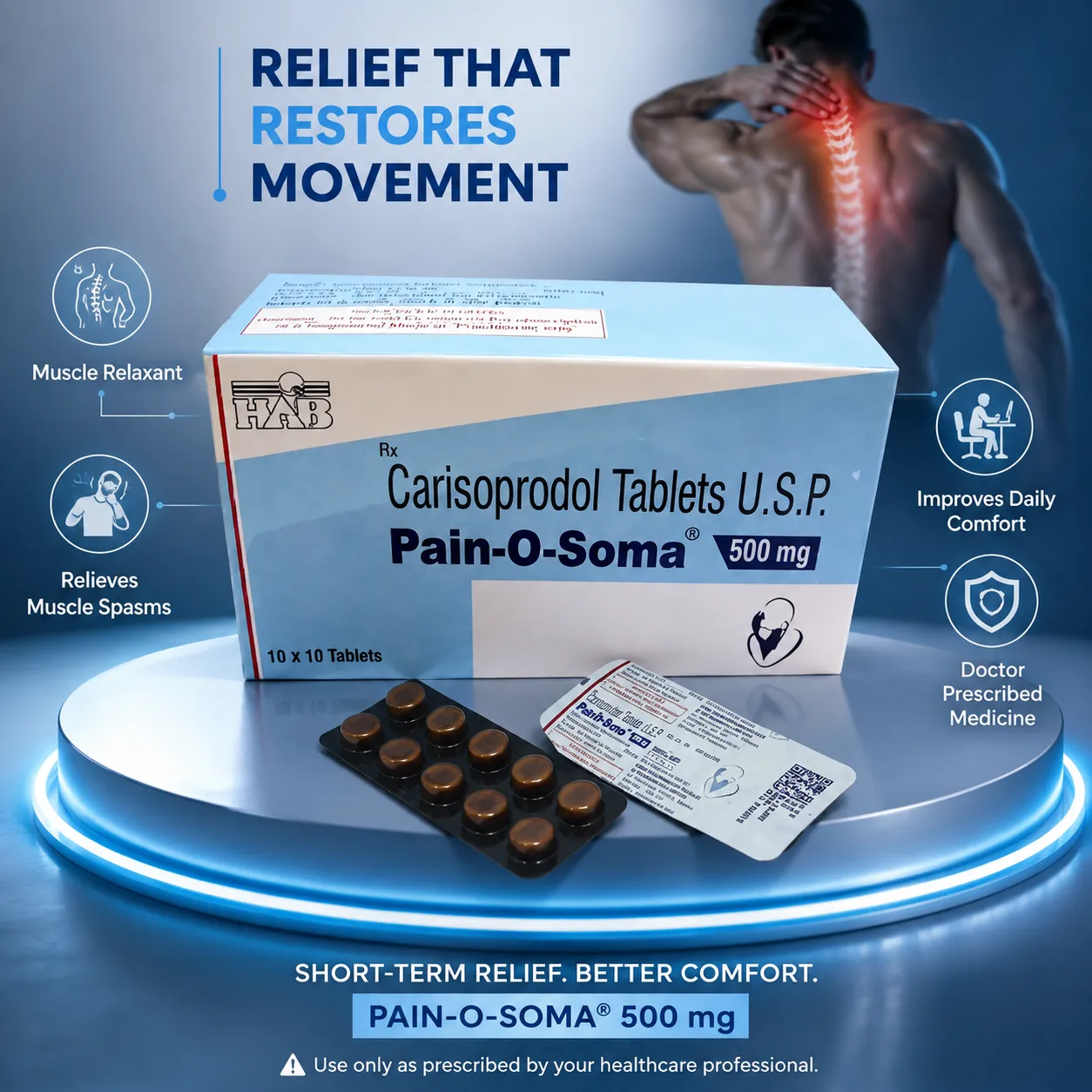
When prolonged sitting contributes to an acute, painful musculoskeletal condition involving muscle spasms or significant discomfort, a healthcare professional may consider prescription treatment such as Pain O Soma (carisoprodol).
Pain O Soma is a prescription muscle relaxant used for the short-term relief of discomfort associated with acute, painful musculoskeletal conditions. It is generally used alongside measures such as rest and physical therapy rather than as a replacement for addressing posture and daily movement habits.
Carisoprodol can cause drowsiness or dizziness. It should therefore be used only as directed by a healthcare professional, and alcohol or other substances that cause sedation may increase these effects. Driving or operating machinery should be avoided if you feel impaired.
Creating a More Comfortable Sitting Routine
Preventing recurring discomfort often involves changing daily habits. Adjust your workstation, take movement breaks, maintain good posture, and include regular physical activity in your routine.
If your work requires sitting for most of the day, alternating between sitting and standing when practical can also encourage more movement throughout the day.
Conclusion
Muscle pain after long hours of sitting can result from prolonged inactivity, poor posture, muscle tension, and inadequate movement. Regular breaks, gentle stretching, proper workstation setup, and physical activity can support muscle comfort.
For acute musculoskeletal conditions involving significant pain or spasms, a healthcare professional can determine whether additional treatment, including a prescription muscle relaxant such as Pain O Soma, is appropriate.