What Is BIS ISI Certification? A Complete Guide for Manufacturers and Consumers
7 Views
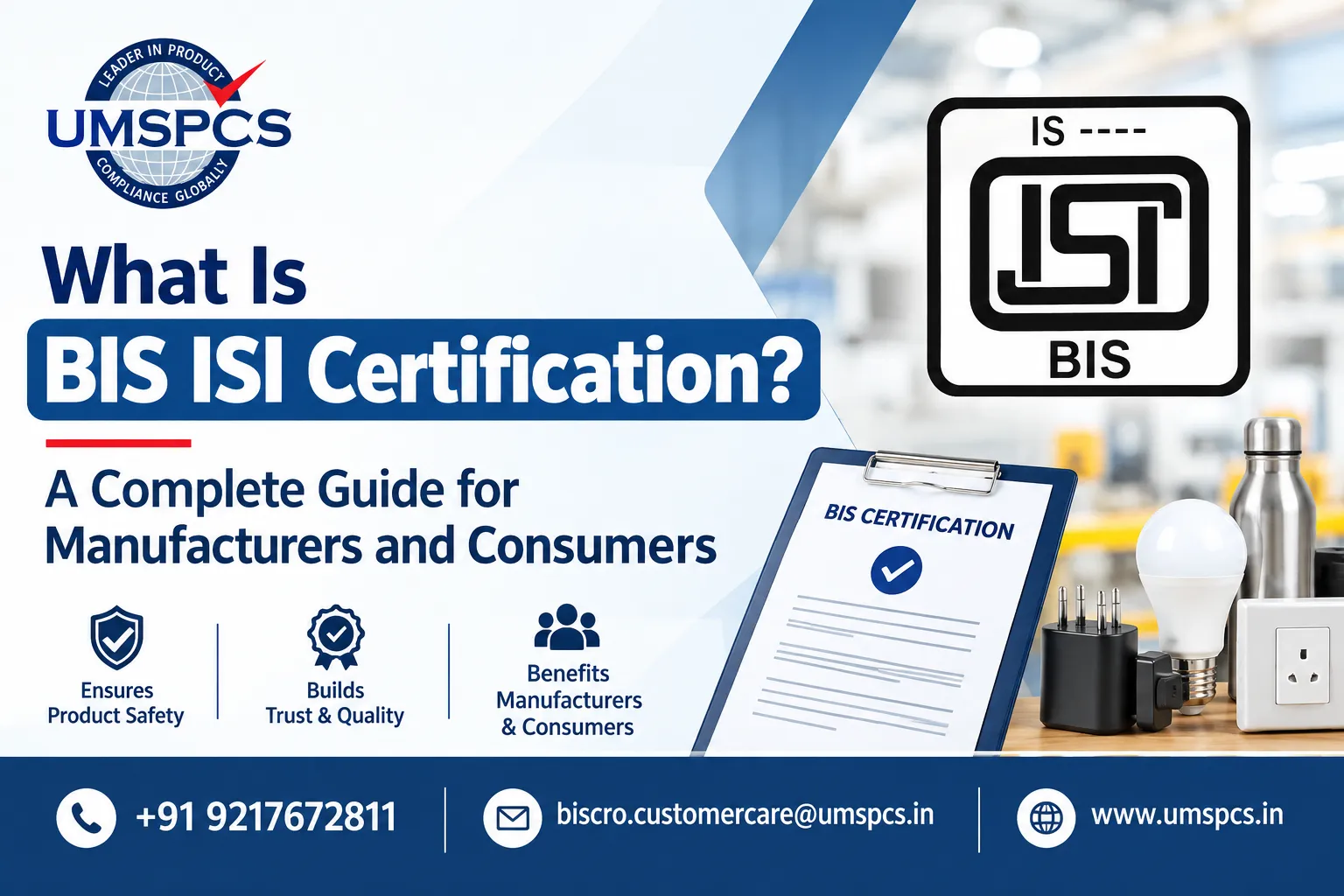
Have you ever held a pressure cooker, a cement bag, or an electrical switch in your hands and observed a triangle symbol with ISI inscribed in it? You have already come across one of the most reliable quality marks of India. But what is the meaning of the mark, who requires it, and why is it so important for businesses in India?
Understanding BIS and the ISI Mark
BIS ISI certification is an acronym for the Bureau of Indian Standards, the government body responsible for prescribing standards for products available in the country. Under the regulations of BIS, manufacturers can get their products marked with the ISI mark, which means that the product complies with the designated IS (Indian Standards) for that type of product.
Let's imagine it as a quality passport. By looking at the ISI mark on a product, the consumer understands that the product is certified according to the national standards regarding safety, durability, and quality. For the manufacturer, it is more than a label; it is a proof of credibility and reliability.
Why Was BIS ISI Certification Introduced?
Before standardization, Indian consumers had no reliable way to judge whether a product was safe or reliable. Electrical appliances could short-circuit, construction materials could fail under stress, and there was little accountability. BIS was established to fix exactly this problem — creating uniform standards that protect consumers while also pushing manufacturers to improve their processes and quality control.
Over the decades, BIS certification has expanded to cover hundreds of product categories, from cement, steel, and LPG cylinders to electronics, toys, packaged drinking water, and even helmets.
Which Products Need ISI Certification?
Some products fall under mandatory BIS certification, meaning they legally cannot be sold in India without it. These typically include:
- Electrical appliances (switches, wires, cables, MCBs)
- Cement and construction materials
- LPG cylinders and gas-related equipment
- Toys
- Packaged drinking water and food products
- Automotive components
- Helmets and safety gear
Other products may go through voluntary certification, where manufacturers choose to get certified to build consumer trust and gain a competitive edge, even though it isn't legally required.
Read more:- BIS CRS Consultant
The BIS ISI Certification Process
Getting certified isn't just a paperwork exercise — it involves genuine product testing and factory evaluation. Here's a simplified look at how the process generally works:
- Application Submission – The manufacturer applies to BIS, specifying the product and relevant Indian Standard.
- Factory Inspection – BIS officials visit the manufacturing unit to assess production processes, quality control systems, and testing facilities.
- Sample Testing – Product samples are tested in BIS-recognized or in-house labs to verify compliance with the specified standard.
- Documentation Review – Technical files, test reports, and quality manuals are reviewed thoroughly.
- License Grant – Once everything checks out, BIS issues the license, allowing the manufacturer to use the ISI mark on their product.
- Surveillance & Renewal – Certification isn't a one-time event. BIS conducts periodic surveillance audits, and the license must be renewed to ensure ongoing compliance.
This entire process can take anywhere from a few weeks to a few months, depending on the product category, documentation readiness, and how quickly test results come in.
Why BIS ISI Certification Matters for Your Business
Many manufacturers view certification as just another regulatory hurdle. In reality, it's a strategic asset:
- Market Access: Without it, mandatory-category products simply cannot be legally sold in India.
- Consumer Trust: The ISI mark instantly signals quality and safety, reducing buyer hesitation.
- Government Tenders: Many government and institutional buyers require ISI-certified products as a bidding prerequisite.
- Export Credibility: An ISI mark often strengthens a brand's reputation even in international markets, since it reflects adherence to recognized quality benchmarks.
- Reduced Liability: Certified products undergo rigorous testing, which lowers the risk of safety failures, recalls, and legal disputes.
Common Challenges Manufacturers Face
While the intent behind BIS certification is straightforward, the actual journey can be complicated for first-time applicants. Common hurdles include:
- Understanding which Indian Standard applies to your exact product
- Preparing the technical documentation correctly
- Passing factory audits, especially for smaller manufacturing units
- Navigating testing lab coordination and interpreting results
- Managing renewal timelines and surveillance visits without disruption
This is where expert consultation becomes invaluable. Instead of manufacturers spending months figuring out the bureaucracy on their own, working with an experienced certification partner can dramatically simplify the process.
Read more:- FMCS Consultant
How UMSPCS Can Help
This is where UMSPCS steps in. As a certification consultancy firm, UMSPCS works exclusively with helping businesses obtain the BIS ISI certification by taking care of the whole process right from finding the right Indian Standard for your product, completing the documentation, scheduling factory audit and lab testing, and much more. Rather than getting bogged down by all the technical jargon or being delayed by inadequate application forms, businesses that deal with UMSPCS will have a much easier and faster experience in becoming certified.
If you are a startup producing its first batch of electric goods or a business looking to expand into the world of mandatory certification, then you definitely need a professional such as UMSPCS in your corner.
Conclusion
Obtaining BIS ISI certification is not just about adhering to regulations; it is about gaining a seal of trust that ensures safety of consumers and helps improve the image of the brand. As far as the manufacturers are concerned, getting acquainted with the process, requirements, and value of the certification in question is a must for sustainable development in the Indian market. And if you know what to do, for example, thanks to the expertise of (UMSPCS) then you can easily go through this process.
If you plan to sell a product that should be certified according to the mandatory BIS standards, or even a product that would benefit from obtaining ISI voluntarily, you should start the process as soon as possible.
Frequently Asked Questions (FAQs)
1. Is BIS ISI certification mandatory for all products? No.
Only specific product categories notified by the government require mandatory certification. Others can opt for voluntary certification to build consumer trust.
2. How long does it take to get BIS ISI certification?
Depending on the product category and documentation readiness, the process typically takes a few weeks to a few months.
3. What happens if I sell a mandatory-category product without ISI certification?
It's illegal, and the product can be seized, along with penalties imposed on the manufacturer or seller under BIS regulations.
4. Does the ISI mark need to be renewed?
Yes. BIS certification is subject to periodic surveillance and must be renewed as per the license validity period.
5. Can a consultancy like UMSPCS handle the entire certification process for me?
Yes. Consultancies like UMSPCS assist with everything from identifying applicable standards to documentation, audit coordination, and renewal management — reducing the burden on manufacturers.
6. Is BIS certification only for Indian manufacturers?
No. Foreign manufacturers exporting mandatory-category products to India also need to obtain BIS certification before selling in the Indian market.