Most Advanced Digital Lending Software: How Platforms Like Roopya Are Reshaping the Loan Industry
By Roopya
64 Views
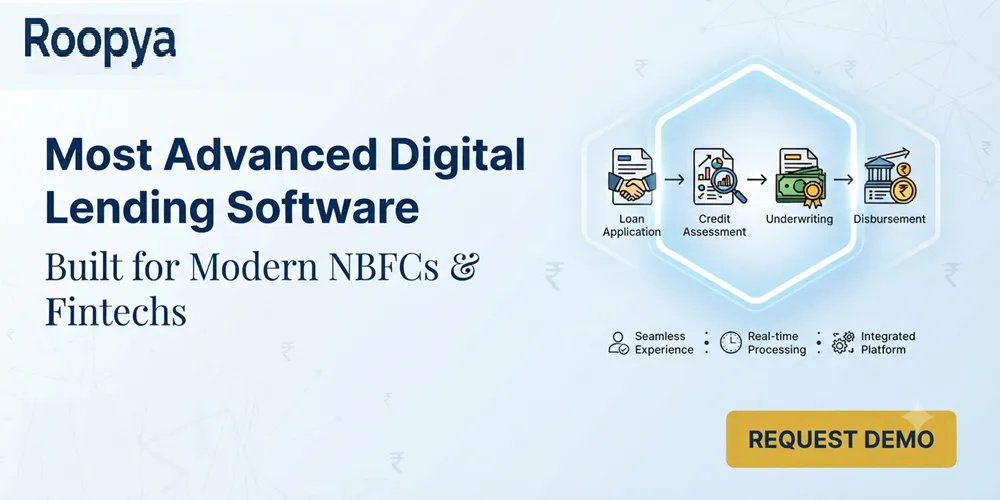
The lending industry has undergone a quiet revolution over the past decade. What once required weeks of paperwork, in-person branch visits, and manual credit checks can now happen in minutes, entirely through software. This shift has been driven by the rise of digital lending software — technology platforms that automate every stage of the loan lifecycle, from application and credit assessment to disbursal and collections.
Among the platforms leading this transformation is Roopya.money, a digital lending solution built to help banks, NBFCs (Non-Banking Financial Companies), fintech startups, and microfinance institutions modernize their lending operations. In this article, we'll explore what makes digital lending software "advanced," the core features that separate leading platforms from legacy systems, and why choosing the right technology partner matters more than ever in 2026.
What Is Digital Lending Software?
Digital lending software is a technology stack that digitizes and automates the end-to-end loan process. Instead of relying on physical documentation, manual underwriting, and disconnected back-office systems, lenders use a unified digital platform to:
- Capture borrower applications online or via mobile apps
- Verify identity and financial documents digitally (eKYC)
- Pull and analyze credit bureau data instantly
- Run automated risk scoring and underwriting models
- Generate loan agreements and e-sign them
- Disburse funds directly to bank accounts
- Manage repayments, collections, and reporting
The goal is simple: reduce the turnaround time (TAT) for loan approval from days or weeks to minutes, while lowering operational costs and minimizing human error.
Why "Advanced" Matters: The Evolution of Lending Technology
Not all digital lending software is created equal. Early-generation loan management systems (LMS) simply moved paper forms online — they digitized data entry but still relied on manual review, siloed databases, and rigid workflows. The most advanced digital lending software available today goes far beyond that. It is:
- API-first and modular — able to plug into credit bureaus, payment gateways, KYC providers, and accounting systems without custom development.
- AI and ML-powered — using machine learning models for credit scoring, fraud detection, and predictive collections.
- Cloud-native — built for scalability, allowing lenders to handle sudden spikes in loan applications without infrastructure strain.
- Configurable, not just customizable — enabling business teams (not just developers) to change loan products, interest rate rules, and approval workflows through no-code or low-code interfaces.
- Compliant by design — built with regulatory requirements (RBI guidelines, data localization, digital lending guidelines) baked into the architecture.
Platforms like Roopya.money are built around these principles, positioning themselves as end-to-end digital lending infrastructure rather than a single-purpose tool.
Core Features of the Most Advanced Digital Lending Software
1. Loan Origination System (LOS)
The Loan Origination System is the front door of any lending platform. Advanced LOS modules allow borrowers to apply through web, mobile, or partner integrations (embedded finance), with dynamic forms that adjust based on loan type — personal, business, gold, education, or micro-loans.
Key capabilities include:
- Multi-channel application intake (web, app, WhatsApp, partner APIs)
- Real-time data validation
- Document upload with OCR-based auto-extraction
- Co-applicant and guarantor workflows
2. eKYC and Digital Identity Verification
Manual KYC is one of the biggest bottlenecks in traditional lending. Advanced platforms integrate:
- Aadhaar-based eKYC and video KYC
- PAN verification
- Bank statement analysis (via account aggregator frameworks)
- Liveness detection and facial recognition to prevent identity fraud
This reduces onboarding time from days to under five minutes in many cases.
3. AI-Driven Credit Underwriting
This is arguably the most critical differentiator among lending platforms. Advanced underwriting engines combine traditional credit bureau data (CIBIL, Experian, Equifax) with alternative data sources such as:
- Bank transaction patterns
- Utility bill payment history
- Digital footprint and device data
- GST and business filings (for MSME lending)
Machine learning models score applicants more accurately than static rule-based systems, especially for borrowers with thin or no credit history — a major advantage in markets like India, where a large population remains underserved by traditional credit scoring.
4. Configurable Loan Product Engine
Lenders rarely offer just one loan product. Advanced software allows institutions to configure:
- Interest rate models (flat, reducing balance, hybrid)
- Tenure and repayment schedules
- Processing fees and penalty structures
- Eligibility rules per product
This flexibility means a single platform can support personal loans, business loans, gold loans, and BNPL (Buy Now Pay Later) products without needing separate systems.
5. Automated Disbursal and Payments Integration
Once a loan is approved, advanced platforms integrate directly with payment rails (UPI, NEFT, IMPS, NACH) to disburse funds instantly and set up automated repayment mandates. This eliminates manual intervention in the disbursal process and reduces the risk of delayed funding.
6. Loan Management System (LMS)
Post-disbursal, the Loan Management System tracks the entire loan lifecycle:
- EMI scheduling and tracking
- Automated reminders via SMS/WhatsApp/email
- Prepayment and foreclosure handling
- NPA (Non-Performing Asset) flagging
- Ledger and accounting integration
7. Collections and Recovery Automation
Advanced systems use predictive analytics to identify borrowers at risk of default before they miss a payment, enabling proactive outreach. Automated dialers, WhatsApp bots, and digital payment reminders reduce collection costs while improving recovery rates.
8. Regulatory Compliance and Reporting
With regulators tightening oversight on digital lending (particularly in India, following RBI's Digital Lending Guidelines), compliance features are no longer optional. Advanced platforms include:
- Built-in Key Fact Statement (KFS) generation
- Data localization and storage compliance
- Audit trails for every loan decision
- Grievance redressal workflows
9. Analytics and Business Intelligence Dashboards
Real-time dashboards give lenders visibility into portfolio health, approval rates, turnaround times, delinquency trends, and product-level profitability — enabling data-driven decision-making rather than reactive management.
10. White-Label and Embedded Lending Capabilities
Many advanced platforms, including Roopya.money, offer white-label solutions that let banks, NBFCs, and fintech companies launch their own branded lending products quickly, as well as embedded lending APIs that allow e-commerce platforms, payroll providers, and marketplaces to offer credit at the point of need.
How Roopya.money Fits Into the Advanced Lending Landscape
Roopya.money positions itself as a digital lending technology platform aimed at simplifying and accelerating the loan lifecycle for lenders and borrowers alike. While specific product capabilities are best explored directly on the platform, the broader value proposition aligns with the industry shift toward:
- Speed — reducing loan processing time through automation
- Accessibility — making credit available to a wider range of borrowers, including those with limited credit history
- Transparency — providing clear terms, fees, and repayment structures upfront
- Technology-first infrastructure — built to integrate with modern financial ecosystems rather than legacy banking cores
For lenders evaluating digital transformation partners, platforms like Roopya represent the category of solution built specifically to modernize lending operations without the multi-year implementation cycles associated with legacy core banking upgrades.
Benefits of Adopting Advanced Digital Lending Software
For Lenders (Banks, NBFCs, Fintechs)
- Faster turnaround time — loans that took days now take minutes
- Lower operational costs — automation reduces manual staffing needs
- Better risk management — AI-driven scoring reduces default rates
- Scalability — cloud infrastructure handles demand spikes effortlessly
- Regulatory readiness — compliance is built into workflows, reducing legal risk
- Improved customer experience — faster approvals lead to higher conversion and retention
For Borrowers
- Convenience — apply from a phone, no branch visit required
- Speed — instant or same-day approval and disbursal in many cases
- Transparency — clear visibility into interest rates, fees, and repayment terms
- Wider access to credit — alternative data scoring helps thin-file and new-to-credit borrowers qualify
- Flexible products — tailored loan options based on individual financial profiles
Key Trends Shaping Digital Lending Software in 2026
1. Generative AI in Underwriting and Customer Support
Beyond traditional ML scoring models, generative AI is now being used for document summarization, chatbot-driven loan guidance, and even drafting personalized loan offers based on a borrower's financial behavior.
2. Account Aggregator Ecosystem Integration
In markets like India, the Account Aggregator (AA) framework allows borrowers to securely share financial data across institutions with consent. Advanced lending platforms are increasingly built to plug directly into this ecosystem, improving underwriting accuracy without compromising data privacy.
3. Embedded Finance and BNPL Expansion
Lending is increasingly happening at the point of transaction — inside e-commerce checkouts, payroll apps, and B2B marketplaces — rather than through standalone loan applications. This requires lending software with robust, developer-friendly APIs.
4. Hyper-Personalization of Loan Products
Instead of one-size-fits-all loan products, advanced platforms are enabling dynamic pricing and terms tailored to individual risk profiles, increasing both approval rates and profitability.
5. Stronger Fraud Prevention
As digital lending scales, so does fraud risk. Leading platforms are investing in device fingerprinting, behavioral biometrics, and network-level fraud detection to protect both lenders and borrowers.
6. Focus on Financial Inclusion
A growing share of digital lending innovation is aimed at serving underbanked populations — gig workers, small merchants, and first-time borrowers — using alternative data and simplified digital journeys.
How to Choose the Right Digital Lending Software
If you're a financial institution or fintech evaluating lending technology partners, consider these criteria:
- Integration capability — Does it offer APIs for credit bureaus, KYC providers, and payment rails?
- Configurability — Can your business team adjust loan products without heavy engineering support?
- Compliance readiness — Does it support current regulatory requirements out of the box?
- Scalability — Can it handle growth in loan volume without performance degradation?
- Security — Does it meet data protection and encryption standards?
- Analytics depth — Does it provide real-time, actionable business intelligence?
- Vendor track record — Does the provider have proven experience supporting lenders in your market segment?
Digital lending software has moved from a "nice-to-have" competitive edge to a fundamental requirement for any lender that wants to remain relevant. The most advanced platforms combine automation, artificial intelligence, regulatory compliance, and seamless integrations to deliver faster approvals, better risk management, and broader financial access.
Platforms like Roopya.money reflect this new generation of lending technology — built to help financial institutions modernize their operations while making credit more accessible and transparent for borrowers. As the lending industry continues to evolve through 2026 and beyond, choosing the right digital lending infrastructure will be one of the most consequential technology decisions a financial institution makes.
Frequently Asked Questions (FAQ)
1. What is digital lending software? Digital lending software is a technology platform that automates the entire loan process — from application and identity verification to credit underwriting, disbursal, and repayment tracking — replacing manual, paper-based lending workflows.
2. What makes lending software "advanced" compared to traditional systems? Advanced digital lending software uses AI/ML-based underwriting, cloud-native infrastructure, API integrations with KYC and payment providers, configurable loan products, and built-in regulatory compliance, rather than relying on rigid, manual, rule-based systems.
3. How does AI improve loan underwriting? AI models analyze both traditional credit bureau data and alternative data (bank transactions, utility payments, digital footprint) to assess creditworthiness more accurately, especially for borrowers with limited or no credit history.
4. Is digital lending software secure? Reputable platforms use encryption, secure eKYC processes, fraud detection systems, and comply with data protection regulations to safeguard both lender and borrower information.
5. Can digital lending software support multiple loan products? Yes. Advanced platforms feature configurable loan product engines that allow lenders to offer personal loans, business loans, gold loans, BNPL, and other credit products from a single system.
6. How fast is loan approval with digital lending platforms? Depending on the lender's configuration and the borrower's data availability, approvals can happen within minutes, compared to days or weeks with traditional processes.
7. What is Roopya.money? Roopya.money is a digital lending platform focused on simplifying and accelerating the loan lifecycle for lenders and borrowers through modern, technology-driven infrastructure. Visit roopya.money for more details.
8. Who uses digital lending software? Banks, NBFCs, microfinance institutions, fintech startups, and embedded finance providers (such as e-commerce and payroll platforms offering credit) use digital lending software to manage their loan operations.
9. Does digital lending software help financial inclusion? Yes. By using alternative data and simplified digital onboarding, advanced lending platforms can extend credit access to underbanked populations who may lack traditional credit histories.
10. What should I look for when choosing a digital lending software provider? Key factors include integration capabilities, configurability, regulatory compliance, scalability, security standards, analytics features, and the vendor's experience in your specific market.