Modern Saree Styles That Retain the Charm of Traditional Weaving
By Aparna
14 Views
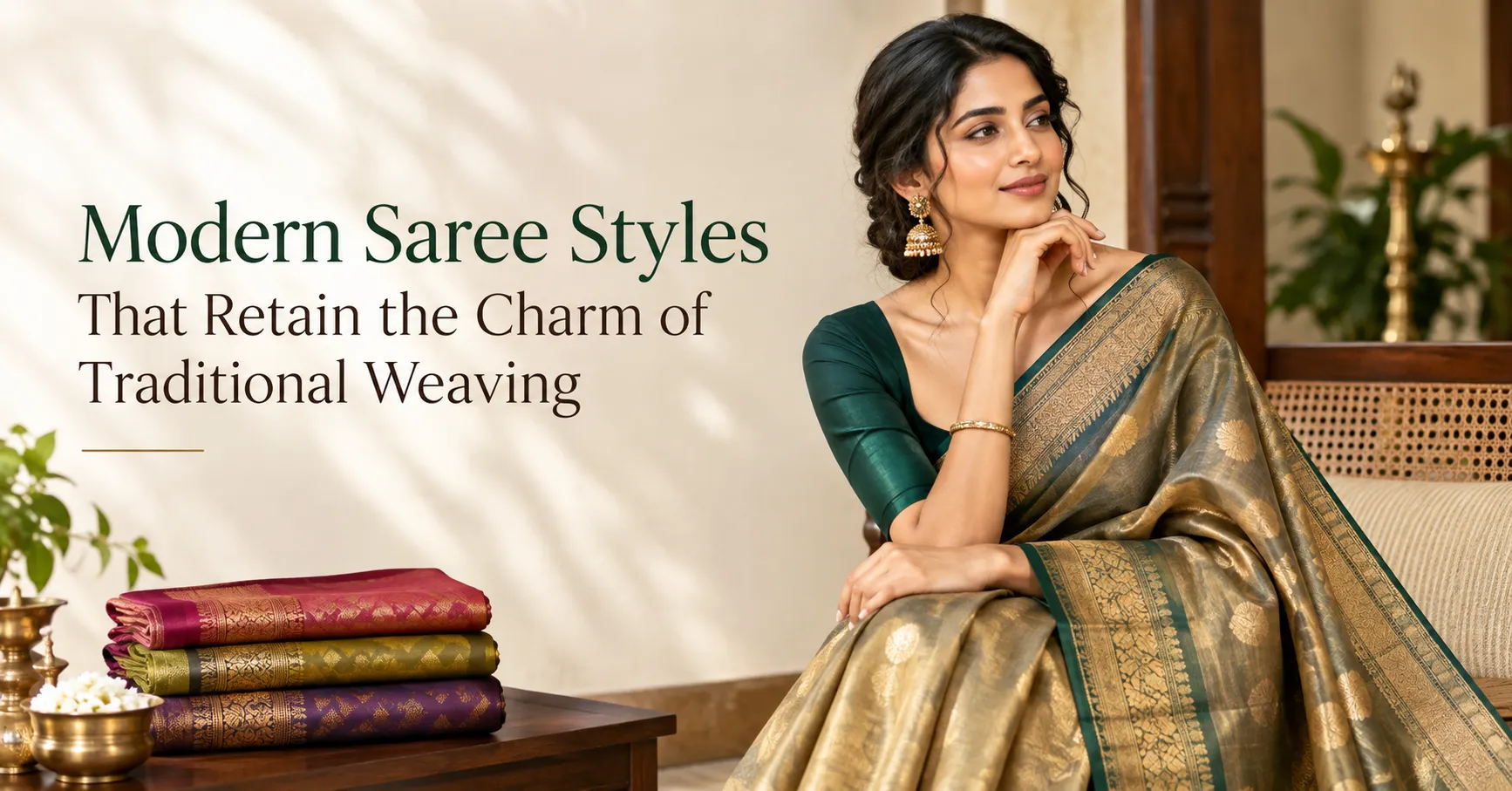
Sarees continue to evolve with changing fashion preferences while staying connected to India's rich textile heritage. Modern designs focus on lighter styling, fresh colour combinations, and distinctive patterns without losing the beauty of traditional weaving. A borderless Kanjivaram saree is one example of how classic craftsmanship can be presented with a cleaner and more contemporary appearance. These styles appeal to those who want traditional elegance with a look that feels effortless and current.
The Appeal of Contemporary Saree Designs
Modern sarees are designed to suit today's occasions and lifestyles. While traditional weaving techniques remain important, designers experiment with colour palettes, motifs, textures, and layouts to create more versatile pieces. This makes the saree suitable for weddings, festive gatherings, receptions, cultural events, and even more intimate celebrations.
The focus is often on balancing heritage with simplicity. Instead of heavily embellished designs, many contemporary sarees use carefully placed motifs, subtle contrasts, and elegant colour combinations. This allows the craftsmanship of the fabric to remain the main attraction.
Minimal Borders for a Modern Appearance
Borders have traditionally been one of the defining features of South Indian silk sarees. However, reducing or removing a prominent border can create a completely different visual effect. Border-free designs offer a clean silhouette while allowing the body of the saree to take centre stage.
This style works particularly well for people who prefer understated elegance. The absence of a contrasting border can make the saree appear more fluid and contemporary while retaining the richness of traditional silk weaving.
Fresh Colour Combinations
Colour plays an important role in giving traditional sarees a modern identity. Alongside familiar shades such as red, green, purple, and gold, contemporary collections often introduce softer pastels, muted tones, jewel shades, and unusual colour pairings.
Contrasting shades can create a striking appearance, while tonal combinations offer a more sophisticated look. Choosing the right colour combination can also make a traditional saree suitable for different types of events, from daytime celebrations to evening receptions.
Contemporary Motifs with Traditional Craftsmanship
Motifs can transform the overall character of a saree. Traditional floral, paisley, temple, peacock, and geometric patterns continue to be popular, but their placement and scale may be adapted for modern preferences.Larger motifs can create a bold statement, while smaller patterns provide a delicate appearance. Combining familiar motifs with a simpler layout allows the saree to retain its cultural identity without appearing overly ornate.
Lightweight Styling for Everyday Comfort
Modern saree preferences also place greater importance on comfort. Lighter fabrics and practical designs make it easier to wear sarees for longer periods without compromising on elegance.This approach is especially useful for younger wearers and those who want to incorporate traditional clothing into more occasions. A well-designed saree can provide ease of movement while maintaining the graceful drape associated with Indian ethnic wear.
Styling Traditional Weaves in New Ways
The way a saree is styled can make a significant difference to its overall appearance. A contemporary blouse with a traditional silk saree can create an interesting contrast. Neckline details, sleeve designs, fabrics, and subtle embellishments can be selected to complement the saree without overwhelming it.
Accessories can also be kept simple for a modern appearance. Statement earrings, a sleek hairstyle, or minimal jewellery can highlight the saree while giving the overall outfit a more current feel.
Choosing a Saree That Balances Heritage and Fashion
When selecting a modern traditional saree, consider the occasion, colour, motif, fabric, and level of detailing. A simpler design may work well for daytime events, while richer colours and more intricate weaving can make a stronger impression at weddings and festive celebrations.The most appealing styles are often those that preserve traditional weaving techniques while adapting details to contemporary tastes. This balance makes them suitable for both generations and allows classic textile traditions to remain relevant.
The Continuing Appeal of Traditional Weaving
Traditional weaving remains an important part of Indian fashion because it carries craftsmanship, cultural stories, and regional identity. Modern interpretations do not necessarily replace these traditions; instead, they offer new ways to appreciate them.
Among classic South Indian weaves, korvai Kanjivaram sarees continue to be appreciated for their distinctive contrast between the saree body and borders, along with the skilled weaving techniques involved. Their detailed construction and traditional character make them an excellent choice for those who value authentic craftsmanship while exploring different saree styles.