Metal vs. Plastic Shoe Horns: Which Lasts Longer?
By Subhan Sipra
50 Views
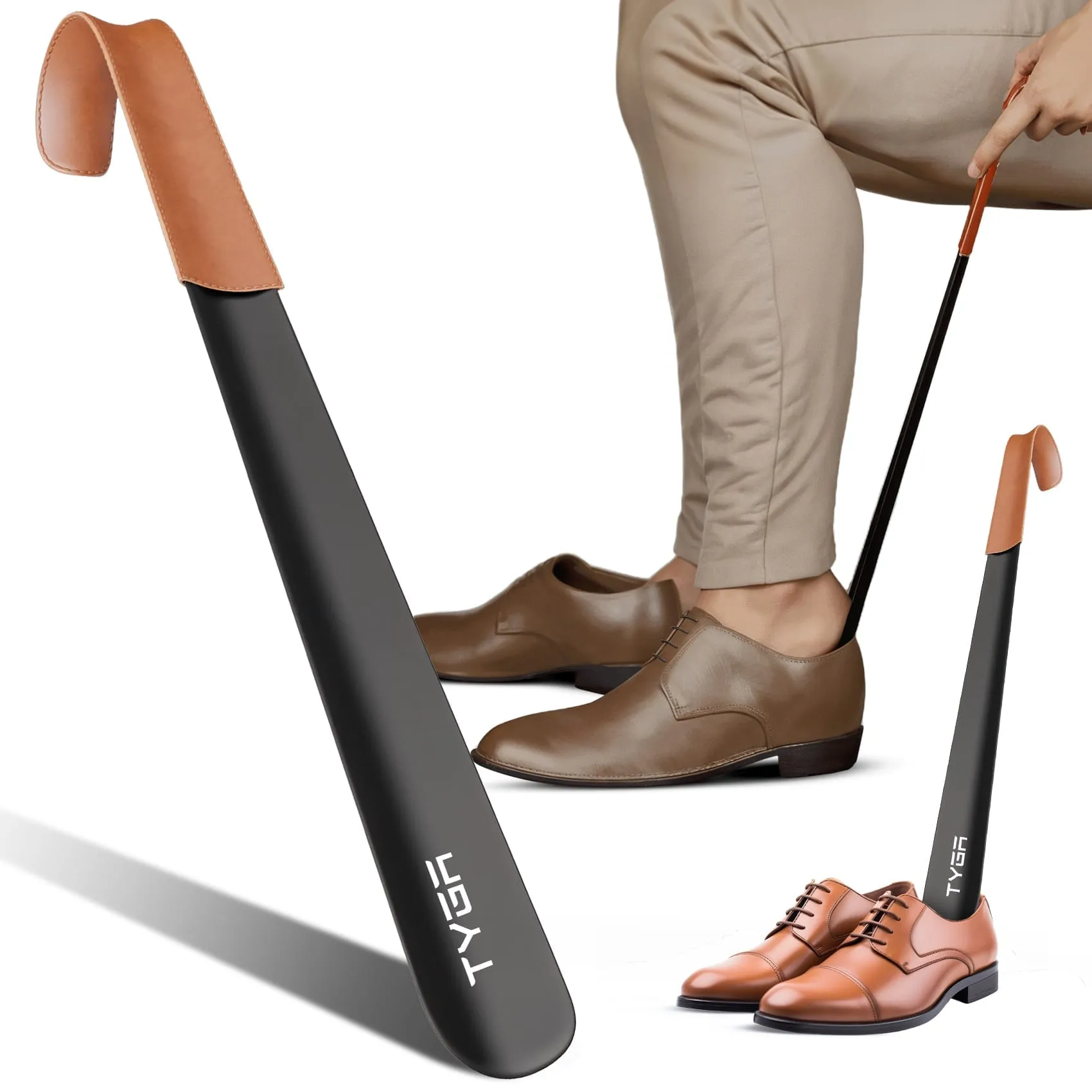
When choosing a shoe horn, one of the simplest decisions is also one of the most important: metal or plastic?
Both materials can work well, but they have different strengths. Metal shoe horns are generally valued for rigidity and durability, while plastic models are often lighter, more affordable and easier to carry.
So, which lasts longer?
In general, a well-made metal shoe horn is likely to withstand heavier and more frequent use than a basic plastic model. However, that does not mean every metal shoe horn will outlast every plastic one. Thickness, construction, design, how the shoe horn is used and how it is stored can all affect its lifespan.
If you only use a shoe horn occasionally, a good plastic model may be more than adequate. For frequent daily use, a sturdy metal option can make more sense.
What Determines How Long a Shoe Horn Lasts?
Material is only one part of the equation.
A shoe horn's lifespan can also depend on:
- The quality of its construction
- Thickness and rigidity
- Shape and design
- How much force is applied
- How frequently it is used
- Whether it is stored safely
- Exposure to moisture or other conditions
- Whether the handle or joints are securely constructed
For example, repeatedly bending a thin shoe horn can eventually damage it regardless of whether it is made from metal or plastic.
The best approach is therefore to consider material and overall construction together.
Metal Shoe Horns: Strengths and Weaknesses
Metal shoe horns are popular with people who want a sturdy, rigid tool.
A suitable metal design is less likely to flex during normal use, which can make it feel substantial when guiding the heel into a shoe.
Advantages of metal shoe horns
- Generally strong and rigid
- Suitable for frequent use
- Less susceptible to cracking than some plastics
- Often feel substantial in the hand
- Suitable for home use
- Available in compact and long-handled designs
Potential drawbacks
- Usually heavier than plastic
- Can cost more
- Poorly finished edges can be uncomfortable
- Metal can be less convenient when travelling
A well-made metal shoe horn is therefore particularly appealing when longevity is the priority.
Is Stainless Steel a Good Choice?
Stainless steel can be a practical material for shoe horns.
It can provide rigidity while offering resistance to corrosion compared with metals that are more vulnerable to rust.
However, the words "stainless steel" do not automatically guarantee superior quality.
A thin, poorly constructed shoe horn may still perform poorly, while a well-designed plastic model may provide perfectly satisfactory service.
Look at the entire product rather than the material label alone.
Plastic Shoe Horns: Lightweight and Practical
Plastic shoe horns are often chosen because they are lightweight and convenient.
For many people, that is exactly what they need.
If a shoe horn is kept in a suitcase, desk drawer or small storage area, the low weight and compact construction of plastic can be an advantage.
Advantages of plastic shoe horns
- Lightweight
- Easy to transport
- Usually inexpensive
- Convenient for travel
- Available in many designs
- Less likely to feel heavy during repeated handling
Potential disadvantages
- Some plastics can crack if excessive force is applied
- Thin designs may flex
- Quality varies considerably
- Some may feel less substantial than metal
A plastic shoe horn is not necessarily a poor-quality product. The key is choosing one that is sufficiently robust for the intended use.
Metal vs Plastic: Which Lasts Longer?
If both products are well made and used normally, metal generally has the advantage when maximum durability is the main goal.
Metal is particularly useful if you:
- Use a shoe horn every day
- Use it with several pairs of shoes
- Prefer a rigid tool
- Want a product for long-term home use
- Need a long-handled design
Plastic can still be a sensible choice if you:
- Use a shoe horn occasionally
- Travel frequently
- Want something lightweight
- Have limited storage space
- Prefer a lower-cost option
The important distinction is that "lasts longer" and "better" are not always the same thing.
A plastic shoe horn that lasts for years and is convenient to carry may be more useful to a traveller than a heavier metal model.
Durability Comparison
FactorMetalPlasticRigidityUsually highVariesResistance to crackingGenerally goodDepends on plastic type and constructionWeightUsually higherUsually lowerTravel convenienceGoodExcellentFrequent useVery suitableSuitable if well madeLong-term durabilityGenerally excellentGood to excellent depending on qualityCostVariesOften lowerStorageModerateEasy
These are general characteristics rather than guarantees. Individual products can perform differently.
Does Thickness Matter?
Yes.
A material's thickness and overall construction can have a significant effect on how a shoe horn performs.
A very thin metal shoe horn may bend more easily than a thicker design. Likewise, a thin plastic shoe horn may flex or crack more readily under excessive pressure than a sturdier model.
This is why comparing materials without considering construction can be misleading.
When possible, look for a shoe horn that feels appropriately rigid without being unnecessarily bulky.
What About Long-Handled Shoe Horns?
Length changes the demands placed on a shoe horn.
A long-handled shoe horn gives you greater reach, which can be useful if you want to avoid bending down.
However, longer designs need appropriate construction to remain comfortable and sufficiently rigid during use.
For a long-handled model, metal can be attractive because of its rigidity. But a well-designed plastic model can also be practical, particularly if reducing weight is important.
Choose the length according to your needs rather than assuming the longest model is automatically the best.
Which Is Better for Elderly Users?
There is no single answer.
A metal shoe horn may provide useful rigidity, but its additional weight could matter to someone who finds heavier objects difficult to handle.
A lightweight plastic shoe horn may be easier to hold.
However, length can sometimes be more important than material.
Someone who has difficulty bending may benefit more from a long-handled shoe horn than from a compact metal model.
When choosing a shoe horn, consider:
- Required reach
- Weight
- Grip
- Handle shape
- Overall rigidity
- Ease of positioning
The most suitable product is the one that can be handled comfortably and safely for its intended purpose.
Which Material Is Better for Travel?
Plastic generally has an advantage when portability is important.
A compact plastic shoe horn can be easy to place in luggage without adding much weight.
Metal can still be a good travel option, particularly when you want a compact and durable design. However, if every gram and centimetre of luggage matters, a lightweight plastic model may be more convenient.
For travel, prioritise:
- Compact size
- Low weight
- Smooth edges
- Adequate rigidity
- Easy storage
Can a Plastic Shoe Horn Last for Years?
Yes.
It would be misleading to suggest that plastic shoe horns are automatically short-lived.
A good-quality plastic shoe horn used appropriately can provide long-term service.
The biggest concern is often excessive force rather than ordinary use.
Avoid bending, twisting or using the shoe horn as a lever. It should guide your heel into the shoe rather than force your foot into footwear that does not fit properly.
How to Make Either Type Last Longer
Good usage habits can extend the useful life of a shoe horn regardless of material.
Use Gentle Pressure
Do not force your heel into the shoe.
If the footwear is too tight, loosen the laces or fastening before trying again.
Keep the Shoe Horn Clean
Remove dirt and residue when necessary using a cleaning method suitable for the material.
Store It Properly
Avoid leaving it somewhere where it can be stepped on, crushed or bent.
Inspect It
Check occasionally for:
- Cracks
- Sharp edges
- Splits
- Bending
- Loose components
- Rough surfaces
Replace a damaged shoe horn rather than continuing to use it.
Can a Shoe Horn Damage Your Shoes?
A properly designed shoe horn used correctly should not normally damage suitable footwear.
Problems are more likely when someone uses excessive force or tries to use the shoe horn for something it was not designed to do.
Do not use a shoe horn to pry open shoes, stretch footwear aggressively or force your foot into a shoe that is too small.
A shoe horn is simply there to provide a smooth guide behind your heel.
Metal vs Plastic for Different Situations
For daily home use
Metal: Excellent choice if durability is the priority.
Plastic: Good choice if low weight and affordability matter.
For travel
Metal: Suitable if you prefer durability and don't mind the additional weight.
Plastic: Often more convenient because of its low weight.
For elderly users
Metal: Consider if rigidity is important and the weight is comfortable.
Plastic: Consider if low weight is more important.
For small storage spaces
Metal: Compact designs are available.
Plastic: Often particularly convenient because lightweight compact designs are common.
What About Shoe Inserts?
Shoe horns and shoe inserts solve completely different problems.
A shoe horn helps you put footwear on, while an insert sits inside the shoe.
For example, TYGA HEIGHT INCREASE INSOLES are intended for use inside suitable footwear rather than for helping with the process of putting shoes on.
Similarly, TYGA HEIGHT BOOSTERS and TYGA SHOE INSERTS belong to the in-shoe accessory category.
If you use any type of insert, make sure your footwear remains comfortable and has enough internal space. An insert should not make the shoe unnecessarily tight.
Frequently Asked Questions
Do metal shoe horns last longer than plastic ones?
Generally, a well-made metal shoe horn can provide excellent long-term durability and may outlast a basic plastic model, particularly with frequent use. However, construction quality matters.
Are plastic shoe horns durable?
Yes. Good-quality plastic shoe horns can be durable enough for regular use. They are especially useful when low weight and portability are priorities.
Is stainless steel better than plastic for a shoe horn?
Stainless steel can provide greater rigidity and durability, but plastic may be lighter and more convenient. The better option depends on how you intend to use the shoe horn.
Which is better for travel: metal or plastic?
Plastic often has an advantage because it can be lightweight and easy to pack. A compact metal model may be preferable if durability is more important than weight.
What is the most durable type of shoe horn?
A well-constructed metal shoe horn is generally a strong choice when maximum durability is the priority. Look at the entire construction rather than material alone.
Can I use a shoe horn every day?
Yes. A shoe horn can be used daily as long as it is suitable for the footwear and used without excessive force.
Final Verdict: Metal or Plastic?
So, metal vs. plastic shoe horns: which lasts longer?
If durability is your number-one priority, a well-made metal shoe horn is generally the stronger choice. Its rigidity and resistance to cracking can make it particularly suitable for frequent, long-term use.
Plastic, however, should not be dismissed. A good plastic shoe horn can be durable, lightweight and extremely convenient, especially for travel and everyday storage.
The best choice ultimately depends on your priorities:
- Choose metal for rigidity and long-term durability.
- Choose plastic for lightweight portability and convenience.
- Choose a long handle if reach is important.
- Choose a compact design if luggage or storage space is limited.
Most importantly, focus on the quality of the construction rather than the material name alone. A well-designed shoe horn that is used correctly can be a practical accessory for years, whether it is made from metal or plastic.
Related Reading
Why Lifestyle & Culture is Transforming the Global Industry Landscape
Welcome to our in-depth exploration of Lifestyle & Culture. In an era define...
Expert Insights: Navigating the Complex World of Lifestyle & Culture
Welcome to our in-depth exploration of Lifestyle & Culture. In an era define...