Medical Facial Treatment vs Regular Facials: Understanding the Difference
By Rita Sharma
90 Views
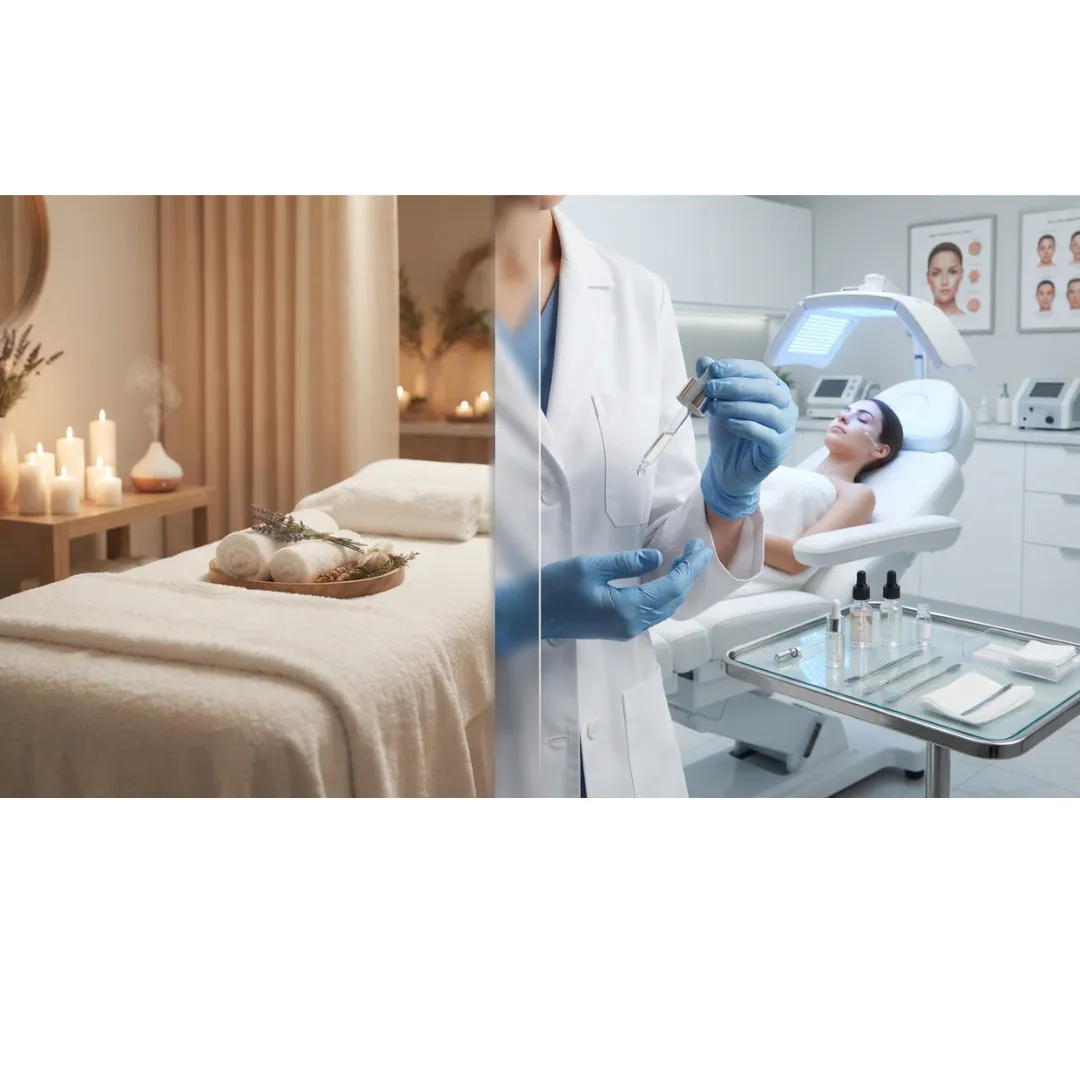
If you've ever sat in a spa chair getting a relaxing facial and wondered whether it's actually doing anything for your skin concerns, you're not alone. The short answer is: a regular facial and a medical facial treatment are two very different things, built for different purposes, and choosing the wrong one can mean wasting time and money.
Here's a clear breakdown of what separates them and how to know which one your skin actually needs.
What a Regular Facial Actually Does
A standard facial is primarily a skin maintenance service. It typically includes cleansing, steaming, manual extraction, a mask, and moisturizer. Done by an esthetician in a spa or salon setting, it focuses on surface level skin health.
It feels good. Your skin looks fresher afterward. But it doesn't go deep enough to address conditions like hyperpigmentation, active acne, melasma, rosacea, or significant texture issues. Think of it like a car wash. It cleans what's visible but doesn't fix what's under the hood.
Regular facials work well for:
- General skin maintenance
- Mild congestion or dullness
- Relaxation and stress relief
- Maintaining results between clinical treatments
What Makes a Medical Facial Treatment Different
A medical facial treatment is administered or supervised by a licensed medical professional, typically a dermatologist, aesthetician working under physician oversight, or a trained clinical skincare specialist. The products used are prescription strength or clinically formulated, and the techniques go deeper into the skin's structure.
This isn't about adding fancier ingredients to a basic facial. It's about using tools and compounds that actually interact with the skin at a cellular level, wh ich requires professional oversight because the margin for error is smaller.
Common components of a medical facial include:
- Chemical peels with regulated acid concentrations
- Medical grade microdermabrasion
- LED light therapy for specific skin conditions
- High frequency treatments for acne and bacteria
- Customized serums based on a clinical skin assessment
The difference in outcome is significant. Where a spa facial might reduce puffiness and give you a temporary glow, a clinical treatment can reduce post inflammatory marks, improve collagen structure, and create measurable improvement in skin texture over a series of sessions.
Who Actually Needs a Medical Grade Facial
Not everyone needs clinical intervention. But if you've been dealing with the same skin concerns for months without improvement from regular facials or over the counter products, it's a signal to step up to a clinical approach.
People who typically benefit most include:
- Those with persistent acne that doesn't respond to standard care
- Adults dealing with uneven pigmentation or melasma
- Anyone with noticeable sun damage or rough texture
- Individuals managing early signs of skin aging with visible results in mind
- Post procedure skin that needs structured rehabilitation
The Role of Skin Assessment in Medical Facials
One thing that separates medical grade services from spa services is the consultation process. Before any clinical treatment begins, a proper skin analysis is conducted. This isn't a quick look in the mirror. It involves understanding your skin type, identifying underlying conditions, reviewing your skincare history, and setting realistic goals.
This is where a clinic like Athena Derma takes a different approach. Rather than offering one size fits all facial menus, the treatment is built around your specific skin profile. That individualized process matters because what works for pigmentation may be completely wrong for someone dealing with sensitized or rosacea prone skin.
Ingredients and Products: A Real Difference
Spa facials use cosmetic grade products that are formulated to be safe for self use. Medical facials use clinical or prescription grade ingredients that are significantly more active. Retinoids, mandelic acid, trichloroacetic acid, and growth factors are examples of ingredients you won't find in a spa setting.
These require professional application because they need to be used at the right concentration, in the right order, and with proper aftercare guidance. Misuse can cause irritation, burns, or worsening of the skin condition being treated.
Frequency and Results: What to Realistically Expect
A spa facial can be done once a month without much concern. A medical facial treatment schedule depends on the specific treatment, your skin's recovery time, and your goals. Some treatments are done every few weeks, others quarterly.
Athena Derma, for instance, structures its facial treatment programs based on clinical outcomes, not just a standard appointment cycle. Results from medical facials are cumulative. A single session shows improvement but the real changes in texture, pigmentation, and skin quality appear over a series of treatments.
Conclusion
Regular facials have a place in any skincare routine. They maintain, refresh, and support overall skin health. But when you're dealing with real skin concerns that aren't improving, a medical facial treatment offers a level of depth, precision, and clinical impact that a spa setting simply cannot match.
Know what your skin needs. Invest in the right type of care for the right reason.
Frequently Asked Questions
Q.1 Is a medical facial treatment painful?
Most medical facials involve minimal discomfort. Some chemical peels or active treatments may cause a mild tingling or temporary redness, but it's generally well tolerated with proper preparation.
Q.2 How often should I get a medical facial?
It depends on the treatment type and your skin condition. Most clinical facial programs are spaced two to four weeks apart, with your provider guiding the schedule based on how your skin responds.
Q.3 Can I get a medical facial if I have sensitive skin?
Yes. Sensitive skin requires a more careful approach, but medical facials can be adapted to work safely. A proper skin assessment before treatment is especially important in this case.
Q.4 What is the difference between a chemical peel and a regular facial?
A chemical peel uses active acids to remove damaged skin layers and stimulate renewal. A regular facial uses surface level cleansing and masking. Peels are medical treatments; standard facials are maintenance services.
Q.5 How do I know if I need a medical facial or a regular one?
If your skin concern is cosmetic and mild, a regular facial is fine. If you have persistent acne, pigmentation, texture issues, or visible skin damage, a clinical evaluation and medical grade treatment will give better results