Managed IT Network Services and Cloud Security Monitoring: What Businesses Need to Know in 2026
By Amarjit Singh
5 Views
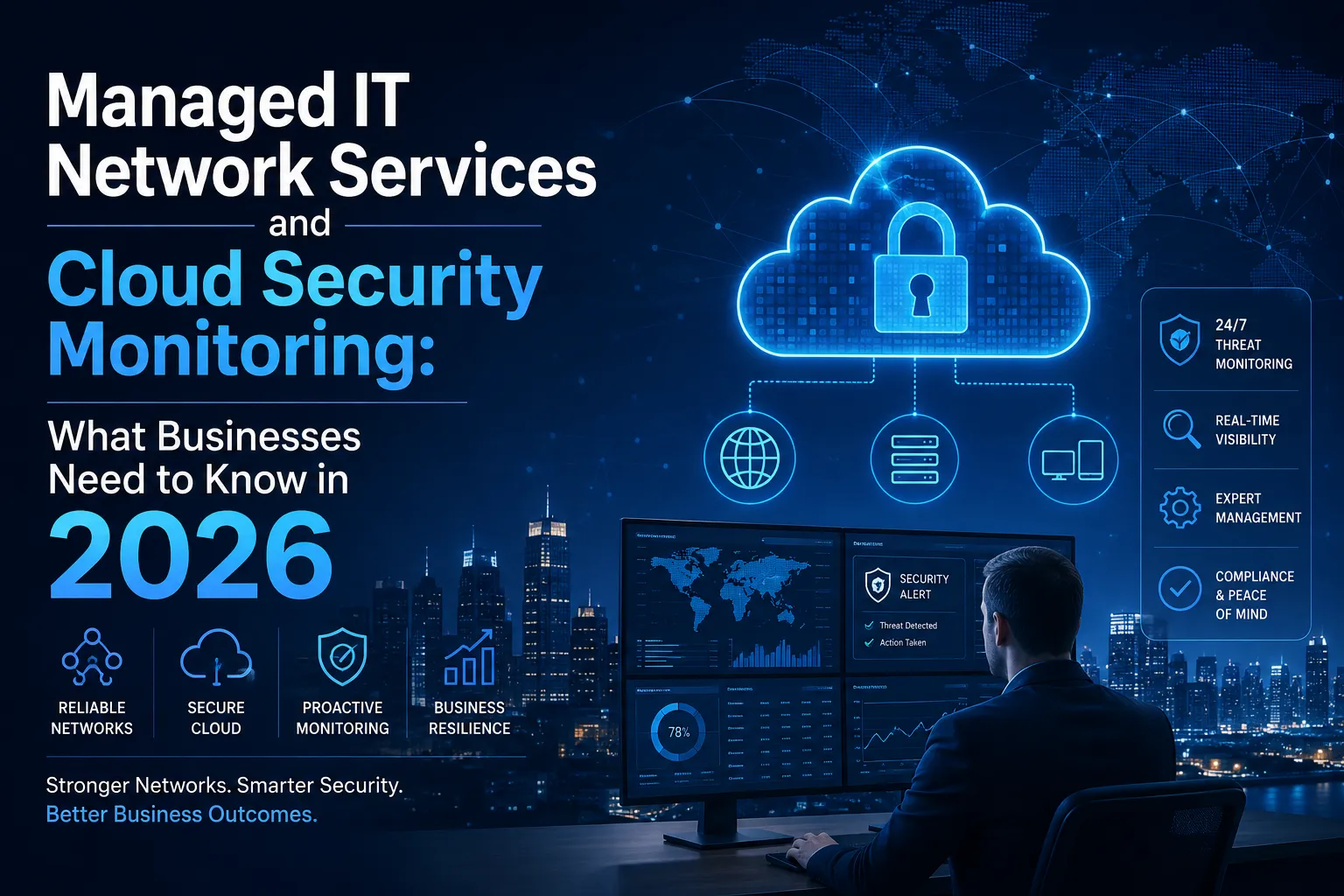
Every business, regardless of size, relies on a combination of on-premise, cloud-based, and remote services to some extent. The maintenance of this ecosystem and its security is an around-the-clock task, which is why many companies choose to outsource at least a part of it to a managed services network. This shift is driven not only by the desire to free up internal resources, but also by the changing nature of network attacks, compliance requirements, and the ability to respond in a timely manner to incidents that require immediate action.
What is a Management Services Network?
A management services network is a broad concept that covers a range of monitoring, maintenance, and security functions. In most cases, it is used to describe a combination of tools and procedures that allow businesses to ensure the reliability and stability of their network infrastructure. This includes monitoring network performance, maintaining firewalls, conducting regular patching and backup validation, and responding to incidents in a structured manner. Essentially, it is about detecting and addressing issues before they impact business operations.
Companies choose to outsource this function to avoid overloading their internal IT department. While a team of five people may be able to provide first-line technical support, maintaining a stable network environment around the clock requires a much broader set of skills and constant attention, which is hard to achieve in a small team.
Why are Managed IT Network Services Becoming More Popular?
Managed IT network services represent an evolution of the traditional network monitoring and maintenance concept, which now includes more elements related to day-to-day management of the infrastructure. Managed IT network service providers offer to take care of all aspects of network operations, including the maintenance of individual devices such as routers and switches, wireless infrastructure, and VPN servers. The shift towards managed services is explained by several factors:
The number of remote employees and endpoints accessing company data has increased significantly, which makes network security more challenging.
Regulatory requirements related to data security are becoming more stringent.
Networks are increasingly targeted by attackers, who may exploit them to gain access to data centers or other IT infrastructure.
The business impact of network downtime is growing, which puts more pressure on companies to ensure there are no service interruptions.
Instead of waiting for an issue to occur, managed network service providers attempt to stay ahead of potential problems by conducting regular scans and audits. This approach helps identify misconfigurations and other issues before they can lead to an incident.
The Rise of Cloud Security Monitoring
The growing adoption of cloud platforms such as AWS, Azure, and Google Cloud is driving the need for cloud security monitoring. While many traditional network monitoring tools are designed to work with on-premise infrastructure, cloud security monitoring is a separate discipline that deals with the unique challenges of securing data in cloud environments. There are several reasons why cloud security monitoring is necessary:
Resources in the cloud are much more dynamic and diverse than traditional on-premise IT infrastructure. Monitoring tools need to account for the fact that resources are often created and destroyed on a regular basis and have varying levels of security.
Cloud resources are typically accessed using APIs, which adds another layer of complexity.
There is a need to constantly ensure that resources are configured securely and that there are no weaknesses that can be exploited by attackers.
There are multiple sources of data that can be used for cloud security monitoring, including logs, API calls, and data security assessments. Each of these areas can provide insights into potential security issues, such as misconfigured storage resources, overly permissive network rules, or weak encryption practices.
There are multiple examples of security incidents that occur in cloud environments because of simple mistakes, such as leaving a storage bucket publicly accessible. In many cases, these issues could be identified and resolved by automated tools that are used for cloud security monitoring. This is an important consideration, given that the majority of cloud security incidents stem from easily detectable causes.
Network Management and Cloud Security Monitoring: How are they Connected?
Network management and cloud security monitoring used to be separate disciplines that were handled by different teams using different tools. However, the increasing complexity of attacks is making it harder to address security issues without considering the bigger picture. One example of such an attack is ransomware, which typically gains access to a network through an endpoint, moves around it laterally to gain administrative privileges, and then encrypts resources both locally and in the cloud. In cases like this, network monitoring tools can help detect anomalous lateral movement, while cloud security monitoring can identify unauthorized changes to resources. In most cases, however, the two areas need to be coordinated to address the incident effectively.
This is why many companies are moving towards integrated approaches to network management and cloud security monitoring. By consolidating these areas under one team or one platform, businesses can benefit from increased visibility and faster response times. For example, network monitoring alerts can be reviewed in the context of cloud security data to determine if they represent actual threats. The same applies to cloud security alerts, which may need to be triaged based on network activity.
Key Questions to ask when Choosing an Approach to Network Monitoring and Cloud Security
When considering the options available for network monitoring and cloud security, businesses should ask a series of practical questions to understand the strengths and weaknesses of each approach. Some of these questions relate to the ability of the chosen solution to detect and respond to incidents in a timely manner. For example, companies should ask whether monitoring is continuous or intermittent and what roles are involved in the incident response process. It is also important to understand if the service covers on-premise infrastructure, cloud resources, or both, and how alerts are prioritized when urgent action is required. Finally, businesses should also ask about compliance reporting and how this information is presented to internal stakeholders.
Ultimately, the value of a particular approach to network management and cloud security monitoring should be evaluated based on the company’s specific needs. In most cases, companies benefit from being able to rely on tools that offer continuous monitoring and visibility across key areas without overwhelming internal teams with excessive alerts.