Makeup Bag Materials Explained: What to Consider Before Buying
13 Views
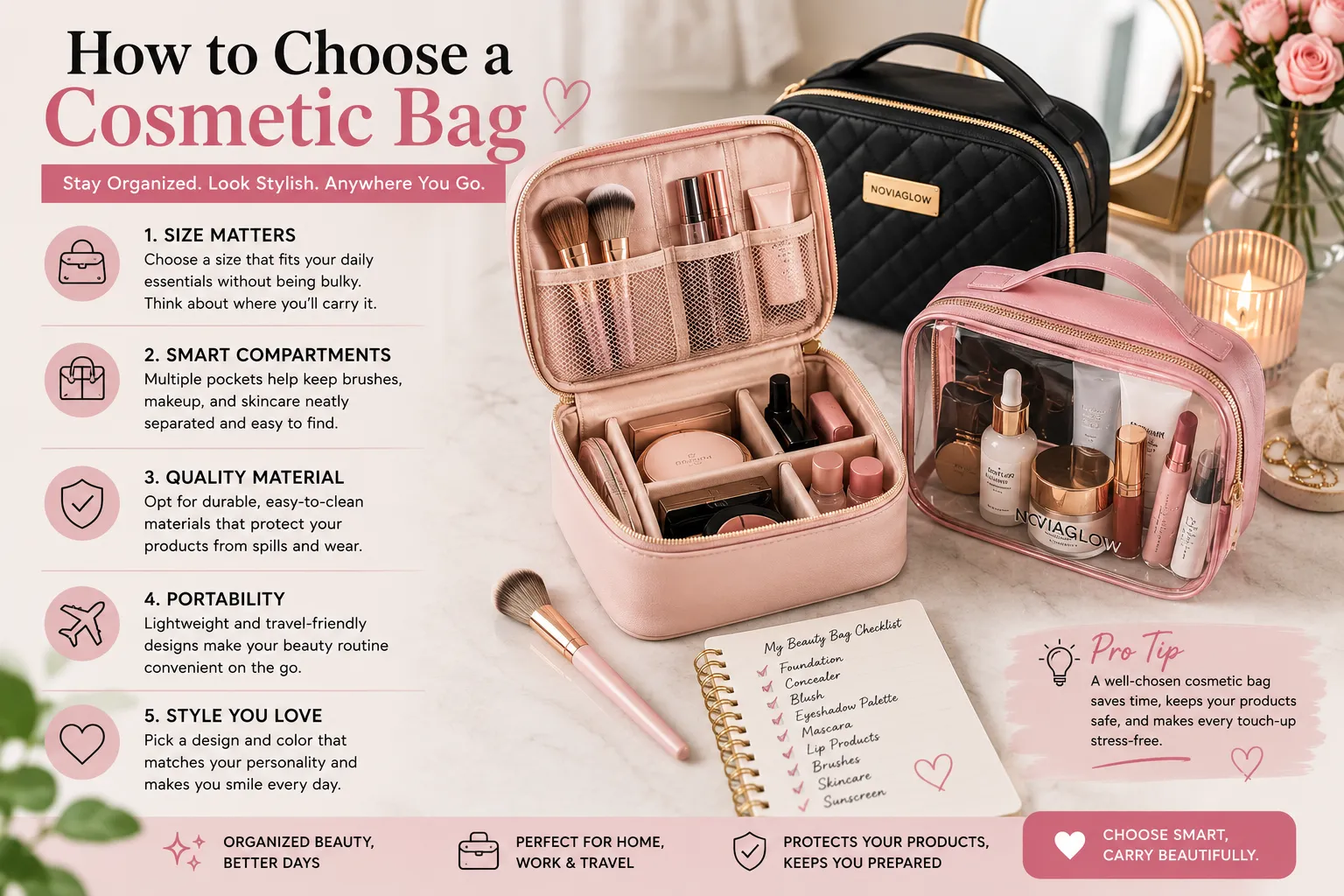
A makeup bag may seem like a simple purchase, but its material can influence how it feels, how it holds its shape and how easy it is to maintain. Some shoppers want a lightweight pouch for a handbag, while others need a structured organiser that can hold brushes, palettes and full-size products.
There is no single best material for everyone. The right choice depends on what you carry, where you use the bag and how much maintenance you are willing to do. Understanding the main differences can help you compare options more confidently before buying.
What makes a good makeup bag?
A useful makeup bag should suit your daily routine. Consider the products you plan to store, the available space in your handbag or suitcase, and whether you prefer a flexible pouch or a bag with a firm shape.
Before comparing materials, think about five practical factors:
-
Cleaning: Can the inside be wiped or washed according to the manufacturer's instructions?
-
Structure: Will the bag keep its shape when filled?
-
Weight: Is it comfortable to carry?
-
Protection: Does the construction help prevent products from being crushed or knocked around?
-
Organisation: Are there compartments or pockets for smaller items?
The material is only one part of the decision. Stitching, lining, zipper quality and overall construction can be just as important.
1. PU or faux leather
PU, often used in faux-leather products, is popular for makeup bags with a polished, structured appearance. It can be suitable for shoppers who prefer a smooth exterior and a bag that looks smart on a dressing table.
Some PU surfaces can be wiped clean, although the appropriate method depends on the coating and manufacturer instructions. Harsh cleaners, excessive moisture or rough scrubbing may damage the finish.
When comparing a faux-leather bag, inspect the seams, corners and zipper area. These parts experience repeated handling, especially when the bag is carried daily.
Best suited to: Shoppers who prefer a structured, polished-looking pouch and want a material that is relatively straightforward to maintain.
2. Cotton and canvas
Cotton and canvas bags often have a soft, casual appearance. They can be lightweight and flexible, making them useful for storing a smaller collection or carrying a few essentials.
Their cleaning requirements depend on the fabric, lining, colour and construction. Some fabric bags may be washable, while others may shrink, lose shape or become damaged if washed incorrectly. Check the care label before cleaning.
Fabric can absorb spills more readily than some coated materials, so products should be closed securely before storage. If you regularly carry liquid makeup, a removable or easy-to-clean lining may be a helpful feature.
Best suited to: People who want a flexible, casual bag for everyday products or lighter travel needs.
3. Nylon and polyester
Nylon and polyester are commonly used in lightweight bags and travel organisers. Depending on the weave and coating, these fabrics can offer a practical balance between flexibility, weight and everyday durability.
They are available in many styles, from simple pouches to multi-compartment cases. Some finishes can be wiped clean, but not every fabric is waterproof or resistant to stains. Avoid assuming that a bag is leakproof simply because its exterior is made from synthetic fabric.
Check the lining, zipper construction and pocket arrangement. If you carry brushes, a separate section may help keep bristles away from makeup residue or other belongings.
Best suited to: Shoppers looking for lightweight storage and a range of practical designs.
4. Transparent plastic or coated panels
Transparent panels can make it easier to see what is inside a bag without opening every compartment. This can be helpful when packing for travel or organising products that are easy to overlook.
However, clear material varies in thickness, flexibility and durability. Some transparent pouches can crease or become scratched with repeated use. Check whether the bag is intended for everyday handling or occasional travel.
A transparent bag is not automatically waterproof or suitable for every travel requirement. Review the product description and any relevant airline or transport rules before relying on it for a specific purpose.
Best suited to: People who value visibility and want to identify products quickly.
5. Soft-lined and padded designs
Some makeup bags include a soft lining or padding to separate products from the outer surface. These designs may feel more substantial and can help organise items that you do not want rubbing directly against one another.
Padding does not guarantee that fragile products will be protected from every impact. If you carry glass bottles, pressed powders or delicate accessories, consider the overall construction and how tightly the bag will be packed.
A structured case may be useful when you want compartments, while a flexible pouch may work better if space is limited.
Best suited to: Shoppers who want a more organised interior or prefer a bag with some structure.
Match the material to your routine
For a small everyday collection, a lightweight fabric or synthetic pouch may be sufficient. If you carry multiple brushes, palettes and complexion products, a structured bag with dividers may be more convenient. For travel, consider how much space you have and whether the interior can be cleaned easily after a spill.
Think about the environment where the bag will be stored. Keep makeup away from excessive heat and direct sunlight, and avoid leaving damp tools inside an enclosed pouch.
If you are comparing options, browse the NoviaGlow makeup bags collection. Check each listing for its actual dimensions, material details, compartments and care instructions rather than assuming every bag in a collection has identical features.
How to care for a makeup bag
Empty the bag periodically and remove loose powder, hair and product residue. Clean the interior according to the care instructions, and allow it to dry completely before replacing makeup.
Check for leaking containers and make sure caps are secure before packing. Store brushes separately if they are still damp, and remove products that are no longer suitable for use.
If the lining develops persistent residue that cannot be removed using the recommended method, or the seams and closure become damaged, consider replacing the bag.
Frequently asked questions
What is the easiest makeup bag material to clean?
Smooth or coated surfaces may be easier to wipe than absorbent fabrics, but the result depends on the particular material and its care instructions.
Is a transparent makeup bag better?
It can make products easier to see, but it may offer less privacy and can be more prone to visible scratches. Choose according to your preferences.
Should a makeup bag be waterproof?
Not every routine requires a waterproof bag. If resistance to spills is important, check the exact product specifications and do not assume a water-resistant exterior makes the entire bag leakproof.
Conclusion
The best makeup bag material is the one that fits your products, storage space and maintenance preferences. Compare cleaning requirements, structure, weight, compartments and construction before making a decision. A suitable bag should make your routine more convenient—not simply look attractive on a shelf.