Luxury Villa Design in Abu Dhabi: Architectural Styles, Principles, and What Makes a Design Work
By Sultan
18 Views
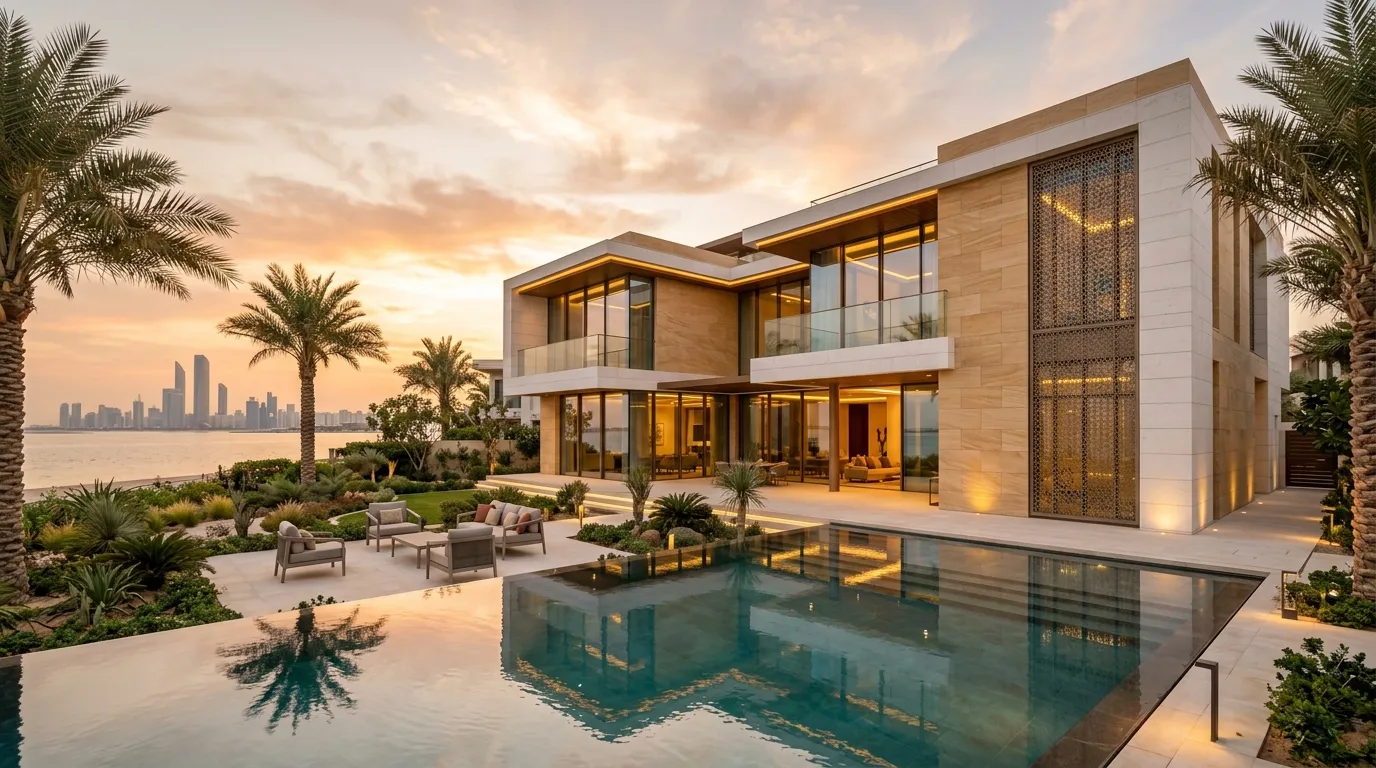
Good villa design does more than look impressive in a rendering — it responds intelligently to climate, culture, and the way a specific family actually lives. In Abu Dhabi, where intense summer heat, strong coastal light, and a growing appetite for both contemporary and culturally rooted architecture all intersect, luxury villa design in Abu Dhabi has developed a distinct character shaped by these very particular conditions.
This guide explores the architectural styles currently popular across the emirate, the design principles that separate a genuinely well-designed villa from one that simply looks expensive, and the practical considerations homeowners should keep in mind when briefing an architect for a custom home.
The Architectural Styles Defining Abu Dhabi's Villa Market
Contemporary minimalism. Clean geometric forms, flat or low-pitched rooflines, expansive glazing, and neutral material palettes dominate much of the new villa construction across communities like Saadiyat Island and Yas Island. This style favors restraint over ornamentation, relying on proportion, natural light, and material quality to create a sense of luxury rather than decorative detail.
Contemporary Arabic and regional fusion. A significant portion of luxury villa design in Abu Dhabi blends modern architectural language with regional cues — mashrabiya-inspired screening for shade and privacy, courtyard layouts drawn from traditional Gulf architecture, and natural stone facades that reference the region's building heritage while remaining functionally and aesthetically contemporary.
Mediterranean-influenced design. Popular among a segment of GCC buyers, this style incorporates elements like arched openings, warm stucco or stone facades, and terracotta roofing accents, often adapted to suit the region's climate through deeper overhangs and shaded outdoor living spaces.
Modern tropical and resort-inspired design. Particularly on waterfront plots, some villas lean into a resort aesthetic — extensive use of natural wood, expansive covered terraces, infinity pools that visually merge with the horizon, and layouts organized almost entirely around outdoor living.
Most high-end villa projects don't sit purely within one category, and skilled architects frequently blend elements from several of these traditions to create something specific to the client and the site, rather than defaulting to a single stylistic template.
Design Principles That Actually Matter
Climate-responsive orientation. In Abu Dhabi's climate, how a villa is oriented on its plot has a significant effect on comfort and energy efficiency. Thoughtful design minimizes direct western sun exposure on major living spaces, uses deep overhangs and shading devices to reduce solar heat gain, and positions outdoor spaces to capture prevailing breezes where possible. This kind of climate-responsive thinking distinguishes genuinely well-designed villas from those that simply look striking without accounting for how uncomfortable certain spaces become during peak summer months.
Indoor-outdoor flow. Given how much of the year allows for outdoor living in the cooler months, and how central shaded outdoor space is to comfort during the summer, the relationship between interior rooms and exterior spaces is one of the defining design considerations in luxury villa design in Abu Dhabi. Retractable glazing, covered terraces, and courtyards that extend living space outward are now standard features in high-end design rather than optional upgrades.
Natural light without heat gain. Large glazed openings are a hallmark of contemporary luxury design, but managing the heat that comes with them is a genuine design challenge in this climate. High-performance glazing, strategic shading, and careful orientation allow architects to deliver bright, open interiors without the corresponding cooling costs and comfort issues that poorly considered glazing can create.
Privacy without isolation. Villa design in the region has to balance the desire for expansive views and natural light with cultural and personal expectations around privacy, particularly for ground-floor living spaces and outdoor areas. Techniques like elevated courtyards, strategic screening, and thoughtful landscaping allow homes to feel open and connected to their surroundings while still maintaining genuine privacy from neighboring plots and public areas.
Proportion and material honesty. Some of the most successful luxury villa designs rely less on decorative flourish and more on getting fundamental proportions right — ceiling heights that feel generous without being cavernous, room dimensions that suit their function, and material transitions that feel deliberate rather than arbitrary. Skilled architects often describe this as the difference between a home that looks expensive and one that actually feels well-designed to live in.
Designing Around How a Family Actually Lives
The best luxury villa design in Abu Dhabi starts not with a stylistic direction but with a clear understanding of how the specific family intends to use the home. This includes practical considerations like whether formal and informal living spaces need to be separated, how much space is needed for extended family or guest accommodation, whether staff quarters are required and how they should be integrated into the overall layout, and how entertaining spaces should relate to more private family areas.
Homeowners who invest time upfront articulating these requirements to their architect — rather than simply requesting a particular aesthetic — consistently end up with designs that function better in daily life, regardless of which architectural style they ultimately choose.
The Role of Landscape in Villa Design
Landscape design is frequently treated as an afterthought in villa projects, brought in only after the architecture is finalized. In genuinely well-designed luxury villas, however, landscape and architecture are considered together from an early stage, since outdoor spaces, pool placement, and planting directly affect privacy, shading, views from interior rooms, and how the overall property is experienced when arriving or moving between spaces.
This integrated approach also has practical climate benefits — mature tree placement can meaningfully reduce heat gain on adjacent building facades, while thoughtfully designed water features and shaded outdoor seating areas extend the usable outdoor living season considerably.
Working Effectively With an Architect
A few practices help homeowners get the most out of the design process for a custom luxury villa.
Provide a detailed lifestyle brief, not just a style reference. Photos of admired homes are useful, but they're most valuable when paired with clear explanations of how the family actually lives, entertains, and uses space day to day.
Expect multiple design iterations. Genuinely custom design work involves refining a concept through several rounds of feedback, and rushing this process to save time often results in a design that looks good on paper but functions poorly in practice.
Involve landscape and interior designers early. Coordinating these disciplines from the concept stage, rather than sequentially after architecture is finalized, produces more cohesive results and avoids costly redesigns later.
Prioritize function alongside aesthetics. It's easy to be drawn toward striking visual features during the design phase, but the villas that feel successful years after completion are consistently the ones where daily functionality was given equal weight to visual impact from the outset.
Final Thoughts
Luxury villa design in Abu Dhabi at its best isn't defined by any single architectural style, but by how intelligently a design responds to climate, site, culture, and the specific family who will live there. Homeowners who approach the design process with clear priorities, realistic expectations around iteration and timeline, and a willingness to weigh function alongside aesthetics are consistently the ones who end up with homes that feel as good to live in years later as they looked in the earliest concept renderings.
Related Reading
Top 10 Hidden Secrets About Business & Finance You Need to Know
Welcome to our in-depth exploration of Business & Finance. In an era defined...
Why Business & Finance is Transforming the Global Industry Landscape
Welcome to our in-depth exploration of Business & Finance. In an era defined...