Loan Management System for NBFCs in India: The Complete Guide for Digital Lenders (2026)
By Roopya
94 Views
Loan Management System for NBFCs in India: A Complete Guide
The Indian lending ecosystem is undergoing a major digital transformation. Non-Banking Financial Companies (NBFCs), fintech lenders, microfinance institutions, cooperative credit societies, and digital lending platforms are rapidly adopting technology to streamline their operations, improve customer experiences, and remain compliant with evolving regulations.
As loan portfolios grow, managing borrowers, repayments, collections, compliance, and reporting manually becomes increasingly difficult. This is where a Loan Management System (LMS) becomes essential.
A modern Loan Management System helps NBFCs automate the entire post-disbursement loan lifecycle—from EMI tracking and repayment management to collections, customer servicing, and regulatory reporting.
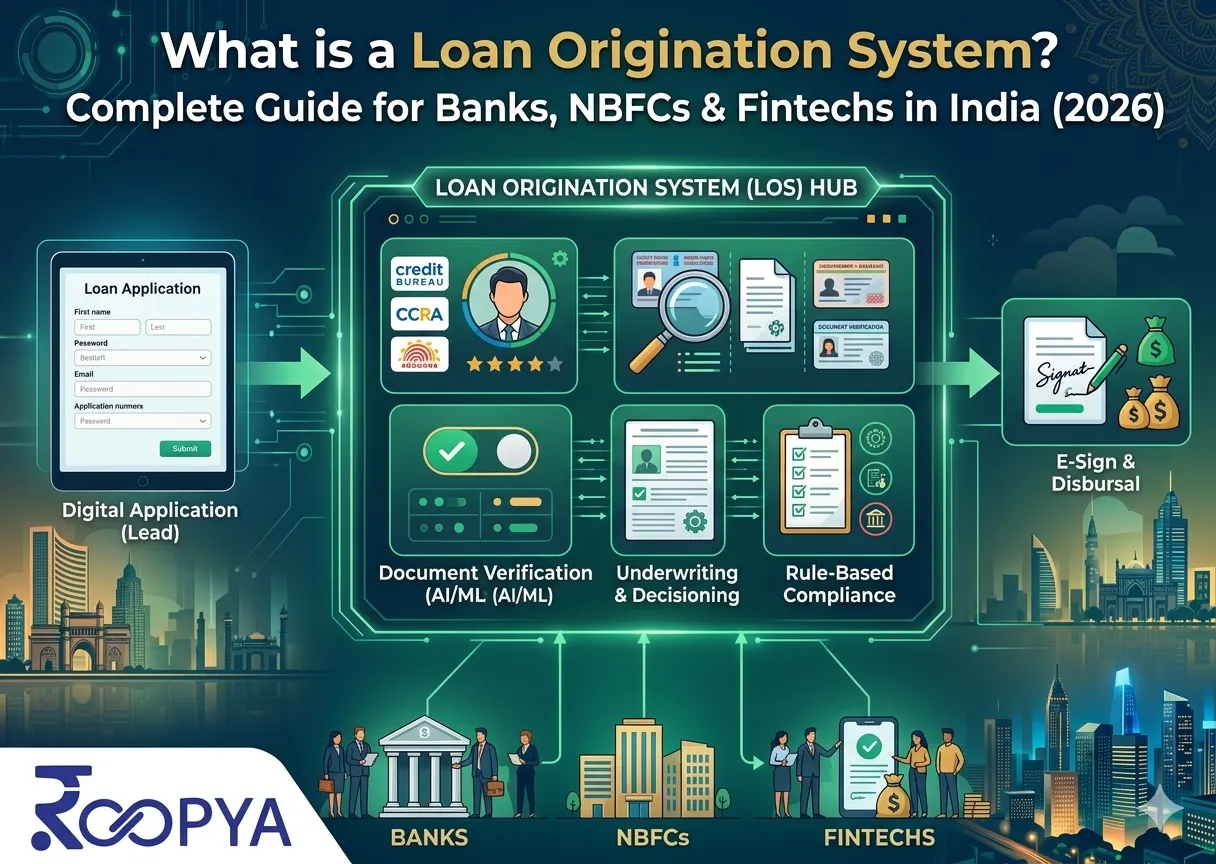
According to industry trends, Indian lenders are increasingly moving toward cloud-based lending infrastructure that combines Loan Origination Systems (LOS) and Loan Management Systems (LMS) on a unified platform to improve operational efficiency and scale faster.
In this comprehensive guide, we will explore everything NBFCs need to know about Loan Management Systems in India, including features, benefits, challenges, implementation strategies, and how Roopya can help lenders automate their lending operations.
What is a Loan Management System (LMS)?
A Loan Management System (LMS) is software that manages and automates the complete lifecycle of a loan after disbursement.
The system enables lenders to:
- Track loan accounts
- Manage repayment schedules
- Process EMIs
- Handle collections
- Calculate interest
- Monitor delinquency
- Generate reports
- Manage borrower communication
- Ensure compliance
In simple terms, an LMS acts as the operational backbone of an NBFC.
Without an LMS, lenders often struggle with:
- Manual spreadsheets
- Human errors
- Delayed collections
- Poor visibility
- Compliance risks
- Customer dissatisfaction
Modern LMS platforms eliminate these challenges through automation and real-time monitoring.
Why NBFCs Need a Loan Management System
The lending market in India has become highly competitive.
Borrowers expect:
- Instant approvals
- Faster disbursements
- Online repayments
- Mobile accessibility
- Real-time updates
To meet these expectations, NBFCs require technology-driven lending infrastructure.
Major Reasons NBFCs Need LMS Software
1. Portfolio Growth
As loan volumes increase, manual operations become unsustainable.
2. Better Collection Efficiency
Automated reminders and collection workflows improve repayment rates.
3. Compliance Management
NBFCs must adhere to RBI regulations and reporting requirements.
4. Risk Reduction
Real-time portfolio monitoring helps identify potential defaults.
5. Improved Customer Experience
Borrowers receive timely notifications and account visibility.
6. Operational Efficiency
Automation reduces dependency on manual processes.
How a Loan Management System Works
A Loan Management System begins functioning once a loan is approved and disbursed.
Step 1: Loan Account Creation
The system creates a digital loan account.
Step 2: Repayment Schedule Generation
EMI schedules are automatically generated.
Step 3: Payment Tracking
The platform tracks repayments in real time.
Step 4: Collection Monitoring
Missed payments trigger collection workflows.
Step 5: Reporting
Real-time dashboards provide portfolio insights.
Step 6: Loan Closure
The system processes foreclosure or loan completion.
Key Features of a Modern Loan Management System
1. Borrower Management
Maintain a centralized borrower database.
Features include:
- Customer profiles
- Contact management
- KYC records
- Loan history
- Communication logs
2. Loan Servicing
Efficient loan servicing is essential for customer satisfaction.
Capabilities include:
- Loan account management
- Interest calculations
- Balance tracking
- Statement generation
- Loan restructuring
3. EMI Management
Automated EMI tracking helps reduce defaults.
Features:
- EMI schedule generation
- Due date monitoring
- Penalty calculations
- Part-payment handling
- Prepayment management
4. Repayment Collection Automation
Modern LMS solutions automate repayment collections.
Supported methods:
- NACH
- UPI AutoPay
- Payment gateways
- Bank transfers
- Debit mandates
5. Collection Management
Collection modules help recover overdue payments efficiently.
Features include:
- DPD tracking
- Collection queues
- Automated reminders
- Agent allocation
- Recovery management
6. Delinquency Management
Monitor overdue accounts using:
- DPD buckets
- NPA tracking
- Recovery workflows
- Collection performance dashboards
7. Automated Notifications
Communication automation improves borrower engagement.
Channels include:
- SMS
- Push notifications
8. Loan Restructuring
Lenders can modify:
- EMI amounts
- Loan tenure
- Interest rates
- Repayment schedules
9. Compliance Management
Modern LMS software supports compliance requirements through:
- Audit trails
- User activity logs
- Regulatory reports
- Document retention
10. Analytics & Reporting
Data-driven lending is becoming essential.
Reports include:
- Collection efficiency
- Portfolio quality
- Loan performance
- NPA reports
- Risk analytics
Types of Loans Managed by LMS
An advanced LMS can support:
Personal Loans
- Salaried borrower loans
- Consumer finance
Business Loans
- SME loans
- Working capital loans
Gold Loans
- Gold-backed financing
Vehicle Loans
- Two-wheeler loans
- Commercial vehicle loans
Home Loans
- Housing finance
Education Loans
- Student financing
Microfinance Loans
- Group lending
- Rural finance
MSME Loans
- Business expansion funding
Benefits of Loan Management Software for NBFCs
Faster Operations
Automation reduces manual effort significantly.
Lower Operating Costs
Staff productivity improves through workflow automation.
Better Customer Experience
Customers gain access to real-time loan information.
Improved Collection Rates
Automated reminders reduce missed payments.
Stronger Risk Management
Real-time monitoring helps identify risky accounts.
Enhanced Compliance
Audit-ready reports simplify regulatory requirements.
Business Scalability
Cloud-based platforms support rapid expansion.
Challenges of Managing Loans Without LMS
NBFCs relying on spreadsheets often face:
Manual Errors
Data inaccuracies impact operations.
Delayed Collections
Missed follow-ups increase defaults.
Compliance Risks
Manual reporting creates regulatory challenges.
Poor Visibility
Management lacks real-time insights.
Higher Costs
Manual processes increase operational expenses.
AI-Powered Loan Management Systems
Artificial Intelligence is transforming lending operations.
AI-based LMS platforms help lenders:
- Predict defaults
- Improve collections
- Detect fraud
- Optimize risk assessment
- Automate customer engagement
Modern AI-driven lending platforms improve decision-making while reducing NPAs.
Cloud-Based LMS vs Traditional LMS
Feature Cloud LMS Traditional LMS Deployment Fast Slow Cost Lower Higher Scalability High Limited Maintenance Vendor Managed Internal Team Security Updates Automatic Manual Remote Access Available Limited
Cloud-based lending platforms are becoming the preferred choice for Indian NBFCs due to faster deployment and lower infrastructure costs.
LMS + LOS: The Ideal Combination
Leading lenders now use integrated LOS and LMS platforms.
Benefits include:
- Single borrower record
- Faster onboarding
- Better reporting
- Reduced duplication
- Improved compliance
Industry experts increasingly recommend unified lending infrastructure instead of disconnected systems.
How to Choose the Best Loan Management System for Your NBFC
When evaluating LMS software, consider:
Scalability
Can it support future growth?
Compliance Readiness
Does it support RBI reporting?
Integration Capability
Can it integrate with:
- Credit bureaus
- Payment gateways
- Account Aggregators
- Core banking systems
Customization
Can workflows be configured easily?
Security
Does it offer:
- Encryption
- Audit logs
- Role-based access
Reporting
Are real-time dashboards available?
Industry practitioners recommend evaluating integrations, no-code configuration, co-lending support, daily EMI handling, and reporting capabilities before selecting a platform.
Future Trends in Loan Management Systems
The future of NBFC lending technology includes:
AI-Based Collections
Predictive collection strategies.
Embedded Lending
Loans integrated into digital ecosystems.
Open Banking
Account Aggregator-powered underwriting.
Hyper Automation
Minimal manual intervention.
Real-Time Decisioning
Instant servicing and risk management.
Mobile-First Lending
Complete lending operations via smartphones.
Why Roopya Loan Management Software?
Roopya provides a cloud-based Loan Management System specifically designed for Indian NBFCs, fintechs, banks, MFIs, and digital lenders.
Key capabilities include:
- End-to-end loan lifecycle management
- EMI tracking
- Automated collections
- Borrower management
- AI-powered risk monitoring
- Compliance-ready workflows
- Real-time analytics
- LOS + LMS integration
- Multi-product lending support
- Cloud deployment
Roopya enables lenders to automate operations, reduce costs, improve collections, and scale faster.
The Indian lending industry is evolving rapidly. As loan portfolios expand and regulatory requirements become more complex, NBFCs need modern technology to remain competitive.
A Loan Management System is no longer optional—it is a critical business infrastructure component.
From repayment tracking and collections to analytics and compliance, a modern LMS helps lenders improve efficiency, reduce risk, and deliver superior borrower experiences.
For NBFCs looking to modernize their lending operations, adopting a cloud-based LMS integrated with a Loan Origination System can create a strong foundation for sustainable growth.
FAQ Section
What is a Loan Management System for NBFCs?
A Loan Management System is software that automates loan servicing, EMI tracking, collections, borrower management, and reporting for NBFCs.
Why do NBFCs need Loan Management Software?
It helps reduce manual work, improve collections, maintain compliance, and scale lending operations efficiently.
What is the difference between LOS and LMS?
LOS manages loan origination and approvals, while LMS manages loans after disbursement.
Can LMS automate EMI collections?
Yes. Modern LMS platforms support NACH, UPI AutoPay, bank transfers, and payment gateway integrations.
Is Loan Management Software RBI compliant?
Most modern LMS solutions provide audit trails, reporting, and compliance features to support RBI requirements.
Can LMS support multiple loan products?
Yes. Personal loans, business loans, gold loans, MSME loans, vehicle loans, and microfinance loans can all be managed.
Is cloud-based LMS secure?
Yes. Leading LMS platforms use encryption, role-based access, audit logs, and secure cloud infrastructure.
How does AI improve Loan Management Systems?
AI helps predict defaults, optimize collections, automate servicing, and improve risk management.
Related Reading
Top 10 Hidden Secrets About Business & Finance You Need to Know
Welcome to our in-depth exploration of Business & Finance. In an era defined...
Why Business & Finance is Transforming the Global Industry Landscape
Welcome to our in-depth exploration of Business & Finance. In an era defined...