Linoleum Flooring Installation in Pawtucket, RI: A Guide
By Roy Wilson
7 Views
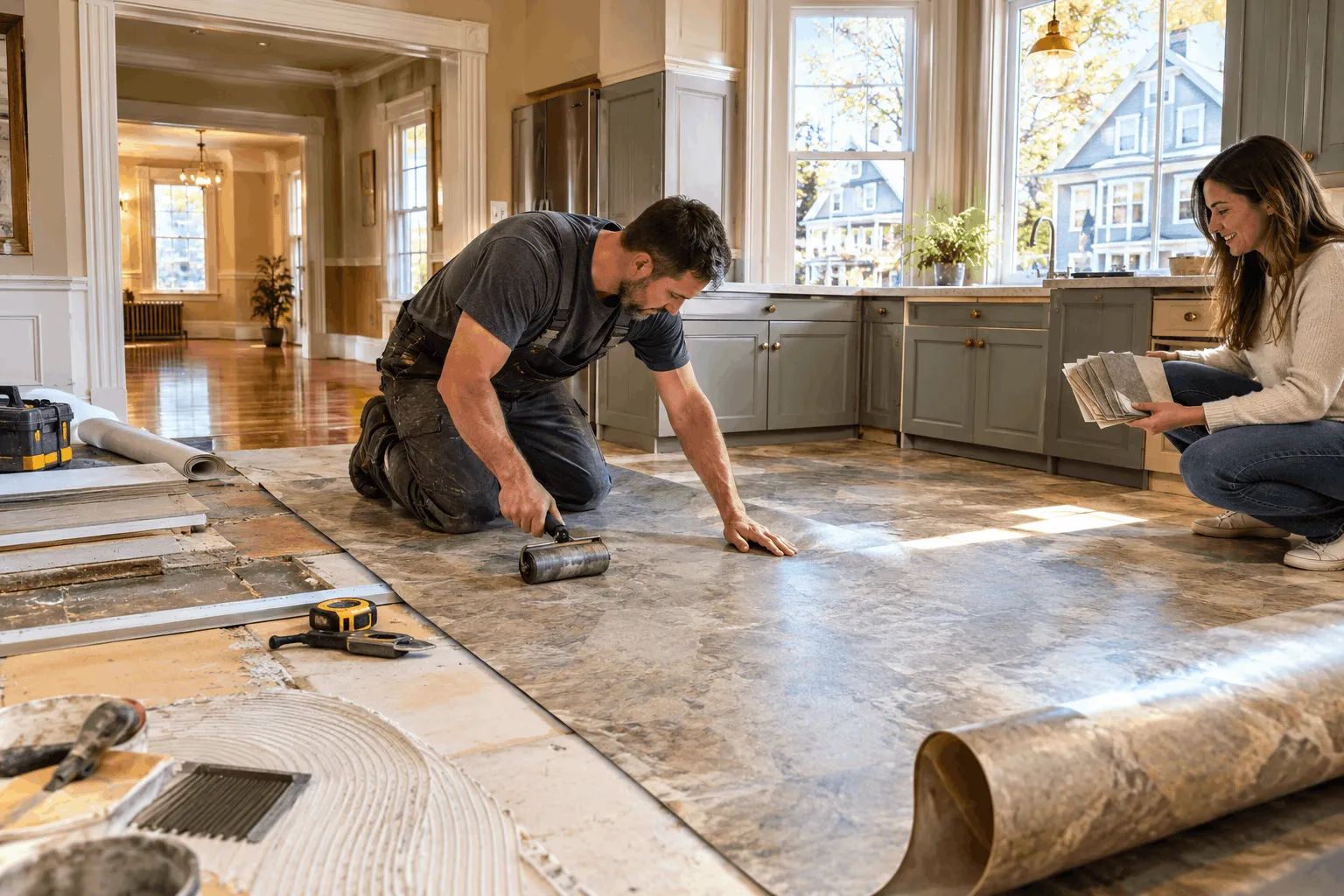
Picture a century-old triple-decker with a kitchen floor that has seen better days. The vinyl is peeling at the corners, the seams have turned gray, and every spill seems to find its way underneath. Many homeowners face this exact problem, and a growing number are turning to an old favorite to solve it.
Linoleum flooring installation in Pawtucket, RI has quietly gained popularity again. Homeowners want floors that look good, hold up to daily life, and come from natural materials. Linoleum checks all three boxes. That makes it worth a closer look before your next renovation.
What Linoleum Actually Is
Many people use "linoleum" and "vinyl" as if they mean the same thing. They don't. Vinyl is a plastic product made from PVC. True linoleum is made from linseed oil, cork or wood flour, tree resins, ground limestone, and natural pigments, all pressed onto a jute backing.
That natural recipe gives linoleum a few unusual traits. It hardens and becomes tougher with age. The color runs all the way through the material, so small scratches don't expose a different layer underneath.
Fresh linoleum also has a slight yellow tint when it first goes down. Installers call this "drying room film." It fades within a few weeks of exposure to natural light, revealing the true color. Knowing this ahead of time saves a lot of worried phone calls.
How the Installation Process Usually Works
Linoleum comes in two main formats. Sheet linoleum arrives in large rolls and is glued directly to the subfloor. Click-together panels, often called floating linoleum, sit on a cork or fiberboard core and lock into place without full adhesive.
Sheet goods offer the cleanest, most water-resistant result. Seams are often heat-welded or sealed, which makes the floor nearly continuous. That's a big plus in kitchens, bathrooms, and laundry rooms.
The subfloor matters more than most people expect. Linoleum is fairly thin, so any bump, nail head, or dip will show through over time. Older homes in the area often need new underlayment or patching before the flooring itself goes down.
The material also needs time to adjust. Most manufacturers recommend letting linoleum rest in the room for at least 48 hours before installation. This allows it to settle to the home's temperature and humidity.
Why Local Homes Present Unique Challenges
Much of Pawtucket's housing stock dates back to the city's mill era. These homes have character, but they also have uneven floors, settled joists, and layers of old flooring stacked on top of one another.
It's not unusual for a contractor to pull up a kitchen floor and find three or four older layers underneath. Some of those older materials, especially tiles from before the 1980s, may contain asbestos. Testing is a smart move before any demolition begins.
New England weather adds another factor. Humid summers and dry, heated winters cause wood subfloors to expand and contract. A proper installation accounts for this movement, especially near exterior walls and around radiators.
The Benefits Homeowners Tend to Notice
Durability is usually the first thing people mention. A well-installed linoleum floor can last 25 to 40 years with basic care. That's far longer than many budget vinyl products.
Linoleum is also easy to live with. It resists dust buildup thanks to natural antistatic properties, which many allergy sufferers appreciate. Regular sweeping and a damp mop with a pH-neutral cleaner keep it looking fresh.
Comfort underfoot is another quiet advantage. Linoleum has a slight give that feels warmer and softer than ceramic tile. Anyone who spends hours cooking or standing at a counter will notice the difference.
Then there's the environmental angle. Because linoleum comes from renewable materials, it breaks down far more easily than plastic flooring at the end of its life. For eco-minded homeowners, that matters.
Design flexibility rounds out the list. Modern linoleum comes in bold solids, soft marbled patterns, and muted earth tones. Sheet goods can even be cut into custom inlays, borders, or simple geometric designs.
Real-World Situations Where Linoleum Makes Sense
Consider a young family renovating a kitchen in an older two-family home. They want something durable enough for spilled juice and dragged chairs, but they don't want plastic. Sheet linoleum with sealed seams gives them a tough, cleanable surface that suits the home's vintage feel.
Or think about a landlord updating units between tenants. Linoleum's long lifespan means fewer replacements over the years. Its through-body color hides everyday wear better than printed vinyl.
Another common scenario involves mixed flooring. Many homeowners pair linoleum in the kitchen and bath with hardwood in living spaces. In these projects, the hardwood is often sanded and finished on site so the color and sheen match the room perfectly.
Homeowners planning this kind of combination often look for a Sand Finish Hardwood Floor Installer in Pawtucket, RI who can coordinate with the linoleum work. Floor heights, transition strips, and finishing schedules all need to line up. Otherwise, the result can look patchy or uneven where the two surfaces meet.
Timing is especially important. Sanding hardwood creates fine dust that can settle into fresh linoleum adhesive. Most experienced crews schedule the sanding and finishing first, then install linoleum once the dust has cleared.
Choosing the Right Professional
Linoleum is less forgiving than many people assume. It can crack if bent too sharply in cold weather, and seams require practiced skill to weld cleanly. A DIY approach works for some click-panel products, but sheet installation is usually best left to someone with experience.
When comparing contractors, homeowners often ask about subfloor preparation, seam treatment, and how old flooring will be handled. Clear answers to these questions usually signal a careful installer. Local flooring firms such as The Flooring Specialist often note that preparation, not the flooring itself, decides how long a floor will last.
Some homeowners also prefer working with a team that handles multiple floor types. Hiring a Sand Finish Hardwood Floor Installer in Pawtucket, RI who also understands resilient flooring can simplify a whole-home project. It reduces scheduling conflicts and keeps transitions consistent.
Caring for Linoleum After Installation
The first few weeks matter most. Avoid heavy mopping right away so the adhesive can fully cure. Place felt pads under chair legs and furniture to prevent dents.
Over the long term, linoleum benefits from occasional polishing or a fresh protective finish. Many newer products come with a factory coating that reduces this need. Still, a little routine care helps the floor keep its color and shine for decades.
Harsh cleaners, especially ammonia and high-alkaline products, should be avoided. They can dry out the linseed oil and dull the surface. A mild cleaner and a well-wrung mop are all most floors need.
Final Thoughts
Linoleum offers a rare mix of durability, comfort, and natural materials. For older homes with plenty of history, it can feel like a fitting choice rather than a compromise.
Anyone considering linoleum flooring installation in Pawtucket, RI should focus on the basics: a solid subfloor, proper acclimation, and an installer who understands the material. Get those right, and the floor will likely outlast many of the appliances sitting on top of it.
Frequently Asked Questions
How long does linoleum flooring installation usually take?
Most single-room projects take one to two days, not counting acclimation time. Larger spaces or homes needing subfloor repair may take longer.
Is linoleum waterproof?
Linoleum is water-resistant, not fully waterproof. Sheet linoleum with sealed or welded seams handles spills well, but standing water should be wiped up quickly.
How much does linoleum flooring cost compared to vinyl?
Linoleum generally costs more than basic vinyl, both for materials and labor. However, its longer lifespan often makes it a better value over time.
Can linoleum be installed over existing flooring?
Sometimes, if the existing floor is flat, firm, and well-bonded. In many older homes, though, removing old layers or adding new underlayment gives a better result.
Why does new linoleum look yellow?
This is a natural film that forms during manufacturing. It fades on its own after a few weeks of exposure to daylight, revealing the floor's true color.
Related Reading
Expert Insights: Navigating the Complex World of Home Improvement
Welcome to our in-depth exploration of Home Improvement. In an era defined by ra...
Why Home Improvement is Transforming the Global Industry Landscape
Welcome to our in-depth exploration of Home Improvement. In an era defined by ra...