Limousine Dispatch Software: Streamline Bookings, Drivers, and Fleet Operations
By Limo Captain
16 Views
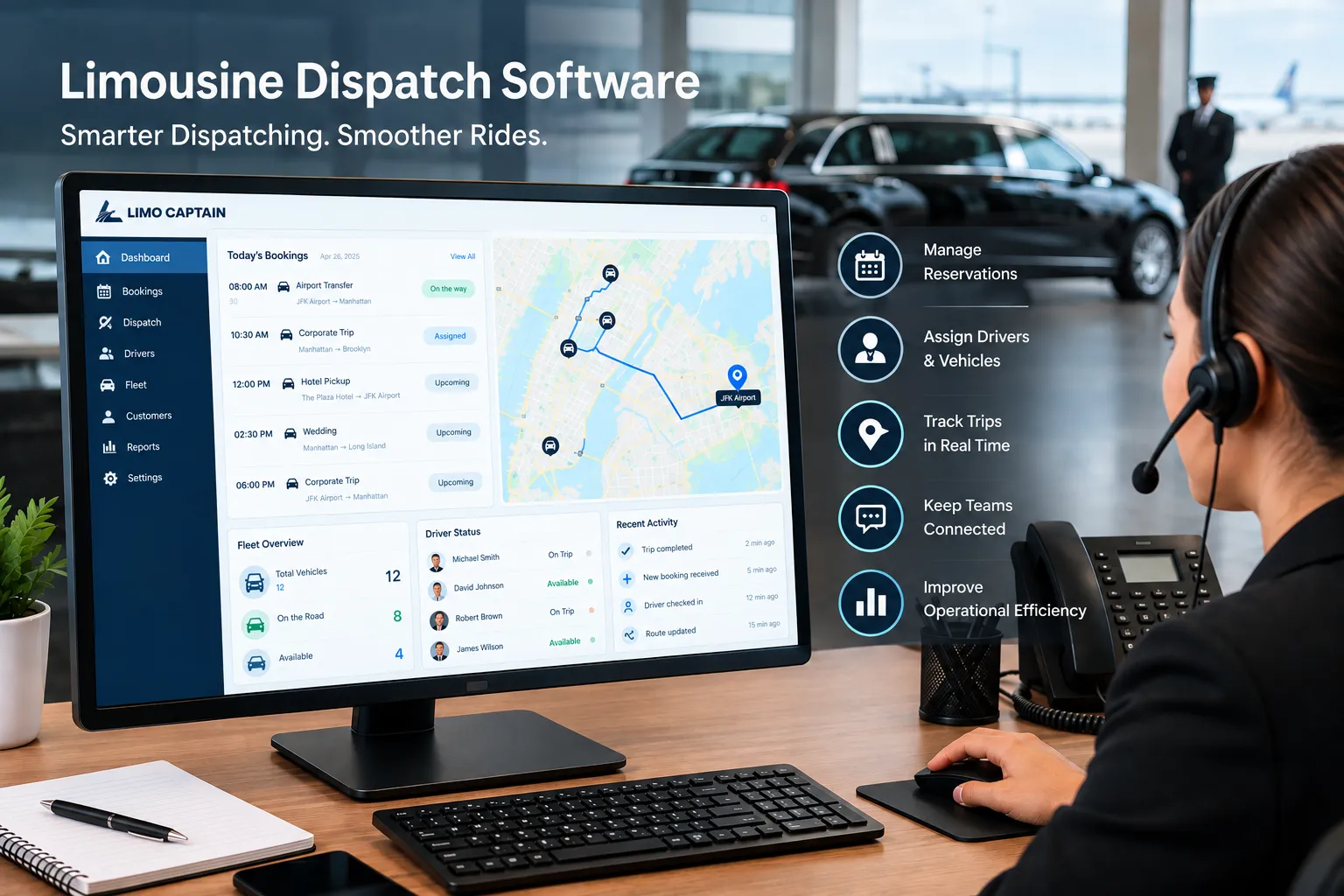
Managing a limousine business requires more than providing comfortable vehicles and professional chauffeurs. Operators must coordinate reservations, assign drivers, monitor trip progress, handle schedule changes, and maintain clear communication with customers. When these tasks depend on phone calls, spreadsheets, and manual records, even a small mistake can cause delays or missed pickups.
Limousine dispatch software helps bring these responsibilities together in one organized system. Limo Captain gives limousine businesses a starting point for exploring connected transportation management workflows that can simplify daily coordination and support business growth.
With the right technology, operators can improve visibility across their fleet, reduce administrative pressure, and deliver a more consistent experience to passengers.
What Is Limousine Dispatch Software?
Limousine dispatch software is a digital system that helps transportation companies manage trips, assign chauffeurs, coordinate vehicles, and organize reservations. Depending on the platform, it may also include online booking, GPS tracking, driver applications, payment processing, and customer notifications.
Instead of relying on separate records for every trip, dispatchers can access essential information through a centralized dashboard.
For example, a limousine company may have several airport pickups scheduled alongside corporate transfers and wedding bookings. A dispatch system helps the team review these assignments, check vehicle availability, and allocate suitable chauffeurs according to their schedules.
When a booking changes, the dispatcher can update the relevant information and communicate the change through the available system features.
The goal is straightforward: make daily transportation operations easier to coordinate while keeping important trip information organized and accessible.
Why Limousine Businesses Need Dispatch Software
Manual dispatching can become difficult when reservation volumes increase. A dispatcher may need to answer customer calls, check driver availability, coordinate pickups, and resolve schedule conflicts at the same time.
Without a reliable overview of the day's assignments, it becomes easier to overlook details or give a driver outdated instructions.
Dispatch software helps reduce these challenges by organizing reservations, schedules, and driver assignments in one place. It can also improve communication between office staff and chauffeurs.
This is particularly valuable for businesses managing multiple vehicles, corporate accounts, airport transfers, and bookings across different locations.
Although software cannot prevent every delay, it gives operators better access to information when making decisions and responding to unexpected changes.
Key Benefits of Limousine Dispatch Software
1. More Organized Reservation Management
Every limousine reservation contains important details, including pickup time, destination, passenger requirements, vehicle preferences, and contact information.
A centralized system helps dispatchers review these details without searching through multiple spreadsheets or message threads. It also makes it easier to identify upcoming trips and review booking changes.
For example, when a customer changes an airport pickup time, staff can update the reservation and notify the assigned chauffeur. Keeping the information consistent helps prevent misunderstandings.
Businesses should choose a system that makes it easy to create, edit, and review reservations while maintaining clear records of important changes.
2. Better Driver and Vehicle Scheduling
Assigning the right chauffeur and vehicle is a central part of dispatching. Operators must consider existing assignments, estimated travel time, vehicle suitability, and driver availability.
Dispatch software gives the team a clearer view of scheduled trips and available resources. This can help reduce overlapping assignments and improve coordination during busy periods.
For instance, a dispatcher handling several corporate pickups can review the schedule before assigning a chauffeur to another journey.
The software supports these decisions, but accurate information remains essential. Dispatchers should account for traffic, journey duration, rest requirements, and unexpected delays rather than relying on the schedule alone.
3. Improved Communication and Trip Visibility
A connected dispatch system can help drivers receive updated instructions and allow dispatchers to review trip progress.
Depending on the platform, features may include automated notifications, trip status updates, GPS tracking, and arrival confirmations.
These tools are particularly useful when a driver encounters traffic or a customer changes the pickup location. The team can review the available information and coordinate an appropriate response.
Operators should verify how frequently location data updates, whether notifications are configurable, and what happens when a driver's device loses connectivity.
4. More Consistent Customer Service
Customers expect professional communication, reliable pickups, and accurate booking information. Disorganized dispatching can undermine these expectations even when the vehicles and chauffeurs are excellent.
A well-managed system helps staff provide consistent information and respond to booking changes more efficiently.
Automated confirmations and notifications, where supported, can also reduce uncertainty for passengers.
However, technology should complement human service rather than replace it. Courteous communication, realistic pickup estimates, and trained chauffeurs remain essential to a positive customer experience.
Livery Software: Managing More Than Dispatching
Livery software can support a broader range of transportation business activities beyond assigning drivers. Depending on the provider, it may combine reservations, dispatching, customer records, payment processing, reporting, and fleet coordination.
Using connected tools can reduce duplicate data entry and help staff work from consistent information.
For example, when a reservation is entered into an integrated system, the information may become available to the dispatch team and assigned chauffeur. After the trip, the operator may be able to review its status and associated payment records.
Before selecting a platform, determine which features are included in the standard package and which require additional subscriptions or integrations.
A company should choose software according to its actual workflow, not simply the number of features advertised.
Limo Driver App: Connecting Chauffeurs With Dispatchers
A limo driver app extends dispatch operations to chauffeurs in the field. It allows drivers to access trip assignments and, depending on the application, view pickup instructions, use navigation, receive updates, and report trip progress.
This connection can reduce routine phone calls and help drivers stay informed when schedules change.
For example, if a dispatcher updates a pickup location, the driver should receive the revised details through the supported workflow. The driver can then follow the new instructions and update the trip status when appropriate.
When evaluating a driver app, consider ease of use, device compatibility, notification reliability, and integration with the main dispatch system.
Training is equally important. Drivers should understand when to accept assignments, report delays, and mark trips as completed.
SEO Limousine Company: Generating More Organic Leads
An effective SEO limousine company strategy can help transportation businesses become more visible to people searching for chauffeur services online.
Start by creating useful website pages for your main services, such as airport transfers, corporate transportation, wedding limousines, and private events. Include relevant service-area information and explain what customers can expect when booking.
Use keywords naturally in page titles, headings, and descriptions. Keep business contact information accurate, improve mobile usability, and publish helpful answers to common customer questions.
Local SEO can also support visibility in relevant geographic searches. Genuine customer reviews and consistent business listings help potential passengers assess your company.
SEO does not guarantee specific rankings or immediate bookings. Its purpose is to make useful information easier to discover and help qualified visitors understand why your service meets their needs.
Limo Service Google Ads: Turning Search Traffic Into Bookings
A limo service Google Ads campaign can help a transportation company reach customers actively searching for services such as airport transfers or executive travel.
Start with clearly defined goals, relevant search terms, and landing pages that match each advertisement. A customer clicking an airport transfer ad should find useful airport service information and an easy way to request or complete a booking.
Monitor conversions, qualified inquiries, and cost per booking rather than measuring success by clicks alone. Review search terms regularly and exclude irrelevant queries when appropriate.
It is also important to connect marketing plans with dispatch capacity. Generating more inquiries is helpful only if your team can respond promptly and deliver the promised service.
How to Choose the Right Dispatch System
Selecting software is an operational decision that deserves careful evaluation.
-
Identify your needs: List your biggest challenges, such as booking errors, scheduling conflicts, or limited trip visibility.
-
Check essential features: Confirm that reservation management, driver assignments, and communication tools meet your requirements.
-
Review integrations: Verify compatibility with existing booking platforms, driver apps, payment providers, and navigation services.
-
Compare total costs: Consider setup fees, subscriptions, transaction charges, and additional feature costs.
-
Evaluate support and security: Ask about technical assistance, access permissions, data protection, and backup procedures.
-
Test realistic scenarios: Request a demonstration that covers a new booking, a driver assignment, a schedule change, and trip completion.
Involving dispatchers and chauffeurs in the evaluation can help identify usability issues before the software is introduced across the business.
Conclusion
Limousine dispatch software helps transportation businesses organize reservations, coordinate drivers, manage schedules, and improve communication. When combined with livery software, a connected driver app, and effective marketing, it can support a more organized and customer-focused operation.
The best system is one that addresses your current challenges, fits your team's workflow, and can accommodate future growth. Compare essential features, evaluate integration options, and test the software before making a commitment.
For limousine operators looking to improve booking coordination and streamline daily fleet operations, Limo Captain is a starting point for exploring connected transportation management tools. Take the time to assess your requirements and choose technology that helps your business operate more efficiently while delivering dependable service to every passenger.