Legal Metrology for Prepackaged Commodities Guide for Importers
63 Views
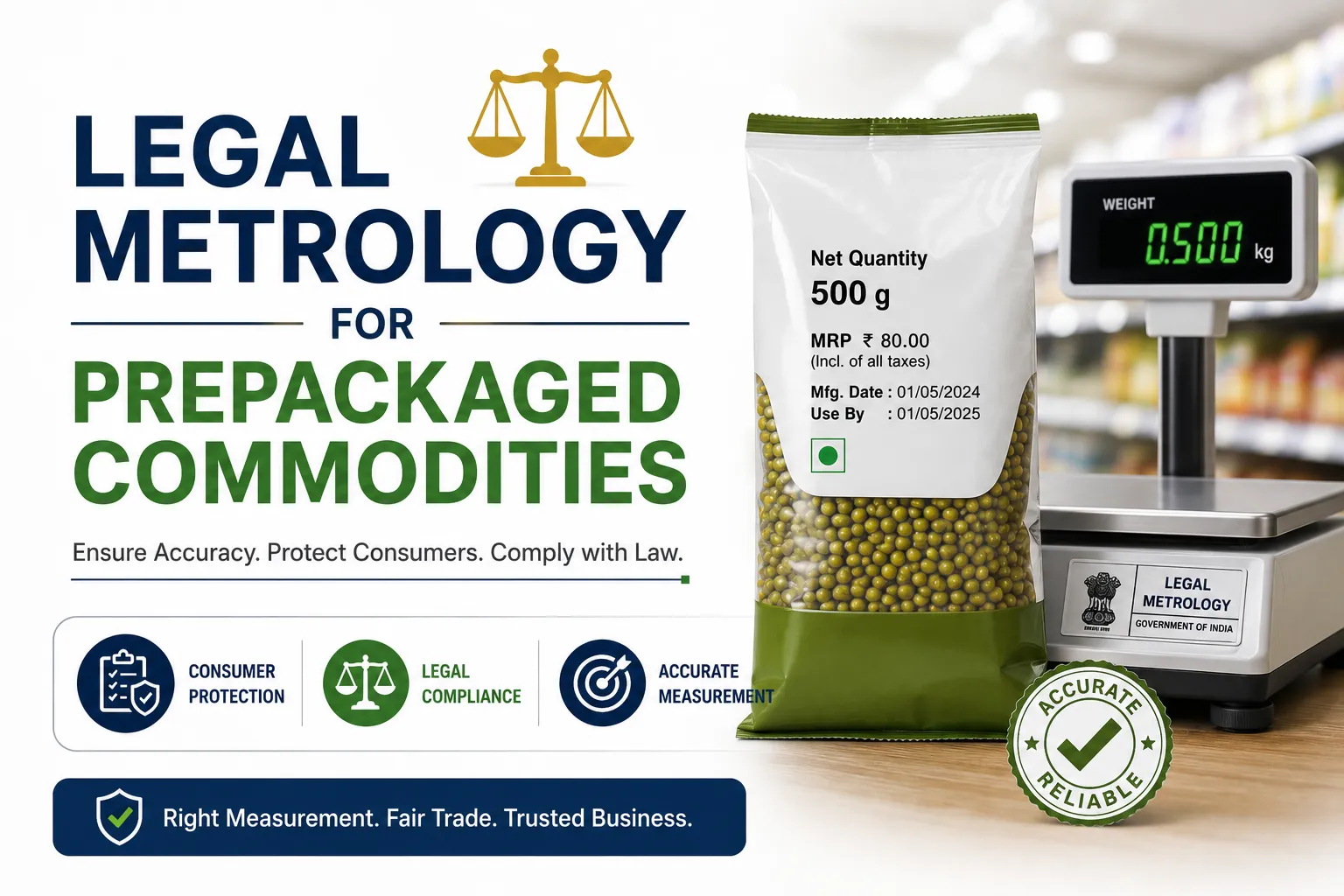
India's manufacturing and export sectors operate under a structured legal framework that promotes industrial growth while ensuring consumer protection and fair trade practices. Businesses involved in production, imports, packaging, and exports must comply with various government regulations to maintain smooth operations and avoid legal complications. Two important frameworks supporting these objectives are Legal Metrology for Prepackaged Commodities and the Export Promotion of Capital Goods Scheme.
While Legal Metrology for Prepackaged Commodities ensures packaged goods carry accurate declarations for consumer protection, the Export Promotion of Capital Goods Scheme helps manufacturers modernize production by allowing concessional import of capital goods. Understanding both frameworks enables businesses to improve manufacturing efficiency while maintaining complete regulatory compliance.
What Is Legal Metrology for Prepackaged Commodities?
Legal Metrology for Prepackaged Commodities refers to the legal regulations governing packaged products sold or distributed in India. These rules require businesses to provide specific declarations on product packaging to ensure transparency and consumer awareness.
Mandatory declarations generally include product quantity, manufacturer or importer details, country of origin where applicable, maximum retail price, date of manufacture or packing, customer care information, and other prescribed details.
The objective is to protect consumers by ensuring they receive complete and accurate product information before making purchasing decisions.
Importance of Legal Metrology for Prepackaged Commodities
Accurate labeling supports fair trade.
Improves Consumer Transparency
Clear declarations promote informed purchasing.
- Proper labeling enables consumers to understand product specifications, pricing, quantity, manufacturer information, and packaging details before purchasing.
- Transparent declarations reduce confusion while increasing customer confidence.
Ensures Regulatory Compliance
Following legal standards minimizes business risk.
- Businesses complying with Legal Metrology regulations reduce the possibility of penalties, product recalls, customs delays, and legal disputes.
Strengthens Brand Reputation
Responsible businesses earn customer trust.
- Organizations maintaining accurate packaging standards demonstrate professionalism and commitment to consumer protection.
Understanding the Export Promotion of Capital Goods Scheme
The Export Promotion of Capital Goods Scheme (EPCG Scheme) is a government initiative that supports exporters by allowing the import of capital goods at concessional customs duties.
The scheme encourages manufacturers to modernize production facilities by reducing the cost of importing machinery and equipment required for export-oriented manufacturing. Businesses receiving these benefits commit to fulfilling prescribed export obligations within specified timelines.
The scheme plays a significant role in strengthening India's manufacturing sector and improving international competitiveness.
Benefits of the Export Promotion of Capital Goods Scheme
Government incentives encourage industrial modernization.
Lower Capital Investment
Reduced import costs improve affordability.
- Businesses importing eligible machinery under the scheme significantly reduce production expansion costs.
- Financial savings allow manufacturers to invest in innovation, technology upgrades, and operational improvements.
Enhanced Manufacturing Capability
Advanced machinery increases efficiency.
- Modern production equipment improves product quality, manufacturing consistency, production capacity, and overall operational performance.
Greater Export Competitiveness
Improved infrastructure supports global growth.
- Efficient production systems help businesses satisfy international quality standards while expanding export opportunities.
How Legal Metrology for Prepackaged Commodities and Export Promotion of Capital Goods Scheme Complement Each Other
Although these frameworks regulate different aspects of business operations, many manufacturers benefit from complying with both.
A business importing advanced packaging machinery through the Export Promotion of Capital Goods Scheme may manufacture packaged products that must comply with Legal Metrology for Prepackaged Commodities regulations before entering the Indian market.
Maintaining compliance with both frameworks ensures manufacturing efficiency while protecting consumer interests.
Industries That Benefit from Both Frameworks
Several industries frequently require both regulatory systems.
Food and Beverage Manufacturers
Packaging compliance remains essential.
- Food manufacturers investing in advanced packaging equipment through the EPCG Scheme must ensure packaged products comply with Legal Metrology requirements.
Consumer Goods Companies
Retail products require accurate declarations.
- Businesses manufacturing cosmetics, healthcare products, household goods, and packaged consumer items benefit from efficient production while maintaining proper labeling standards.
Electronics Manufacturers
Imported products require structured compliance.
- Electronics businesses modernizing manufacturing facilities often comply with packaging regulations alongside export incentive schemes.
Best Practices for Successful Compliance
Good planning supports business efficiency.
Maintain Proper Documentation
Complete records simplify approvals.
- Businesses should preserve import documents, packaging specifications, machinery invoices, compliance certificates, labeling records, customs documentation, and export records.
Regularly Review Product Labels
Packaging requirements should remain current.
- Periodically verifying declarations helps ensure compliance with changing Legal Metrology regulations.
Stay Updated with Government Policies
Regulatory frameworks continue evolving.
- Monitoring updates in packaging standards and foreign trade policies helps businesses avoid unnecessary compliance challenges.
Long-Term Business Advantages
Responsible compliance strengthens sustainable growth.
Improved Corporate Reputation
Transparency builds customer confidence.
- Companies maintaining proper packaging standards and modern manufacturing capabilities strengthen relationships with customers and business partners.
Better Operational Performance
Modern infrastructure improves productivity.
- Combining efficient production technology with compliant packaging systems creates smoother manufacturing operations.
Stronger International Presence
Reliable businesses compete more effectively.
- Organizations maintaining both manufacturing excellence and regulatory compliance are better positioned for long-term export success.
Conclusion
Legal Metrology for Prepackaged Commodities and the Export Promotion of Capital Goods Scheme are essential components of India's regulatory environment for manufacturers, importers, and exporters. While Legal Metrology regulations ensure transparency through standardized product labeling, the Export Promotion of Capital Goods Scheme encourages industrial modernization by reducing the cost of importing advanced production equipment.
Businesses successfully integrating both frameworks strengthen manufacturing efficiency, improve regulatory compliance, enhance consumer confidence, and build a solid foundation for sustainable business growth.
Need expert assistance with Legal Metrology for Prepackaged Commodities or the Export Promotion of Capital Goods Scheme? Connect with experienced compliance professionals who can simplify documentation, ensure regulatory approvals, and help your business achieve efficient manufacturing with complete legal compliance.
Related Reading
Top 10 Hidden Secrets About Business & Finance You Need to Know
Welcome to our in-depth exploration of Business & Finance. In an era defined...
Why Business & Finance is Transforming the Global Industry Landscape
Welcome to our in-depth exploration of Business & Finance. In an era defined...