Laparoscopic Surgery in Vasai: What Patients Need to Know Before Choosing a Hospital
16 Views
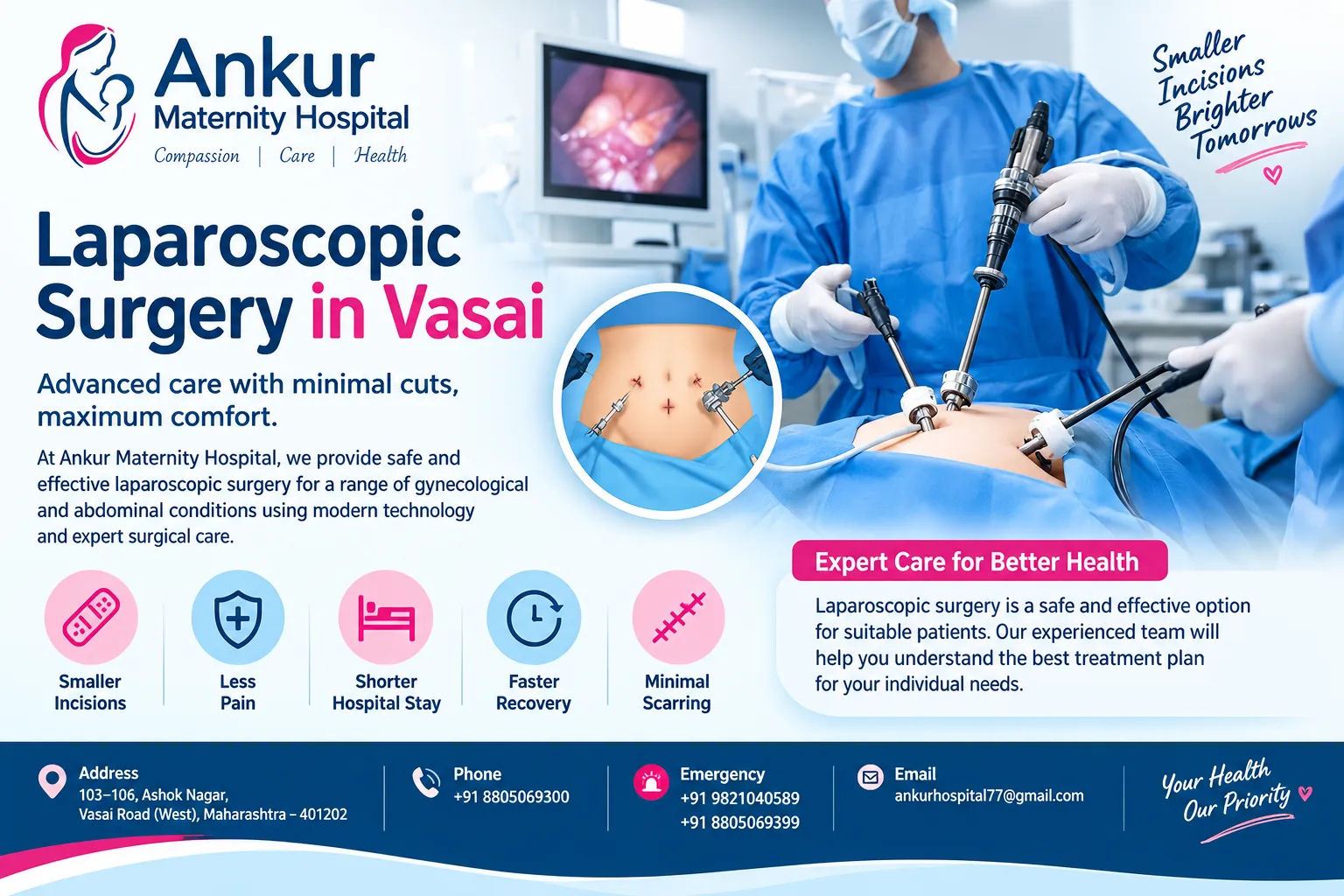
Minimally invasive surgery has changed how gynaecological conditions are diagnosed and treated — here is a clear, practical guide to understanding laparoscopic procedures, their benefits, and why facility choice matters more than most patients realise.
Most people assume that surgery means a long hospital stay, visible scars, and weeks of recovery. That assumption is outdated. Laparoscopic surgery has fundamentally changed the picture, particularly for women dealing with gynaecological conditions — and access to this technology is no longer limited to large city hospitals. Ankur Maternity and Nursing Home, led by Dr. Dilip Yadav, offers laparoscopic surgery in Vasai for patients across the region, bringing advanced surgical care closer to home for families in Vasai-Virar and beyond.
What Is Laparoscopic Surgery and Why Does It Matter?
Laparoscopy is a surgical technique that uses a thin, camera-equipped instrument called a laparoscope inserted through small incisions — typically less than 1.5 cm — to visualise and operate inside the abdomen or pelvis. The surgeon views magnified images on a monitor in real time and performs the procedure using specialised instruments through one or two additional tiny cuts.
The difference compared to open surgery is significant. Patients experience less post-operative pain, lower risk of infection, minimal blood loss, and recovery measured in days rather than weeks. According to research published in gynaecological surgery journals, patients undergoing laparoscopic procedures are discharged, on average, 2–3 days earlier than those who undergo conventional open surgery for the same conditions.
Conditions Treated Through Laparoscopic Surgery
At Ankur Maternity and Nursing Home, laparoscopic surgery in Vasai
covers a wide clinical scope. Common gynaecological conditions addressed include:
- Ovarian cysts — removal or drainage without large abdominal cuts
- Endometriosis — excision or ablation of endometrial tissue outside the uterus
- Uterine fibroids — laparoscopic myomectomy preserving uterine integrity
- Ectopic pregnancy — surgical management through minimally invasive access
- Blocked fallopian tubes — relevant in infertility evaluation and treatment
- Diagnostic laparoscopy — when imaging alone cannot confirm a diagnosis
This last point is worth emphasising. Diagnostic laparoscopy remains the gold standard for investigating unexplained pelvic pain and infertility. Non-invasive scans can miss small adhesions, subtle endometriosis, or minor tubal abnormalities that are clearly visible once the camera is inside. For patients consulting Ankur Maternity for infertility treatments in Vasai, diagnostic laparoscopy often provides answers that months of other tests could not.
The Connection Between Laparoscopy and Infertility Treatment
Fertility and laparoscopy are closely linked. The World Health Organization estimates that roughly 15 percent of couples globally face difficulty conceiving, and structural gynaecological issues — fibroids, blocked tubes, endometriosis — are responsible for a substantial share of those cases.
Correcting these structural problems through laparoscopic surgery often directly improves a patient's chances of natural conception or improves the success rate of assisted reproduction procedures. At Ankur Maternity and Nursing Home, the overlap between obstetrics and gynaecology services means patients dealing with infertility receive coordinated care: from infertility consultation through surgical correction to pregnancy monitoring, all under one roof on Ambadi Road, Vasai West.
What to Expect: Before, During, and After the Procedure
Pre-operative preparation typically includes blood tests, ultrasound imaging, anaesthesia consultation, and fasting instructions. The procedure itself is performed under general anaesthesia and usually takes between 30 minutes and 2 hours depending on complexity.
Post-operatively, most patients are mobile within 24 hours. Shoulder discomfort from residual gas used during the procedure is common and resolves within a day or two. Patients typically return to normal activity within 5–7 days for diagnostic procedures, or 2–3 weeks after more extensive operative laparoscopy.
Choosing a facility equipped with the right surgical infrastructure — and a surgeon with direct experience in gynaecological laparoscopy — is non-negotiable. Technique matters as much as technology.
About the Treating Physician
Dr. Dilip Yadav heads clinical services at Ankur Maternity and Nursing Home, bringing specialised expertise in obstetrics, gynaecology, and minimally invasive gynaecological surgery. The hospital operates from 103–106, First Floor, Ashok Nagar Building, B Wing, Ambadi Road, Vasai West — a location accessible to patients from across Vasai-Virar.
Key Takeaways
Laparoscopic surgery in Vasai is now a practical, accessible option — not a service reserved for Mumbai's larger hospitals. Smaller incisions, faster recovery, and diagnostic precision make it the preferred approach for most gynaecological surgical needs. Patients dealing with chronic pelvic conditions, fertility concerns, or unexplained symptoms should not delay evaluation.
Book a consultation with Dr. Dilip Yadav at Ankur Maternity and Nursing Home. Call 8805069300 or visit [ankurmaternityhospital.in](https://ankurmaternityhospital.in/) to schedule your appointment.