Lab Diamond Earrings: A Smart Guide to Style and Quality
67 Views
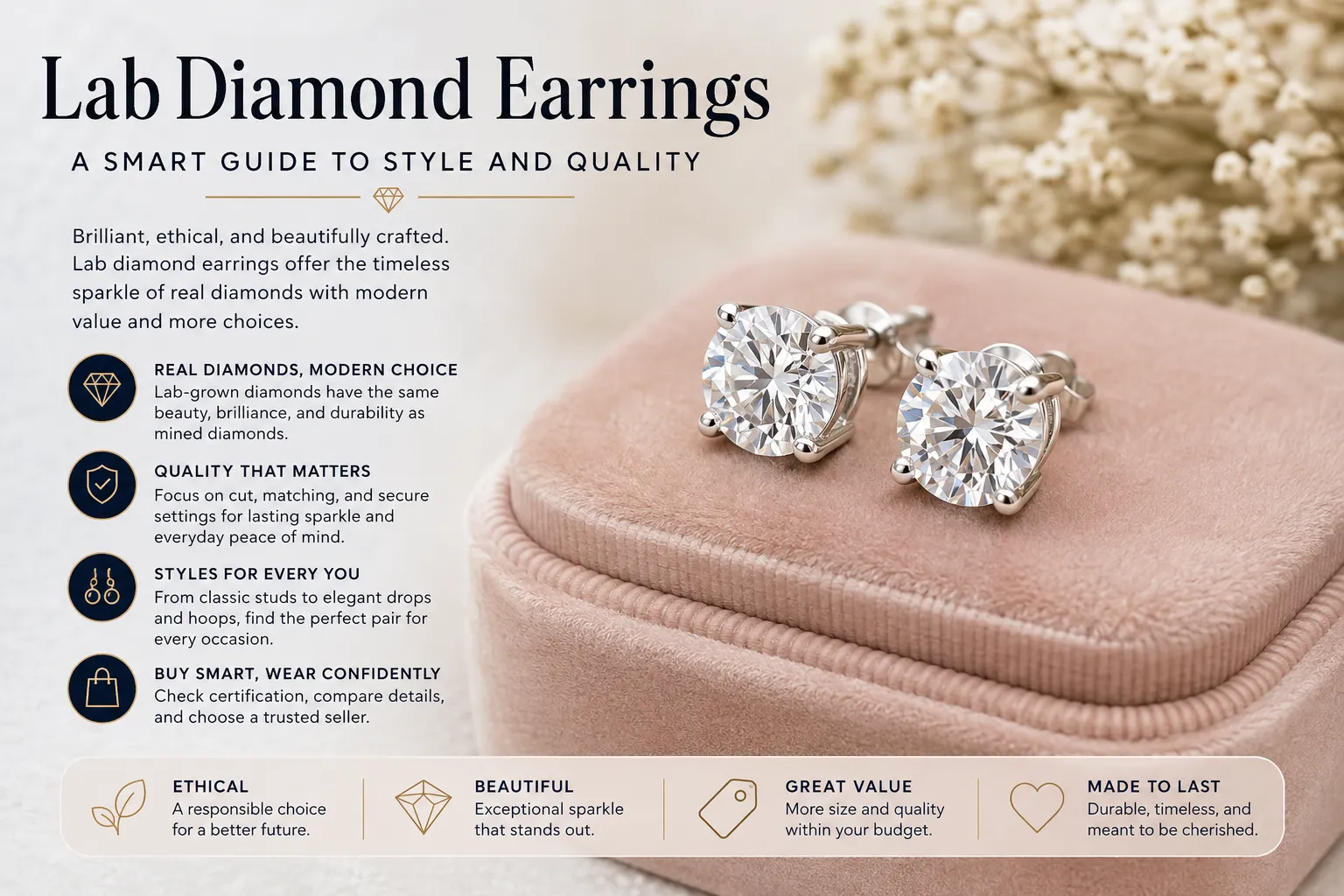
Diamond earrings have a rare ability to feel polished without looking overdone. They work with office clothes, evening outfits, and simple weekend looks. Lab diamond earrings offer that same versatile style while giving shoppers more options across size, setting, and budget.
Still, choosing a pair takes more than finding a design that looks attractive. Diamond quality, metal, setting security, certification, and comfort all affect the final purchase. Understanding these details makes it easier to choose earrings you will enjoy wearing for years.
Why Lab Diamond Earrings Appeal to Modern Buyers
Lab-grown diamonds are real diamonds created in controlled environments rather than mined from the earth. They have the same crystal structure and key physical properties as mined diamonds. That means they offer the brilliance, hardness, and familiar appearance people expect from diamond jewelry.
One major advantage is choice. Buyers can often consider a larger stone or higher quality grade within the same spending range. This flexibility is especially useful with earrings because you are purchasing two diamonds instead of one.
The growing range of lab diamonds also gives shoppers more freedom with shapes and designs. Round, oval, pear, princess, cushion, and emerald cuts can all create distinct looks. The right choice depends on personal style rather than one universal standard.
Understanding Diamond Quality Before You Buy
Diamond earrings are viewed from farther away than engagement rings, but quality still matters. The traditional 4Cs provide a useful starting point: cut, color, clarity, and carat weight.
Cut Has the Biggest Visual Impact
Cut affects how well a diamond reflects light. A well-cut stone can appear bright, lively, and crisp even at a modest size. Poor proportions may make a diamond look dull despite strong color or clarity grades.
For round diamonds, prioritize a high cut grade when possible. Fancy shapes require closer attention because grading standards differ. Look at videos or detailed images to judge symmetry and light performance.
Color and Clarity Can Offer Value
Earrings give buyers some flexibility with color. Near-colorless stones can look bright once placed in white gold or platinum. Yellow or rose gold settings may also make slight warmth less noticeable.
Clarity refers to internal and external characteristics. Tiny inclusions that require magnification often have little effect on everyday appearance. Choosing eye-clean stones can be more practical than paying extra for a very high clarity grade.
Carat Weight Works Differently for Earrings
Earrings are commonly sold by total carat weight. A one-carat total weight pair may contain two diamonds weighing about half a carat each. Always check whether a listed weight refers to each stone or the complete pair.
Matching also matters. The two diamonds should look balanced in size, shape, color, and brightness. Small grading differences may be acceptable if the stones appear nearly identical when worn.
Popular Styles for Different Looks
The best design depends on how often you plan to wear the earrings and how much visual impact you want.
Studs for Everyday Wear
Diamond studs remain one of the easiest jewelry styles to wear. Their clean design works with casual clothing, professional outfits, and formal pieces. Round brilliant studs offer classic sparkle, while oval and princess cuts create a more distinctive profile.
Four-prong settings expose more of the diamond. Bezel settings surround the stone with metal and provide a sleek appearance with added edge protection. Three-prong martini settings sit close to the ear and create a light, minimal look.
Hoops for More Presence
Diamond hoops create a stronger style statement while remaining versatile. Small huggie hoops suit daily wear because they stay close to the earlobe. Larger hoops create more movement and visual impact.
Pay attention to where the diamonds sit. Some designs place stones only across the front, while inside-out hoops add diamonds to visible inner surfaces. The second option can create more sparkle from several angles.
Drops and Dangles for Special Occasions
Drop earrings add movement and length around the face. They may combine several diamond shapes or use a single stone as the focal point.
Longer designs work well for weddings, dinners, and formal events. Short drops can offer a similar effect while remaining practical enough for regular wear.
Choosing the Right Metal and Setting
The metal around a diamond changes both its appearance and its durability. White gold creates a bright, coordinated look and remains a popular choice for diamond earrings. Platinum provides excellent durability but usually costs more.
Yellow gold creates warm contrast against bright stones. Rose gold offers a softer tone that can feel modern or romantic, depending on the design. Consider existing jewelry if you want the new pair to coordinate with pieces you already own.
Setting security deserves equal attention. Prongs should hold each stone firmly without appearing uneven or damaged. For active lifestyles, bezel or low-profile settings may reduce snagging on clothing and hair.
Certification and Seller Details Matter
Independent grading reports help buyers understand what they are purchasing. Organizations such as the Gemological Institute of America and International Gemological Institute grade laboratory-grown diamonds using established quality factors.
A grading report may list carat weight, measurements, color, clarity, and other characteristics. Check that the report number matches the diamond information provided by the seller.
Seller policies matter too. Review return periods, warranties, repair services, and replacement terms before buying. Clear product specifications are especially valuable when purchasing online because you cannot inspect the earrings in person first.
How to Choose the Right Size
Size should match your lifestyle as much as your taste. Smaller studs tend to feel subtle and comfortable for daily use. Larger stones attract more attention but may require stronger backs and a setting that prevents the earrings from tilting forward.
Think about earlobe size as well. A diamond that looks balanced on one person may appear larger or smaller on another. Product photos, millimeter measurements, and virtual try-on tools can provide better context than carat weight alone.
For hoops, consider diameter and thickness. Huggies stay close to the ear, while medium and large hoops create a more noticeable outline around the face.
Comfort and Earring Backs Are Easy to Overlook
A beautiful pair will not get much wear if it feels uncomfortable. Weight, post length, setting height, and backing style all affect comfort.
Push backs are simple and common, but they should fit the post securely. Screw backs add security and can suit higher-value studs, though they take longer to put on. Some larger earrings use supportive backs that distribute weight across more of the earlobe.
People with metal sensitivities should also check the alloy used in the setting and posts. Knowing the exact metal composition can help prevent an expensive pair from sitting unused.
Caring for Lab Diamond Earrings
Diamonds can collect skin oils, cosmetics, and hair products over time. This buildup reduces sparkle even when the stones themselves remain undamaged.
For routine cleaning, use warm water with a small amount of mild dish soap. Soak the earrings briefly, then clean around the setting with a soft brush. Rinse carefully and dry them with a lint-free cloth.
Inspect prongs and backs during cleaning. If a stone feels loose or a prong looks bent, stop wearing the earrings until a jeweler checks the setting. Store each pair separately to reduce scratches between jewelry pieces.
Making a Purchase You Will Enjoy Wearing
A good pair of lab diamond earrings should balance beauty, quality, comfort, and practical value. Start with a style that fits your routine, then compare cut, matching, metal, setting, and total carat weight. Certification and clear seller policies can add useful confidence to the decision.
The expanding selection of lab diamonds makes it easier to prioritize the features you actually notice and enjoy. Rather than chasing the highest grade in every category, focus on bright stones, secure construction, and a design that suits your personal style. A carefully chosen pair can become an easy, dependable part of your jewelry collection.
Related Reading
Why Lifestyle & Culture is Transforming the Global Industry Landscape
Welcome to our in-depth exploration of Lifestyle & Culture. In an era define...
Expert Insights: Navigating the Complex World of Lifestyle & Culture
Welcome to our in-depth exploration of Lifestyle & Culture. In an era define...