Understanding STP & ETP Plant Functions
91 Views
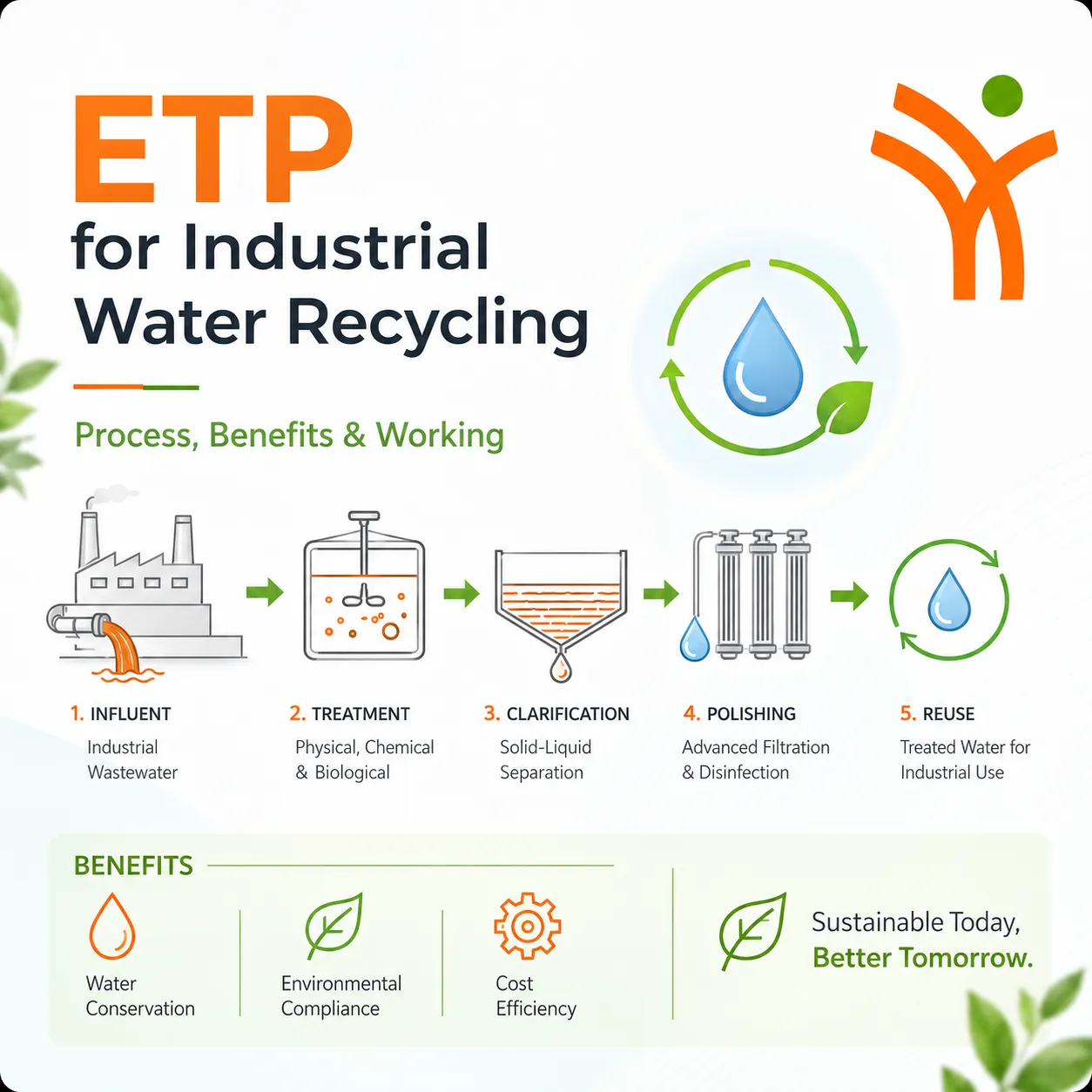
Water pollution has always been a big problem in India. The growing industries, commercial buildings, and residential areas create water pollution in huge quantities. The amount of clean water for operations gets limited; to treat this amount of wastewater, a sustainable solution is required: STP & ETP plant functions work by treating the wastewater into reusable water.
STP & ETP plant functions keep the environment clean and reduce carbon emissions. There are three wastewater plants that help clean the water for operational work. Sewage Treatment Plant (best for residential areas) and Effluent Treatment Plant (best for industrial pollutants). This blog revolves around how these WTP plants (STP & ETP plant functions) convert polluted water into reusable water.
What is a Sewage Treatment Plant (STP)?
A Sewage Treatment Plant (STP) is an instrument that removes harmful and contaminated pollutants from domestic, commercial, and industrial wastewater, making it safe for all chores other than drinking and bathing.
The procedure of the STP plant is simple: it collects the polluted water, treats it, and discharges it for reuse purposes. A sewage treatment plant is mainly used in the residential sector, where sewage waste is mainly collected and treated to produce reusable water.
Function of STP plants
The main function of a sewage treatment plant is to treat the domestic sewage waste collected from residential areas. The sewage plant removes the solids, organic matter, and harmful microorganisms. It produces treated water suitable for landscaping, flushing, and other non-potable uses.
Areas where a Sewage Treatment Plant (STP) is used:
1) Residential Society
2) Commercial Complex
3) Educational Institutions
4) Hotels
Though mainly the sewage treatment plant is installed in residential societies, it is not mandatory. It can also be installed in corporate buildings & educational institutions as well.
The installation of an STP plant reduces the consumption of fresh water for household chores. Since the water that gets recycled is reused for washing and flushing.
What is an Effluent Treatment Plant (ETP)?
An effluent treatment plant is used on an industrial level. Chemical industries dispose of their wastewater directly into the rivers. This creates problems for the marine life and humans, too.
To solve this issue, an effluent treatment plant is installed. The procedure for it is to collect the chemically affected water, treat it aggressively, and then reuse it for all purposes other than drinking.
Function of Effluent Treatment Plant (ETP):
Industrial wastewater treatment is done on the water that contains contaminants, such as oil, chemicals, and toxic elements. These can be harmful to the environment. Hence, the pollutants are reduced and treated before disposing of them in the water. The ETP plant helps the industrial sector in maintaining the environmental norms.
Areas where Effluent Treatment Plants are used:
- Textile Industry
- Pharmaceutical Industry
- Chemical manufacturing units
- Paper and pulp manufacturing industry
- Food processing units
Key Difference between STP & ETP Plant Functions
The key difference between the two STP & ETP plant functions is as follows:
Sewage Treatment Plant (STP)
Main Purpose: Treatment of sewage water from the residential sector and making it suitable for reuse purposes.
Common Users: Residential societies and the corporate sector.
Effluent Treatment Plant (ETP)
Main Purpose: To treat the contaminated wastewater from the chemical-based industries and make it suitable for reuse.
Common Users: Manufacturing industries
Important STP & ETP Plant functions for environmental Safety & reuse purposes
The important STP & ETP plant functions for environmental protection & reuse of treated water:
- Environmental pollution is reduced.
- STP & ETP plant functions conserve the natural water resources.
- One of the sustainable water management steps.
- The organisations can easily meet ESG goals and regulatory requirements.
- STP & ETP plant functions also make the water reusable and lower operational costs.
Wrapping Up
Both STP & ETP plant functions have the goal of reducing wastewater and making it reusable for purposes such as washing, flushing, and gardening. Sewage treatment plants are mainly used in domestic areas, whereas effluent treatment plants treat the chemicals generated from the industries. Together, these systems help protect the environment, conserve water resources, and support sustainable development.
Frequently Asked Questions
What is the main difference between STP & ETP plant functions?
An STP treats domestic sewage from residential and commercial sources, while an ETP treats industrial wastewater containing chemicals and other pollutants.
Can treated water from a Sewage Treatment Plant be reused?
Yes, treated water can be reused for landscaping, flushing, cooling towers, and other non-potable applications.
Why do industries require an Effluent Treatment Plant?
Industries generate wastewater with contaminants that can harm the environment, making treatment necessary before discharge or reuse.
Can a facility have both STP & ETP plant functions?
Yes, facilities that generate both domestic sewage and industrial wastewater may require separate STP & ETP plant functions systems for effective treatment.
How do water treatment plants support sustainability?
They promote water conservation, reduce pollution, enable water reuse, and help organisations comply with environmental regulations.
Domestic Biogas , Commercial Biogas , BioGas , Sewage Water Treatment Plant , Effluent Water Treatment Plant , Zero Liquid Discharge Water Treatment Plant