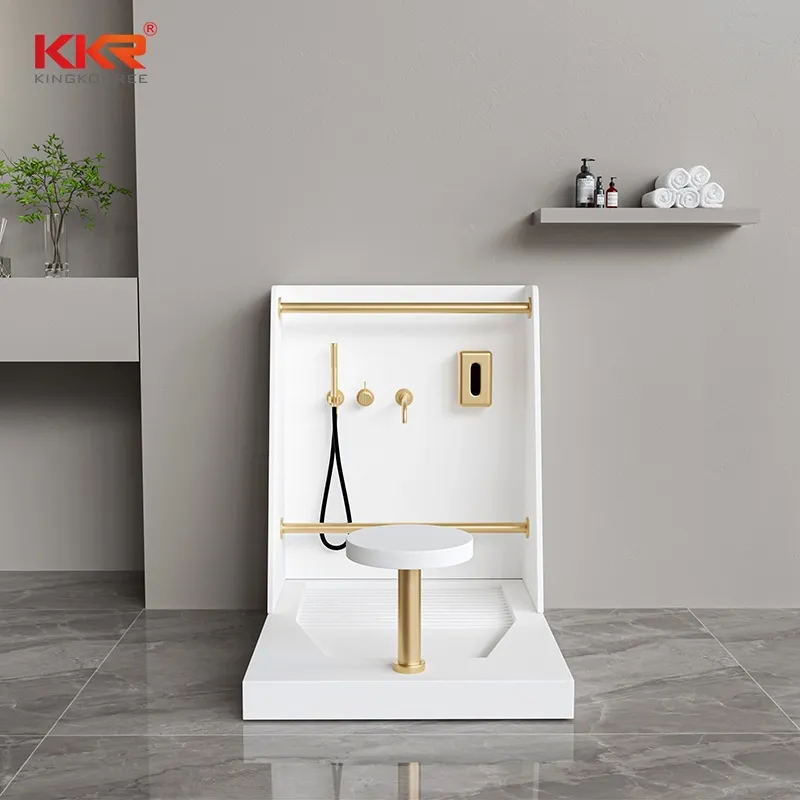
Public restrooms are designed around a narrow set of assumptions. A person walks in, uses a toilet or a sink, washes their hands, and leaves. The moment someone needs to wash their feet, those assumptions collapse. There is nowhere to sit, no low tap, no floor drain, and no space that tolerates splashing. Worshippers improvise, staff mop up afterwards, and everyone quietly accepts a poor experience as normal. KingKonree's Muslim foot washing station exists to replace that improvisation with a proper solution, and the benefits it brings to public restrooms are felt by users, cleaners, and facility managers alike.
The Everyday Problems Worshippers Face in Public Facilities
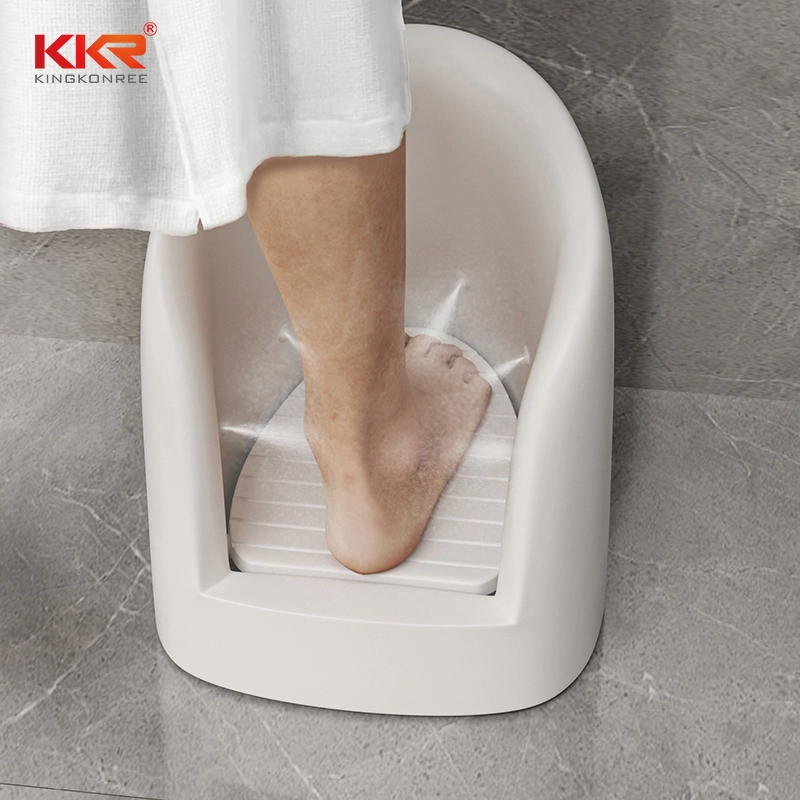
Anyone who has performed wudu in a public restroom knows the routine. The foot is lifted toward a basin not designed for it, balance is held with one hand against the wall, and water sprays onto the floor, the counter, and sometimes the user's own clothes. Some people give up and delay their prayer until they reach home. Others use the accessible toilet cubicle, which creates its own difficulties and takes a facility intended for disabled users out of circulation. These workarounds are not the fault of the worshippers; they are the predictable result of restrooms that were never designed to accommodate ablution at all.
Reducing Slip Hazards and Floor Damage
The most immediate safety concern in any wet area is slipping, and improvised foot washing turns restroom floors into hazards. Water spreads beyond the basin, tiles become slick, and the risk increases precisely when the room is busiest. A dedicated KingKonree station contains water within its washing bay and directs it to drainage, so the surrounding floor stays dry. This protects users from falls and also protects the building itself, since persistent moisture damages grout, undermines flooring, and encourages mould in corners that cleaners struggle to reach. For facility managers, this single change removes a recurring maintenance headache.
Seating and Support for Users With Limited Mobility
Standard restrooms offer no seating at all, which makes foot washing impossible for anyone who cannot balance on one leg. Elderly visitors, pregnant women, people with arthritis, and anyone recovering from injury are effectively excluded from performing wudu properly in public facilities. KingKonree's stations include built-in seating positioned to support the washing posture, allowing users to sit throughout the foot washing stage and rise without assistance. Where facilities serve populations with greater needs, additional support features can be specified. This transforms an exclusionary space into one that welcomes every visitor on equal terms.
Designing Accessibility Into the Wider Restroom Layout
A station alone does not make a restroom accessible. The surrounding layout must support it. There should be clear floor space to approach the station and set down bags, adequate lighting, and a route that does not force wheelchair users to navigate around the installation. Where a restroom serves both general and ablution needs, positioning the station away from the main hand-washing area reduces congestion and keeps the space orderly. KingKonree's compact configurations help fit stations into existing restrooms without consuming circulation space, making accessibility improvements feasible even in buildings with limited room to spare.
Improving the Experience for Cleaning Staff
The people who clean public restrooms are rarely consulted about design, yet they bear the consequences of poor choices. Mopping up after improvised foot washing adds time to every shift and leaves floors damp when the next visitor arrives. A contained ablution station with seamless solid surface construction changes this. Water stays where it belongs, surfaces wipe clean without scrubbing grout, and there are no joints where dirt accumulates. Cleaning becomes faster and more effective, which in turn means the restroom stays presentable throughout the day rather than only immediately after a cleaning round.
The Reputational Benefit for Public Venues
Public venues compete on the quality of their facilities, and restrooms are among the first things visitors judge. For airports, shopping centres, universities, and tourist attractions, providing a proper foot washing station sends a clear message: this venue has thought about all its visitors, not just the majority. Muslim travellers and residents notice the difference immediately, and word travels. The installation becomes a quiet point of distinction that costs far less than many other accessibility upgrades while serving a genuine daily need for a significant portion of the public.
Conclusion
Improving safety and accessibility in public restrooms does not always require a major renovation. Installing a KingKonree Muslim foot washing station addresses slip hazards, floor damage, mobility barriers, and cleaning burdens in one practical step. It replaces improvisation with dignity and turns a space that quietly excluded worshippers into one that accommodates them properly. For any public venue that wants its restrooms to serve everyone well, the case for a dedicated station is straightforward, and the benefits extend well beyond the people who use it directly.