Joint Replacement Surgery: Benefits, Recovery, and Long-Term Results
21 Views
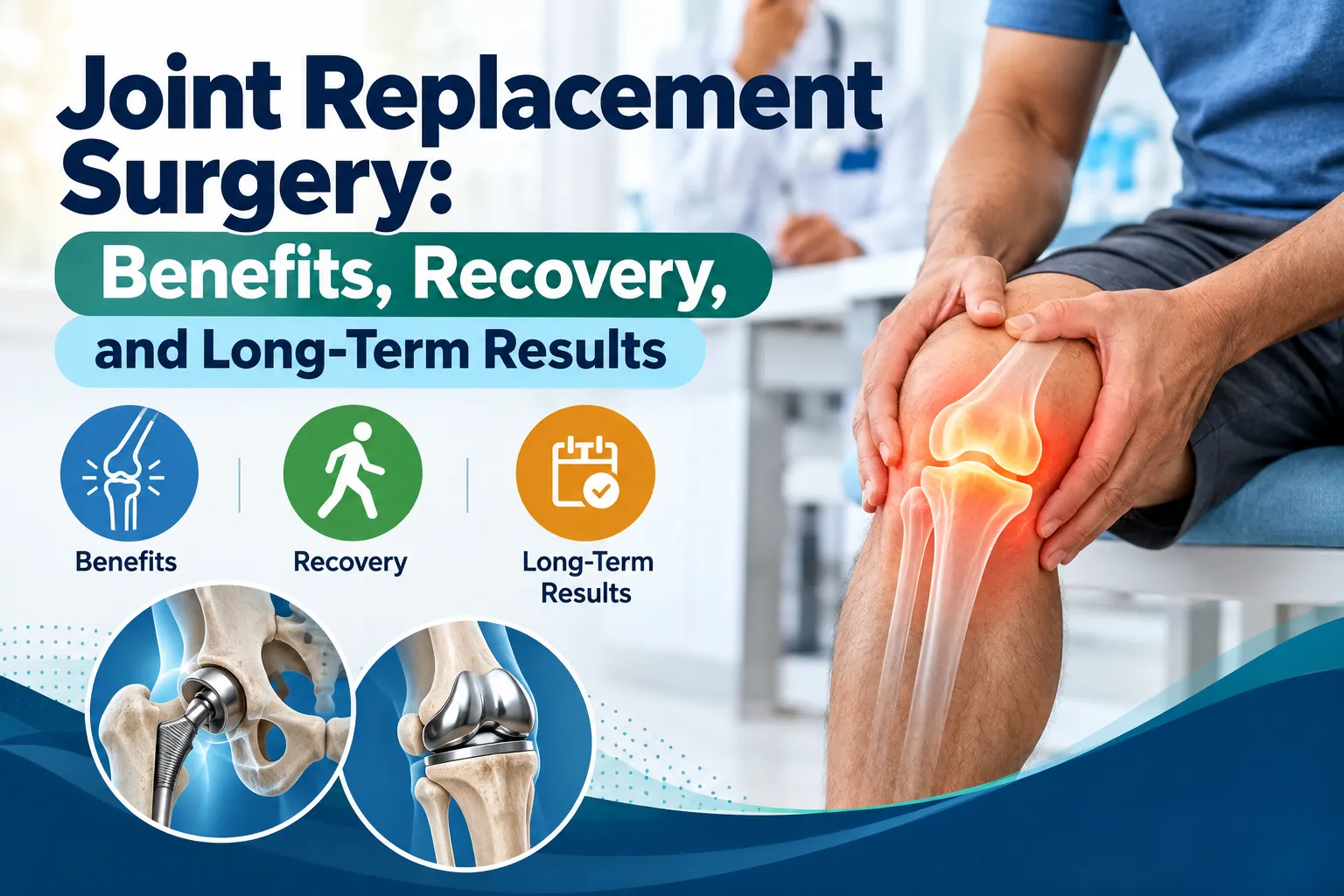
Few things wear a person down like chronic joint pain. It decides whether you take the stairs, whether you can play with your grandchildren, and sometimes whether you sleep at night. If medicines, physiotherapy, and injections no longer help, surgery may be the next step. Choosing a trusted Joint Replacement hospital in Jaipur can make that step far less intimidating. This guide covers what the surgery involves, what recovery really feels like, and how the results hold up years later.
What Joint Replacement Actually Involves
In joint replacement, a surgeon removes the damaged surfaces of a worn-out joint and fits artificial parts, called implants, in their place. The implants are usually made of medical-grade metal, high-grade plastic, or ceramic. They are designed to move the way a healthy joint does.
The knees and hips are by far the most common joints replaced. Shoulders, ankles, and elbows can also be replaced, though less often. Depending on the damage, the surgeon may replace the entire joint or only the affected portion. A partial knee replacement, for example, suits people whose arthritis is limited to one section of the knee.
Most procedures take one to two hours. Many patients get spinal anaesthesia rather than general anaesthesia, which often means less nausea and a quicker wake-up.
How Do You Know It Might Be Time?
There is no single number or X-ray result that says "you need surgery now." Doctors usually look at how much the joint affects your daily life. These signs often point toward considering a replacement:
- Pain that continues even while resting or at night
- Stiffness that makes dressing, walking, or climbing stairs a struggle
- Little or no relief from painkillers, exercise, or injections
- Visible deformity, such as bowed legs
- Swelling that keeps returning
Age matters less than people think. Someone in their late forties with severe damage from an old injury may benefit as much as someone in their seventies with advanced arthritis. What counts is how much the joint limits your life, and whether you are healthy enough for surgery.
The Real Benefits
The first benefit is the one patients mention most: pain relief. Many people say that the grinding, bone-on-bone ache they lived with for years is simply gone once they recover from the operation itself.
The second is mobility. Walking longer distances, getting in and out of a car, sitting cross-legged during prayer or meals, and using an Indian-style toilet become realistic goals again, though your surgeon should discuss which positions are safe for your particular implant.
Then there is independence. When your joints work, you stop needing help with ordinary tasks. That has a quiet effect on confidence and mood. People who were avoiding social events because of pain often start saying yes again.
There are health benefits too. When pain stops you from moving, your muscles weaken, your weight creeps up, and your heart and blood sugar can suffer. Getting moving again helps with all of these.
Preparing Before Surgery
Good results begin before you enter the operating theatre. Your surgeon will usually ask for blood tests, an ECG, and imaging, and may want other specialists, such as a cardiologist or diabetes doctor, to check that your conditions are well controlled.
A few practical steps help a great deal:
- Strengthen the muscles around the joint. Simple exercises recommended by a physiotherapist before surgery often shorten recovery.
- Set up your home. A raised toilet seat, a stable chair with arms, non-slip mats, and a clear path from bedroom to bathroom prevent falls.
- Review your medicines. Some, like blood thinners, may need adjusting. Never stop anything without your doctor's advice.
- Arrange help. You will need someone around for the first couple of weeks.
- Ask questions. Write them down so you do not forget in the consultation room.
What Recovery Looks Like
Recovery is a process, not a single event, and being realistic about the timeline helps you stay patient.
The first few days. Many patients are encouraged to stand and take a few steps with a walker within a day of surgery. It sounds alarming, but early movement reduces the risk of blood clots and stiffness. Pain is managed with medicines, and a physiotherapist begins guiding you through gentle exercises.
Weeks one to six. You will go home, usually within three to five days, and keep doing your exercises daily. Swelling and bruising are normal. Most people move from a walker to a stick during this stage. Wound care matters, so keep the area clean and report any redness, discharge, or fever promptly.
Weeks six to twelve. This is when many people feel the corner has been turned. Walking improves, stairs get easier, and you may return to desk work or light routines. Strength is still building, so do not skip physiotherapy just because you feel better.
Three to six months and beyond. Swelling settles, and the joint feels more natural. Knee replacements in particular can take close to a year to feel completely comfortable, which surprises many patients. Some tightness or an occasional ache in changing weather is common and not usually a cause for alarm.
The single biggest factor in recovery is commitment to rehabilitation. The implant gives you a good joint, but your muscles and your daily exercises are what make it work well.
Long-Term Results: How Long Does It Last?
Modern implants are impressive. Studies of hip and knee replacements generally show that the large majority of implants are still working well after fifteen to twenty years, and many last longer. Results depend on your age, weight, activity level, the type of implant, and the surgeon's technique.
Younger, very active patients put more wear on implants, so they may eventually need a revision procedure, where the old parts are replaced. Revision surgery is more complex than the first operation, which is why getting the first one right matters.
To protect your joint over the long run:
- Keep your weight in a healthy range
- Choose low-impact activities such as walking, swimming, and cycling
- Avoid heavy impact like running on hard surfaces or contact sports, unless your surgeon says otherwise
- Attend follow-up visits and X-rays, even when you feel fine
- Treat infections elsewhere in the body promptly, since bacteria can travel to an implant
Understanding the Risks
Every surgery carries risk, and a good doctor will say so plainly. Possible complications include infection, blood clots, implant loosening, stiffness, and, rarely, nerve or blood vessel injury. The overall chance of a serious problem is low, especially when you are healthy going in and you follow instructions afterwards. Preventive measures like antibiotics, blood thinners, and early movement are built into modern care for exactly this reason.
It is also worth remembering that joint replacement is elective surgery. You are not obliged to rush. A second opinion is perfectly reasonable, and a surgeon who welcomes it is usually one you can trust.
Choosing the Right Place for Your Surgery
Surgeon experience, a well-equipped operating theatre, infection control, and a dedicated physiotherapy team all shape the outcome. Ask how many replacements the surgeon performs each year, what implants are used, what follow-up is offered, and what rehabilitation support you will receive after discharge. Honest, unhurried answers are a good sign.
Final Thoughts
Joint replacement will not turn back the clock, but for many people it gives back something just as valuable: the ability to move without fear of pain. The road involves some discomfort and real effort, yet most patients say that the result was worth it. If joint pain has been steadily shrinking your world, speak with an orthopaedic specialist at a reputable Best Hospital in Jaipur and find out whether surgery could help you get back to the life you want.