ISO 22301 Lead Auditor Training: Build Business Continuity Auditing Skills
25 Views
Introduction
Organizations today must prepare for disruptions such as cyber incidents, technology failures, supply-chain interruptions, natural events, and operational emergencies. A strong Business Continuity Management System (BCMS) helps organizations prepare for these situations and maintain important activities.
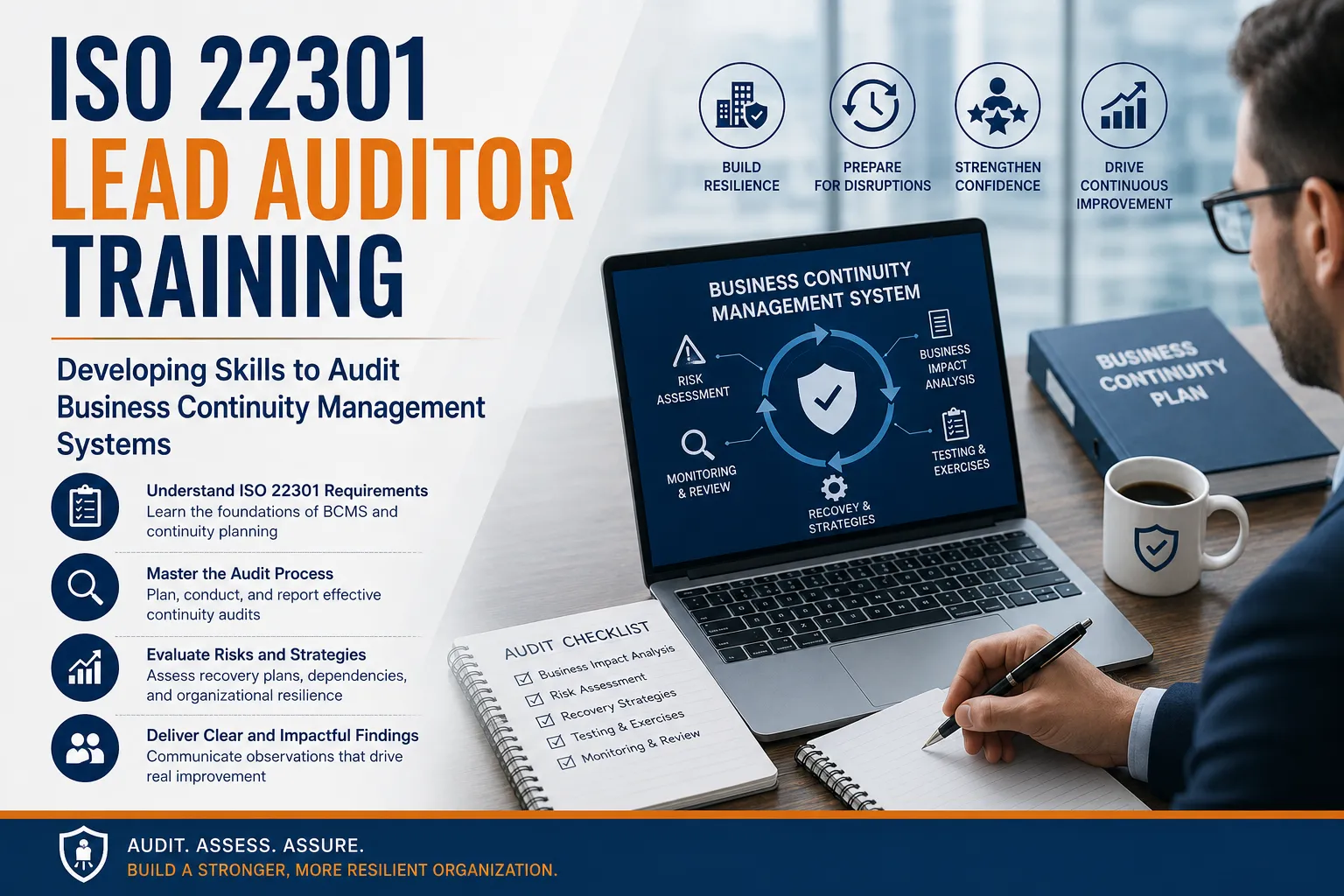
ISO 22301 Lead Auditor Training helps professionals understand how to assess a BCMS against the requirements of ISO 22301. The training focuses on audit planning, evidence collection, risk-based thinking, reporting, and communication. It can be useful for auditors, consultants, quality professionals, business continuity teams, and management system specialists.
1. Understanding ISO 22301 Lead Auditor Training
ISO 22301 Lead Auditor Training provides structured knowledge of auditing a Business Continuity Management System. Participants learn how to interpret requirements, prepare audit plans, conduct audit activities, gather objective evidence, identify nonconformities, and prepare audit reports.
The course also introduces audit principles and approaches that help professionals conduct systematic and impartial assessments.
2. Why ISO 22301 Auditing Matters
Business disruptions can affect customers, employees, suppliers, information, and critical operations. Regular auditing helps organizations evaluate whether their continuity arrangements are properly implemented and maintained.
Through ISO 22301 Lead Auditor Training, participants learn to examine areas such as business continuity objectives, risk and impact analysis, continuity strategies, documented information, operational controls, exercises, and continual improvement.
3. Key Skills Developed During Training
A well-designed ISO 22301 Lead Auditor Training program can develop several practical auditing skills, including:
- Audit planning and scheduling
- Understanding ISO 22301 requirements
- Interviewing and communication
- Evidence gathering and verification
- Identifying audit findings
- Writing clear audit reports
- Evaluating corrective actions
- Managing audit activities
These skills can help professionals approach BCMS audits in a structured and evidence-based manner.
4. ISO 22301 Audit Planning and Preparation
Effective audits begin with proper preparation. Auditors need to understand the organization's scope, processes, objectives, and relevant business continuity arrangements.
During ISO 22301 Lead Auditor Training, participants can learn how to define audit objectives and criteria, develop audit plans, allocate responsibilities, review relevant documents, and prepare questions for different process owners.
Good preparation helps auditors use their time effectively while maintaining focus on important BCMS requirements.
5. Evidence Collection and Audit Reporting
Auditors need reliable evidence before reaching audit conclusions. Evidence may come from interviews, records, documented information, observations, test results, exercises, and other relevant sources.
The training teaches participants how to evaluate evidence against defined audit criteria. When a requirement is not effectively fulfilled, auditors learn how to document the finding clearly and objectively.
Accurate reporting is important because audit results can support corrective actions and continual improvement within the BCMS.
6. Career Opportunities After Training
Professionals completing ISO 22301 Lead Auditor Training may apply their knowledge in different roles related to business continuity and management systems. Potential areas include internal auditing, external auditing, consultancy, compliance, risk management, and business continuity management.
The training can also complement existing experience in quality, information security, occupational health and safety, or other ISO management systems.
7. Choosing the Right ISO 22301 Training Course
When selecting an ISO 22301 Lead Auditor Training program, professionals should consider the course syllabus, trainer experience, practical audit exercises, assessment method, learning format, and certification requirements.
A useful course should balance theoretical knowledge with practical auditing activities. Case studies, simulated audits, evidence evaluation, and report-writing exercises can make the learning experience more applicable to real workplace situations.
Conclusion
ISO 22301 Lead Auditor Training provides professionals with knowledge and practical skills for evaluating Business Continuity Management Systems. From audit planning and evidence collection to reporting and corrective-action evaluation, the training covers important stages of the auditing process.
As organizations continue to focus on resilience and continuity, professionals with structured BCMS auditing knowledge can contribute to stronger business continuity practices and continual improvement.
Related Reading
Expert Insights: Navigating the Complex World of Education & Learning
Welcome to our in-depth exploration of Education & Learning. In an era defin...
Why Education & Learning is Transforming the Global Industry Landscape
Welcome to our in-depth exploration of Education & Learning. In an era defin...