Is Personal Loan Part Prepayment Better Than Increasing Your EMI?
22 Views
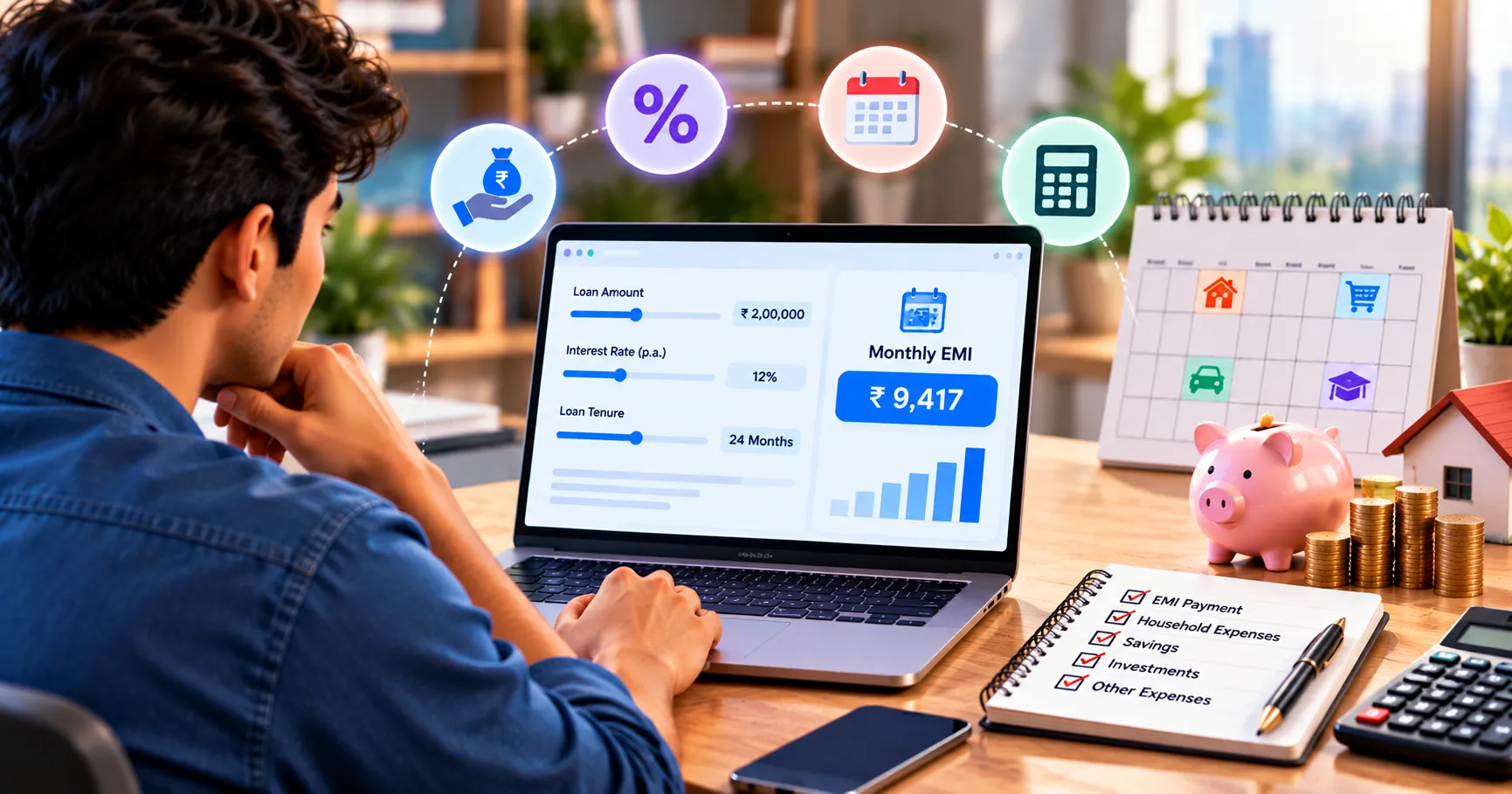
Whether personal loan part prepayment is better than increasing your EMI depends on your cash flow, available savings, loan terms, and financial goals. Both strategies can help reduce the cost or duration of borrowing. A partial prepayment reduces the outstanding principal through a one-time additional payment, while you increase EMI by paying more every month. If both approaches reduce the principal faster, they may lead to interest savings. However, the better option depends on whether you prefer a lump-sum payment or a higher recurring monthly commitment.
What Is Personal Loan Part Prepayment?
Personal loan part prepayment means making an additional payment toward the outstanding principal without necessarily closing the entire loan.
For example, suppose your outstanding balance is ₹3 lakh and you have ₹50,000 available.
You may use that ₹50,000 as a partial prepayment, subject to the lender's terms.
The outstanding balance could then reduce, potentially lowering the amount on which future interest is calculated.
What Does Increasing EMI Mean?
When you increase EMI, you voluntarily pay a higher amount every month than your original scheduled instalment.
For example:
Original EMI: ₹10,000
New EMI: ₹12,000
The additional ₹2,000 is directed toward faster repayment according to the lender's repayment structure.
This approach does not require you to have a large lump sum available at once.
Personal Loan Part Prepayment vs Higher EMI
The comparison between personal loan part prepayment vs higher EMI depends on how the lender recalculates the loan after the additional payment.
Consider these differences:
| Factor | Part Prepayment | Higher EMI |
|---|---|---|
| Payment pattern | Lump sum | Recurring |
| Immediate principal reduction | Yes | Gradual |
| Requires surplus cash | Usually | Less upfront |
| Monthly obligation | May remain similar | Increases |
| Potential interest savings | Yes | Yes |
| Flexibility | Depends on lender terms | Depends on repayment terms |
Neither method is universally better.
How Part Prepayment Can Reduce Interest
A partial prepayment reduces the outstanding principal.
Suppose you owe ₹3 lakh and make a ₹50,000 additional payment.
The outstanding balance may reduce to ₹2.5 lakh, subject to lender processing.
Future interest calculations may then be based on the lower outstanding amount.
If the lender keeps the EMI unchanged and reduces the tenure, the loan may be completed earlier.
How Increasing EMI Can Reduce Interest
When you increase EMI, more money is paid toward the loan every month.
The principal therefore decreases faster than it would under the original EMI.
For example:
Original EMI: ₹10,000
Increased EMI: ₹12,000
The additional ₹2,000 each month can accelerate repayment.
The exact effect depends on the interest rate, outstanding balance, remaining tenure, and lender's repayment calculation.
Which Option Provides Better Interest Savings?
If you are asking for the best way to reduce personal loan interest, there is no universal answer.
A large early prepayment can significantly reduce the principal immediately.
On the other hand, increasing the EMI provides a consistent method of accelerating repayment without requiring a large lump sum.
The timing matters as well.
An additional payment made earlier in the loan may have more opportunity to reduce future interest than the same amount paid much later.
When Part Prepayment May Make Sense
Personal loan part prepayment may be suitable when:
-
You receive a bonus
-
You have surplus savings
-
You want to reduce your outstanding balance
-
You want to reduce future interest
-
You do not want to permanently increase your monthly EMI
However, check the applicable prepayment conditions before making the payment.
When Increasing EMI May Make Sense
Increasing EMI may be more suitable when:
-
Your monthly income has increased
-
You have stable cash flow
-
You do not have a large lump sum
-
You prefer gradual repayment
-
You want to accelerate repayment automatically
For example, someone receiving a salary increase may decide to increase their EMI instead of waiting to accumulate a large amount for prepayment.
Loan Tenure Reduction
Both strategies can potentially contribute to loan tenure reduction.
With part prepayment, the principal falls immediately.
With a higher EMI, the principal falls faster through increased monthly payments.
If the lender allows you to maintain the EMI after a part prepayment, the loan may potentially be completed sooner.
The exact result should be confirmed with the lender.
Compare Cash Flow Before Deciding
Your personal cash flow should be central to the decision.
Suppose you have ₹1 lakh in surplus savings.
You could potentially use some of it toward a part prepayment.
But if using that money leaves you without an emergency reserve, prepayment may not be the best immediate choice.
Similarly, increasing your EMI should not create monthly financial stress.
The goal is to reduce debt without damaging your broader financial stability.
How to Compare Both Strategies
Use a calculator to create two scenarios.
Scenario A: Part Prepayment
Enter:
-
Current outstanding principal
-
Current interest rate
-
Remaining tenure
-
Current EMI
-
Prepayment amount
Scenario B: Higher EMI
Enter:
-
Current outstanding principal
-
Interest rate
-
Remaining tenure
-
Proposed higher EMI
Then compare:
-
New repayment period
-
Total interest
-
Total repayment
-
Cash-flow impact
This provides a more meaningful comparison than simply asking which method sounds better.
Check Lender Terms
Before choosing either strategy, review your loan agreement.
Check:
-
Prepayment conditions
-
Charges
-
Minimum prepayment amount
-
EMI revision rules
-
Tenure revision rules
-
Foreclosure conditions
The financial benefit can differ depending on the lender's policies.
Final Thoughts
Personal loan part prepayment and increasing EMI are both potential ways to accelerate debt repayment. A partial prepayment can reduce the outstanding principal immediately, while increasing EMI gradually directs more money toward repayment each month.
When comparing personal loan part prepayment vs higher EMI, consider your available savings, monthly cash flow, remaining tenure, interest rate, and applicable charges.
If your goal is the best way to reduce personal loan interest, use actual loan figures to compare both options. The strategy that produces the most useful balance between interest savings, affordability, and financial flexibility is generally more suitable for your situation.
Related Reading
Top 10 Hidden Secrets About Business & Finance You Need to Know
Welcome to our in-depth exploration of Business & Finance. In an era defined...
Why Business & Finance is Transforming the Global Industry Landscape
Welcome to our in-depth exploration of Business & Finance. In an era defined...