Insurance for Storage Unit: Coverage, Costs and Key Considerations
By Almas Aleem
30 Views
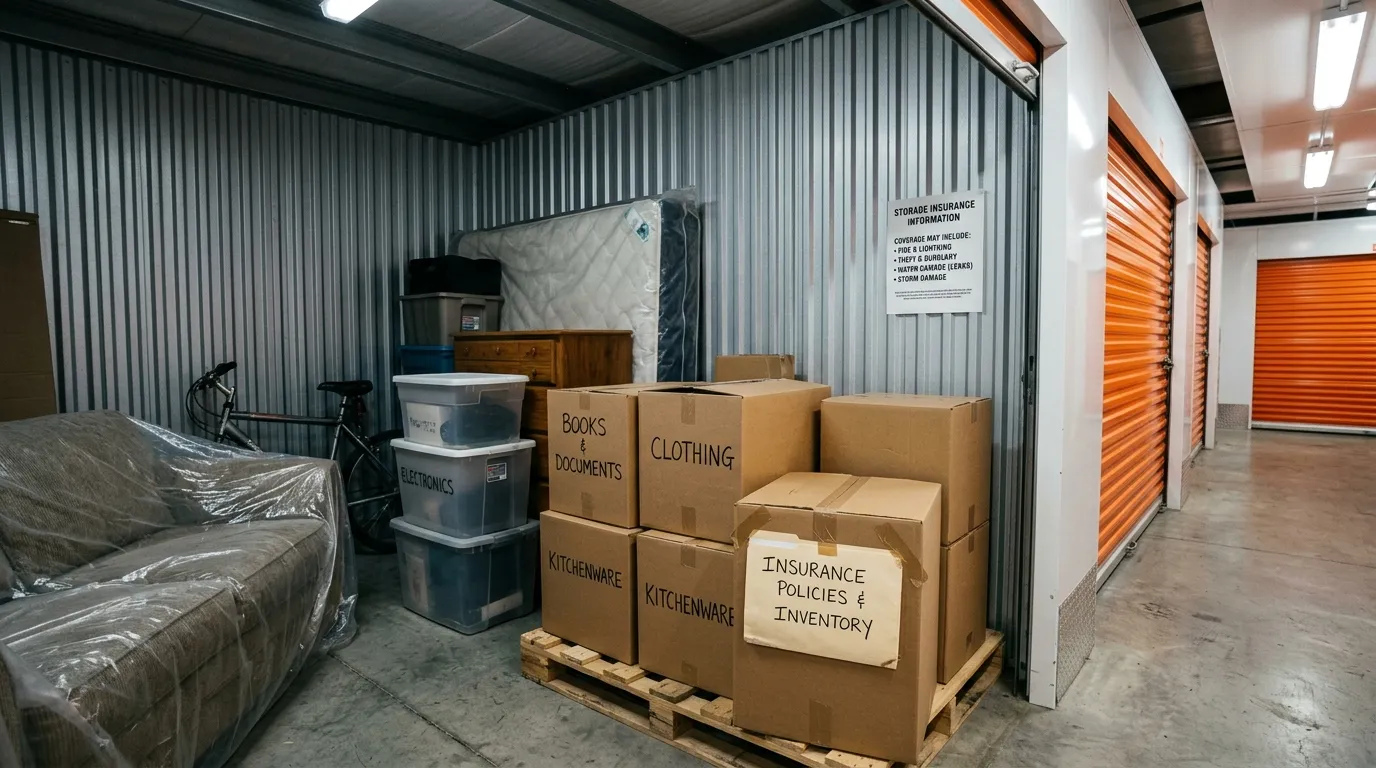
Renting storage space can be useful when moving, renovating, downsizing, managing business inventory or simply running out of room at home. Yet the monthly rental fee is only one cost worth considering. Insurance for storage unit contents can help financially protect eligible belongings if they are damaged or lost because of an event covered by the policy.
Storage protection is not identical across every provider or facility. Coverage limits, deductibles, eligible property, exclusions and premiums can differ significantly. Understanding these details before signing a storage agreement can help you choose protection that reflects what you are actually putting into storage.
How Insurance for Storage Unit Coverage Works
Storage insurance is generally designed to cover eligible property kept within an insured self-storage unit or other qualifying storage location against specified causes of loss.
Instead of assuming everything that happens inside a storage facility will be insured, look at the list of covered causes in the policy. Coverage may apply to events such as fire, smoke, lightning, windstorm, hail, vandalism, explosion or burglary involving forced entry, depending on the policy.
Certain forms of water damage may also qualify, but the source and circumstances can affect whether the loss is covered. Flooding, groundwater and gradual moisture problems, for example, can be treated differently from sudden water damage.
A policy also establishes a maximum coverage limit. If the value of your belongings exceeds that amount, the policy generally will not simply increase its payout to match the total loss.
Understanding the relationship between covered property, covered causes of loss, policy limits and exclusions is therefore essential.
How Much Does Insurance for Storage Unit Contents Cost?
There is no single universal price for storage insurance. Costs can vary according to the coverage option, coverage limit, deductible, location, insurer, storage arrangement and other factors.
In many cases, customers can select from different coverage levels based on the approximate value of their stored belongings. A unit containing a few boxes of household items may require a very different level of protection from one holding furniture, appliances, electronics or commercial inventory.
When comparing costs, avoid focusing exclusively on the monthly premium.
A less expensive option with a low coverage limit may not suit a unit containing higher-value property. Likewise, paying for substantially more coverage than the value of eligible stored belongings may be unnecessary.
Compare the premium with the limit, deductible, covered risks and exclusions to understand what you are receiving for the cost.
What Can Contents Insurance Protect in Storage?
Contents insurance for storage focuses on the property kept inside the unit rather than the physical storage building itself.
For individuals, this can include eligible household property such as furniture, clothing, appliances, sports equipment, seasonal items and other personal belongings.
Commercial customers may place very different property into storage. Depending on the policy, eligible business contents might include inventory, equipment, supplies, materials or office property.
This is an important distinction because policies can define covered property differently.
If you are storing business stock, specialised equipment, collectibles, documents or unusually valuable items, do not assume they receive the same treatment as ordinary household belongings. Review the applicable property definitions and exclusions before placing them into storage.
Does Homeowners or Renters Insurance Cover a Storage Unit?
Existing insurance is worth checking before purchasing separate storage coverage.
Some homeowners and renters policies may provide limited protection for personal property stored away from the insured residence. However, off-premises property can be subject to different limits and restrictions.
For example, your primary policy might insure personal property at home up to one amount but apply a smaller limit when those belongings are kept elsewhere. Your usual deductible may also apply.
Ask your insurer directly about self-storage rather than assuming your standard contents coverage follows your belongings everywhere.
Useful details to confirm include the applicable off-premises limit, deductible, covered causes of loss, excluded property and any restrictions based on how long items remain in storage.
Once you understand your existing protection, you can decide whether separate storage coverage better suits your situation.
Storage Facilities and Insurance Requirements
Individual storage facilities establish their own rental terms, so insurance requirements can vary.
Some facilities may require tenants to show evidence of qualifying insurance, while others may make a storage-specific protection option available during the rental process. Requirements can also differ by location.
Facility security and insurance should be considered separately.
Features such as electronic gates, surveillance cameras, controlled access, perimeter fencing and good lighting can reduce certain risks. They do not, however, guarantee that stored belongings will never experience damage or loss.
A secure facility can still be affected by fire, storms, vandalism or other unexpected incidents.
Before renting, ask what the facility requires, what protection is available and what responsibility the rental agreement assigns to the tenant.
Mobile Storage Insurance for Portable Containers
Traditional storage is only one option. Portable containers are increasingly used during moves, renovations and temporary storage.
The key difference is movement.
A portable container may begin at a residence or business, travel by truck, remain at a storage location and later be transported to another destination. That creates periods when the property is not sitting inside a conventional storage building.
Mobile storage insurance should therefore be evaluated with transportation in mind.
Check whether the policy applies while eligible contents are being loaded, stored and transported. Transit protection should never be assumed simply because the property is covered while stationary.
The Storage Protectors Program includes insurance options for eligible personal and commercial property kept in self-storage and mobile storage units and addresses certain transit situations. The actual protection remains subject to the applicable policy's limits, exclusions, conditions and other terms.
Separate protection may also apply to damage involving a portable storage container itself, which should not be confused with insurance covering the belongings inside it.
Coverage Limits Can Matter More Than Unit Size
A large storage unit does not necessarily require more insurance, and a small one does not automatically require less.
The value of the contents is more important.
A compact unit containing electronics, business equipment and valuable household property could hold more financial value than a larger space filled with lower-value furniture.
Before selecting a coverage limit, create a simple inventory.
Record major belongings, quantities and estimated values. Take photographs or videos and keep receipts or other ownership records for important property when available.
This process gives you a stronger basis for choosing coverage instead of guessing.
Remember that policy limits represent maximum available coverage rather than a guaranteed payment following every claim. Deductibles, exclusions, valuation provisions and the circumstances of the loss can affect the final settlement.
Understanding Deductibles Before Choosing Coverage
The deductible is another cost consideration that should not be overlooked.
It generally represents the portion of a covered loss that the policyholder is responsible for before the insurer's payment is calculated. For smaller losses, the deductible can have a noticeable impact on the amount ultimately received.
Consider two policies with similar premiums and coverage limits. If their deductibles differ substantially, their practical value after a smaller covered loss may also differ.
This is one reason monthly price alone cannot tell you whether a particular policy suits your storage needs.
Look at the premium, deductible and limit together.
Important Storage Insurance Exclusions
Insurance policies define both what they cover and what they do not.
Certain types of property may be excluded or subject to restrictions. Depending on the specific policy, examples can include money, securities, valuable papers, jewelry, precious metals, vehicles, watercraft, firearms, animals and other specialised property.
Causes of loss may also be excluded.
Flooding, groundwater, pests, insects, mould, deterioration, improper packing or unexplained disappearance may not receive the same treatment as sudden damage from a specifically covered event.
The wording matters.
For example, a policy covering burglary may require visible evidence of forcible entry. A missing item without evidence showing how it disappeared may not meet the same definition.
Read the exclusions before storing property, not after discovering a loss.
Personal Storage and Business Storage Have Different Needs
Someone storing furniture during a home renovation has different priorities from a retailer keeping seasonal inventory in a commercial storage unit.
For personal storage, consider the combined value of furniture, appliances, electronics, clothing and household belongings. For business storage, look at inventory turnover, equipment values and whether stored materials change regularly.
Businesses should periodically reassess their coverage if stock levels fluctuate.
If a unit normally holds $5,000 worth of inventory but temporarily contains considerably more during a busy season, an existing coverage limit may no longer reflect the property's value.
The same principle applies to households. Adding expensive belongings without reconsidering your coverage can create a gap between the value stored and the protection selected.
Key Considerations Before Purchasing Storage Insurance
Good storage coverage starts with knowing what you need to protect.
First, estimate the value of eligible property going into storage. Next, check whether your homeowners, renters or business policy already provides off-premises coverage and identify any limitations.
Then review the storage-specific option carefully. Look at covered causes of loss, property exclusions, deductibles, limits, valuation provisions and claim requirements.
For portable storage, check transit protection as well.
Finally, keep documentation. An inventory, photographs, receipts, serial numbers, storage agreement and insurance records can all prove useful if you experience a loss.
These steps provide a much clearer picture than selecting coverage based only on the lowest monthly premium.
Making Insurance for Storage Unit Coverage Part of Your Storage Plan
Storage decisions often begin with location, unit dimensions and monthly rental costs. Protection for the belongings inside deserves the same attention.
The right approach depends on what you are storing, how much it is worth, where it will be kept and whether it will be transported between locations. Comparing coverage limits, deductibles, exclusions and eligible causes of loss can help you understand the actual protection behind the premium.
Programs designed specifically for self-storage and portable storage can provide another option when existing homeowners, renters or business coverage does not meet your needs. Whatever route you choose, review the applicable policy before storing your property and keep records of important belongings.
Insurance cannot prevent an unexpected event, but appropriate storage contents coverage can reduce the financial impact when an eligible loss occurs.
FAQs About Insurance for Storage Unit Coverage
Can I change my storage insurance limit after adding more belongings?
Coverage options vary by provider. If the value of property in your unit increases significantly, contact the appropriate provider or administrator to determine whether your limit can be changed. Avoid assuming newly added property is adequately protected under an existing limit.
Does storage insurance cover business inventory that changes every month?
Some policies can cover eligible commercial property, but the applicable coverage limit remains important. Businesses with changing inventory levels should monitor the value stored and confirm that both the property type and amount remain within the policy's terms.
Is property covered when moving between two storage facilities?
Not under every policy. Transit coverage varies and may depend on the origin, destination, transportation method and other policy conditions. If property will leave one insured location and travel to another, confirm coverage before the move begins.
Can security cameras replace the need for storage contents insurance?
Security cameras can help deter crime and provide evidence after an incident, but they cannot compensate you for damaged or lost belongings. Physical security and insurance serve different purposes and can work together as part of a broader storage plan.
What happens if my stored property is worth more than my coverage limit?
A policy generally will not pay beyond its applicable coverage limit simply because the total value of a loss is higher. Other policy provisions, deductibles and exclusions can further affect a settlement, making an accurate inventory important when selecting coverage.
Related Reading
Top 10 Hidden Secrets About Business & Finance You Need to Know
Welcome to our in-depth exploration of Business & Finance. In an era defined...
Why Business & Finance is Transforming the Global Industry Landscape
Welcome to our in-depth exploration of Business & Finance. In an era defined...