India’s New e-OCI System: What Changes for Existing OCI Cardholders in 2026?
By HelpOCI
12 Views
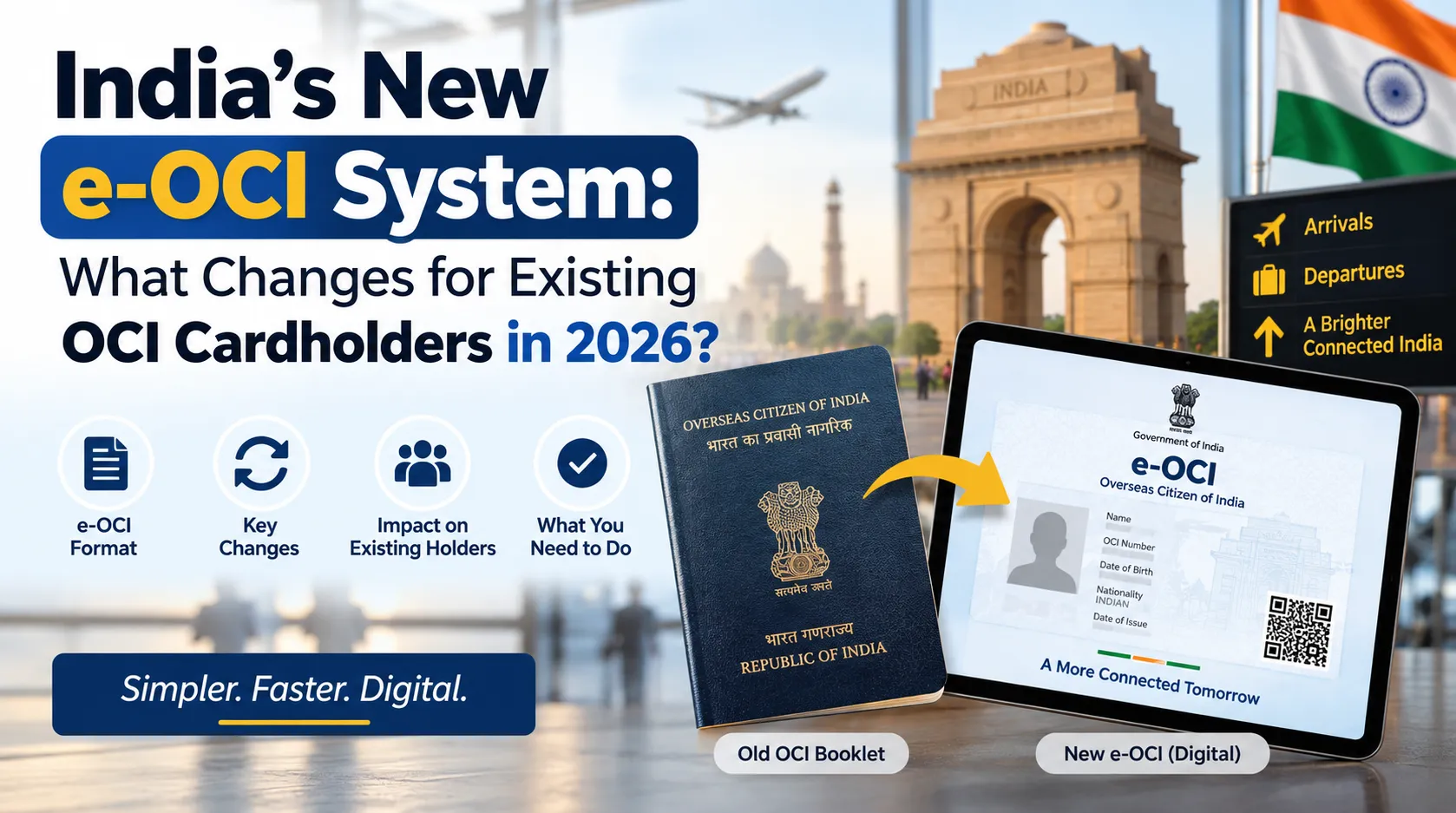
What Changes for the existing OCI Cardholders in 2026 after the India's New E-OCI System is the question we're hearing more often these days.
This isn't about changing your status; it's about changing the physical document you carry. People are looking this up because they want to know if their current OCI booklet will become obsolete and what practical steps they'll need to take. They need to understand if this is a mandatory switch and how it will affect their travel and interactions with Indian authorities come 2026.
What is the e-OCI System?
The e-OCI is simply a digital version of the traditional OCI card booklet. Think of it like a PDF or a secure digital file that you can store on your smartphone or in the cloud, which will be officially recognized at Indian immigration checkpoints. From what we've seen in our day-to-day work with similar government digital initiatives, the goal is to phase out the physical booklet that can be lost, damaged, or forged. For example, instead of presenting the booklet with your foreign passport, you will show the QR code or digital file on your phone, which is linked directly to your passport details in the government's database.
Key Features of the e-OCI
- Digital Format and Accessibility. The most significant feature is the move away from a physical document. The e-OCI will be a downloadable, secure electronic document. This means you can keep a copy on your phone, email, or a cloud service, eliminating the risk of losing or damaging the physical booklet during your travels.
- Dynamic Linking with Passport. Unlike the old system that required re-issuance of the OCI card every time you got a new passport before age 20 and after age 50, the e-OCI is designed to be dynamically linked. We expect you'll just need to update your new passport details online, and the e-OCI will sync automatically.
- Integrated Security Features. The e-OCI will come with security elements like a digitally signed QR code. When scanned at immigration or by other authorities, this code will pull your verified information directly from the Indian government's central database, making it much harder to forge and quicker to verify your status.
Check this Guide to know more about e-OCI: e-OCI Complete Guide
Eligibility Criteria for Transitioning to e-OCI
- You must be an existing, valid OCI cardholder.
- You must possess a valid foreign passport that is not expiring soon.
- Your details on the OCI portal must be current and accurate.
Benefits for Existing Cardholders
- Eliminates Physical Document Carriage. You will no longer need to remember to carry the OCI booklet. As long as you have your smartphone with the e-OCI file or a printout, you have valid proof. This reduces the stress of misplacing a critical travel document.
- Simplified Renewal Process. The headache of re-issuing the OCI card after getting a new passport is gone. You will just upload the new passport details online to update the e-OCI link. This saves time, courier fees, and weeks of waiting.
- Faster Immigration Clearance. With a scannable QR code, verification at the immigration counter becomes much faster. The officer scans the code, and your details pop up instantly. This cuts down on manual checks of the booklet and passport stamps.
- Instant Issuance and Updates. Once an update is approved—like a new passport number or address—the e-OCI is available for download almost immediately. There's no waiting for a physical card to be printed and shipped from India, which has been a major pain point for years.
How to Transition to the e-OCI
- Access the Official OCI Portal. The first step will be to log into your existing account on the official Government of India OCI services website. You'll likely need your current OCI number and passport details to authenticate your identity and access the new e-OCI generation option.
- Verify and Update Your Information. You will be prompted to verify all your personal details, including your current passport number, address, and contact information. This is the point where you'll upload a copy of your new passport if you've recently renewed it, ensuring the e-OCI links to the correct document.
- Generate and Download the e-OCI. After successful verification, the system will generate your secure e-OCI document. You will be able to download it as a PDF file containing your photo, details, and a unique QR code. We advise saving this file in multiple locations—phone, email, and a cloud drive.
Conclusion
The shift to the e-OCI system by 2026 isn't about rewriting the rules of being an OCI cardholder; it's about changing the tool you use. Your rights, privileges, and lifelong visa status remain untouched. The core change is moving from a physical booklet to a secure digital file. From our experience with these transitions, the primary impact on existing cardholders will be the initial—and likely mandatory—process of logging in, verifying details, and downloading the new e-OCI. Once that's done, the benefits of easier updates and not having to carry another document should make travel to India a bit simpler. It’s a practical modernization, not a fundamental change in status.
Most Frequently Asked Question
Will my existing physical OCI booklet become invalid in 2026?
Based on government patterns, there will likely be a transition period. However, we expect the e-OCI to become the primary required document, and authorities will eventually phase out acceptance of the old booklet for entry. It's best to plan on making the switch when it becomes available.
Is there a fee for converting my OCI to an e-OCI?
While not officially announced, minor service fees are common for such digital services to cover administrative costs. We anticipate it will be a nominal fee, far less than the cost of a full re-issuance, but this is yet to be confirmed.
What happens if I lose my phone with the e-OCI on it?
Since the e-OCI is a downloadable file linked to your online profile, you can simply log into the OCI portal from any device and re-download it. We also recommend keeping a printed copy with your travel documents as a backup.
Is the transition to the e-OCI system mandatory for all existing cardholders?
Yes, it is almost certain that the transition will be mandatory. The point of such a system is universal adoption to stop running two parallel processes. Existing cardholders will be given a specific timeframe to complete the switch.