Hydraulic Oil Cooler Heat Exchangers for Heavy-Duty Machines
By NT Hydraulic
150 Views
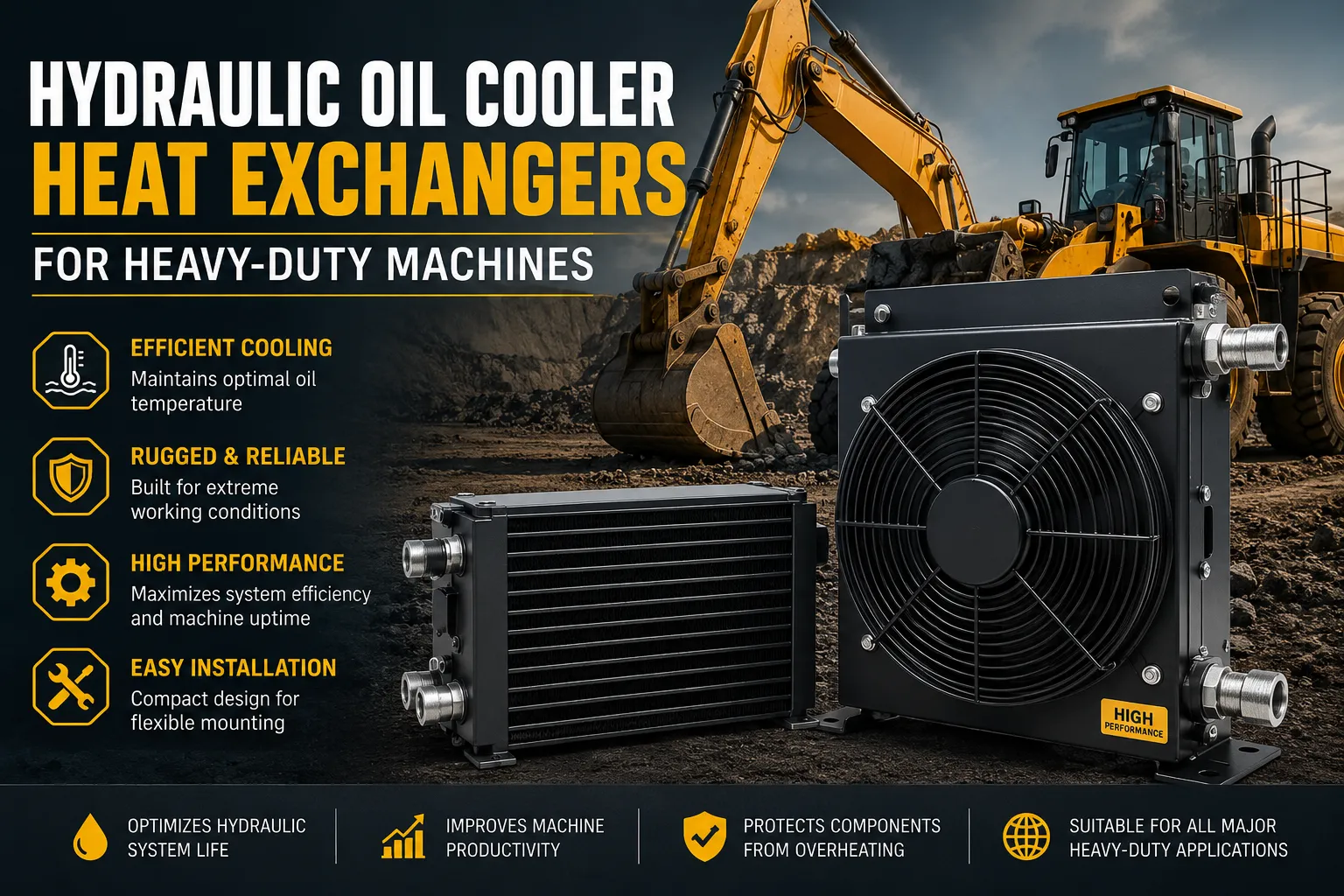
A hydraulic press running at 92°C oil temperature does not fail immediately. That’s the dangerous part. It keeps running just long enough to damage seals, thin the oil viscosity, and quietly reduce pump life month after month. That is exactly why Indian factories are investing more aggressively in Hydraulic Oil Cooler Heat Exchanger systems across steel plants, injection molding units, mining equipment, marine operations, and construction machinery.
Most buyers focus on pump capacity first. They should be looking at heat management earlier in the purchase cycle.
According to multiple industrial maintenance studies, nearly 70% of hydraulic system failures are linked to contamination or excessive heat buildup inside the system. A poorly matched Hydraulic Heat Exchanger does not just reduce machine efficiency. It increases downtime costs, oil replacement frequency, and energy consumption at the same time.
Why Heat Control Became a Serious Factory-Level Decision
Indian industries are pushing machines harder than they did five years ago. Longer shifts. Higher ambient temperatures. Faster production cycles. Which means hydraulic systems now generate more thermal load than older setups were designed to handle.
And yet, buyers still approve coolers based only on price per unit.
That mistake becomes expensive during peak summer operations in Gujarat, Maharashtra, Tamil Nadu, and Rajasthan, where shop-floor temperatures regularly cross 42°C in industrial zones.
Oil Temperature Stability Matters More Than Buyers Think
A proper Hydraulic Oil Cooler maintains oil temperature within operational limits, usually between 45°C and 60°C depending on the application. Once oil temperature crosses safe levels, viscosity drops sharply.
That creates three problems fast:
- Seal degradation
- Pump wear
- Reduced lubrication efficiency
Nobody tells you how difficult it becomes to diagnose intermittent overheating inside hydraulic systems. A lot of machines seem to be “fine” during inspection while internal wear stays undetected and keeps worsening.
Comparing Air-Cooled and Water-Cooled Configurations
Air-Cooled Hydraulic Oil Cooler Systems
These are frequently found in the mobile hydraulic equipment and also in construction machinery (i.e. excavators, bulldozers, etc.) and outdoor applications. They have little reliance on water infrastructure and installation is easier.
Still, airflow quality matters. A cooler installed near dust-heavy fabrication units clogs faster than many procurement teams expect.
Water-Cooled Hydraulic Heat Exchanger Units
Where there is a need for a continuous stable cooling effect for industrial processes, these are generally preferred. Examples are steel rolling mills, paper plants, and plastic processing lines. Systems that cool with water are favored because they provide close control of the temperature.
Fouling resistance and tube material selection should be easily explained, or there is a likely chance of limited real-world application.
The Specification Detail Many Buyers Skip
Flow rate compatibility.
Not external dimensions. Not paint finish. Flow mismatch is what destroys cooling performance.
A Hydraulic Oil Cooler Heat Exchanger sized incorrectly may look operational while still failing to dissipate actual heat load. We have seen buyers install oversized units assuming “bigger is safer,” only to create pressure drop issues that affect machine response time.
Five Supplier Evaluation Criteria Procurement Teams Should Not Ignore
1. Ask for Actual Heat Dissipation Calculations
Good suppliers calculate thermal load using oil flow rate, inlet temperature, ambient conditions, and duty cycle.
Bad suppliers say:
“We supply this model to many industries.”
That answer avoids engineering responsibility.
2. Verify Material Traceability
Industrial buyers increasingly request SS304, SS316, copper tube, or aluminum core verification. That matters because low-grade material corrodes quickly in humid or chemically exposed environments.
Most buyers never ask for raw material batch records until failure happens.
3. Check Spare Availability Before Ordering
A delayed fan motor or replacement core can stop production longer than the original breakdown itself.
Which means nearby support from experienced Hydraulic Heat Exchanger Manufacturers becomes operationally important, not just convenient.
4. Ask About Testing Procedures
Stress, leakage, and thermal performance validation tests should all be confirmed and documented.
When a supplier claims, “everything is factory checked,” but does not provide verifiable reports, supply chain uncertainty and deficient factory inspection processes are being concealed.
5. Review Delivery Stability, Not Just Price
Some Hydraulic Oil Cooler Suppliers provide quotes below cost and then alter lead times to favor material pricing, lengthening delivery times.
That behavior destroys project schedules.
How Hydraulic Oil Cooler Systems Protect Operating Margins
Lower Oil Replacement Frequency
Hydraulic oil exposed to excessive temperature oxidizes faster. Stable cooling extends oil life significantly, especially in 24-hour production environments.
Some Indian manufacturing plants report oil replacement intervals improving by 25–35% after installing properly sized Hydraulic Oil Cooler Heat Exchanger systems.
Reduced Pump Failure Risk
Hydraulic pumps are expensive. Downtime is worse.
A controlled oil temperature environment protects internal tolerances and reduces metal-to-metal wear during continuous operation.
Better Machine Consistency During Long Shifts
That matters more than many managers admit publicly.
Production inconsistency during second and third shifts often traces back to thermal instability inside hydraulic systems rather than operator error.
Lower Energy Consumption
Overheated systems force machines to work harder. Cooling efficiency improves hydraulic response and reduces unnecessary power draw.
Longer Seal and Hose Life
Heat attacks rubber components first.
Properly designed Hydraulic Oil Cooler Manufacturers in India understand regional operating conditions where ambient temperature and dust exposure combine to accelerate hose deterioration.
Fewer Emergency Shutdowns
One unexpected machine stoppage during dispatch week can cost more than the entire cooler installation itself.
Why Indian Buyers Prefer Domestic Hydraulic Heat Exchanger Suppliers
Lead time.
That is the biggest reason.
Cooling systems from abroad typically face lengthy shipping, customs, and expensive replacement parts. Many Indian Industries prefer Hydraulic Heat Exchanger Suppliers in India since local production reduces response and spare part times.
And there is another factor buyers discuss privately: communication.
Typically, a local engineering team can inspect site conditions, modify mounting configurations, and troubleshoot installation issues without extensive emails and delays.
Rapid industrialization pushes demand for industrial cooling systems in states such as Gujarat, Maharashtra, Tamil Nadu, and Punjab.
About Us — Built Around Industrial Cooling Reliability
At N.T Associates, we work directly with industries that cannot afford unstable hydraulic temperatures or inconsistent component quality. We design, manufacture, and supply Hydraulic Oil Cooler Heat Exchanger systems for tough industrial applications within India and for export markets.
We have supplied cooling solutions to buyers operating in 31 countries, and the conversations are surprisingly similar everywhere: buyers want predictable performance, honest delivery schedules, and technical clarity before they release purchase orders.
We modified another main brazing inspection step due to ongoing export feedback from applications with high vibration during the export process in the latter part of 2022.
Tiny vibration fractures were appearing earlier than expected in a specific operating range. We adjusted the inspection process instead of arguing with customers about field conditions.
That is how long-term industrial supply relationships are actually built.
Send Technical Details Before You Request a Quote
If you are sourcing from experienced Hydraulic Oil Cooler Heat Exchanger Manufacturers, send actual operating specifications first.
We usually respond to technical inquiries within one business day.
Include:
- Oil flow rate
- Operating temperature
- Machine type
- Pressure range
- Mounting preference
- Quantity requirement
And yes, MOQ discussions depend on model type and customization level. Standard industrial units move faster. Fully custom-built cooling assemblies naturally require more production planning.
Conclusion
Industrial buyers are no longer treating thermal management as a secondary accessory purchase. A properly engineered Hydraulic Oil Cooler Heat Exchanger directly affects machine life, maintenance cost, and production reliability. Indian industries are choosing experienced local suppliers because downtime recovery, spare access, and technical support matter far more than low initial pricing. The next phase of heavy-duty manufacturing in India will depend heavily on thermal efficiency, not just machine horsepower.
Here is another blog you might be interested in.
Checklist Before Buying from Hydraulic Heat Exchanger Manufacturers
FAQs
In which sectors are Hydraulic Oil Cooler Heat Exchanger systems used?
Hydraulic Oil Cooler Heat Exchangers are used in the Steel Plant, Injection Molding, Mining, Marine Machining, CNC Machining, and Power Generation sectors. Equipment with high thermal load. Like long shifts are worked with high loads.
What should I prioritize as an important factor when selecting reliable Hydraulic Heat Exchanger Manufacturers?
Start with engineering capability, not catalog size. Ask for thermal calculations, testing procedures, material specifications, and actual application references. Suppliers avoiding technical discussions usually become difficult after dispatch too.
Are local Hydraulic Heat Exchanger Suppliers in India better than imported options?
Yes. Spare availability, delivery times, and service responsiveness are better with local suppliers. Though imported systems may have some niche specifications, delays on replacement parts can be severely frustrating during emergency shutdown situations.
How different are Hydraulic Oil Coolers and Heat Exchangers?
Heat Exchanger with Hydraulic Oil Cooler is used to regulate the temperature of hydraulic oil. They are used in the most demanding, pressure-driven, and industrial-driven conditions. Standard heat exchangers will not be able to withstand the same viscosity of oil, pressure, or exposure to vibrations.
Do all Hydraulic Oil Coolers suppliers in India have Customization?
No. A few suppliers will only have the ready to sell models. If buyers have custom and precise installation requirements, custom tube materials and custom flow conditions, then buyers suppliers to be custom model capable prior to making purchasing decisions.
How often should hydraulic oil coolers be cleaned?
That depends heavily on operating conditions. Fouling can increase more rapidly than expected in environments with poor water quality or heavy dust. Some use cases require inspections as frequently as every three months; that is, far more frequently than annual servicing.
Why are Hydraulic Oil Cooler Suppliers important for export tasks?
Certification for quality, package consistency, and regularly stable production is an absolute requirement of exporters. Less disciplined suppliers of the export process often struggle with the compliance, shipment, and replacement.
Related Reading
Top 10 Hidden Secrets About Business & Finance You Need to Know
Welcome to our in-depth exploration of Business & Finance. In an era defined...
Why Business & Finance is Transforming the Global Industry Landscape
Welcome to our in-depth exploration of Business & Finance. In an era defined...