How a Flipkart Clone Manages Multiple Sellers, Inventory, and Customer Orders
22 Views
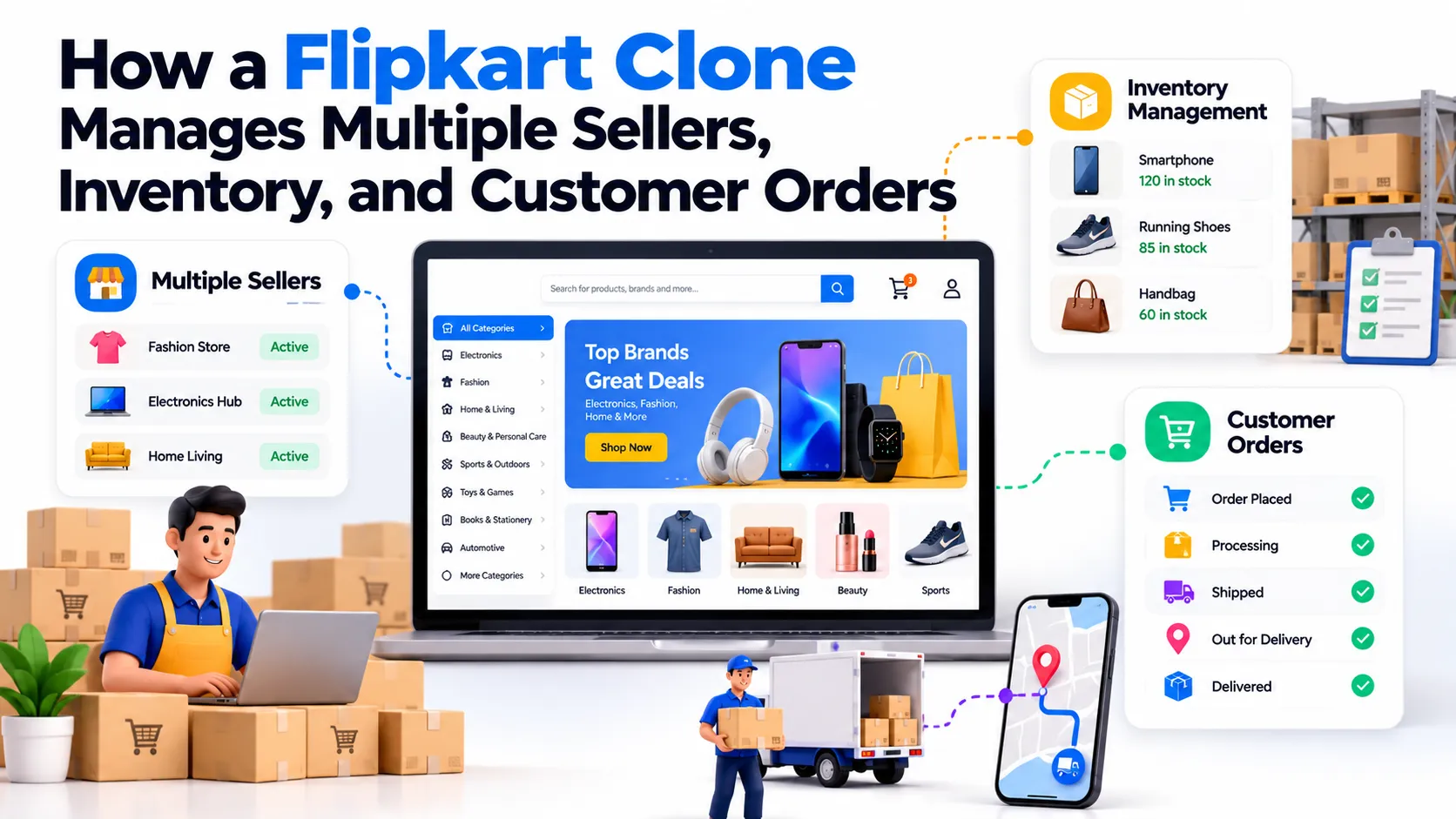
Managing an online shopping marketplace becomes more challenging when hundreds of sellers offer thousands of products through one platform. Unlike a traditional eCommerce store, where one business controls inventory and order fulfillment, a multi-vendor marketplace connects independent merchants, customers, payment systems, and delivery services.
A Flipkart Clone provides a foundation for organizing these operations through a centralized eCommerce marketplace platform. Customers can explore products from different sellers, compare prices, place orders, and track deliveries, while merchants manage their own inventory and sales.
However, operating a marketplace involves more than creating product listings. Businesses need reliable seller onboarding, accurate stock management, coordinated order processing, and transparent payment records.
For entrepreneurs planning a Flipkart Clone, understanding how these systems work together is essential for creating a marketplace that supports both customer satisfaction and merchant growth.
This guide explains how a Flipkart-style marketplace manages multiple sellers, inventory, customer orders, payments, and delivery operations.
What Is a Flipkart Clone Marketplace?
A Flipkart Clone is a multi-vendor eCommerce platform inspired by the online shopping marketplace model associated with Flipkart.
It allows multiple independent sellers to list products and sell them through a single digital marketplace.
Instead of operating separate websites, merchants can use a shared platform to reach customers, manage orders, and participate in promotional campaigns.
How a Multi-Vendor Marketplace Works
A typical marketplace connects three main participants.
Customers browse products, compare available options, complete purchases, and monitor deliveries.
Sellers manage product catalogs, prices, stock quantities, orders, and fulfillment responsibilities.
Administrators oversee seller approvals, marketplace policies, commissions, disputes, and platform performance.
Each participant requires a separate interface with appropriate permissions.
The marketplace must coordinate these activities while providing customers with a consistent shopping experience.
How a Flipkart Clone Manages Multiple Sellers
Seller management is one of the most important responsibilities of a marketplace operator.
A growing platform may support merchants selling electronics, fashion, furniture, beauty products, and household essentials.
Each merchant operates independently but must follow the marketplace's policies.
Seller Registration and Verification
The seller onboarding process begins when merchants register their businesses.
Depending on the marketplace's requirements, sellers may need to provide business details, tax information, contact details, bank information, and verification documents.
Marketplace administrators review these submissions before approving seller accounts.
A structured onboarding process helps reduce fraudulent registrations and establish clear merchant responsibilities.
Seller Dashboard and Account Management
After approval, merchants access a dedicated dashboard.
A seller management system should allow them to add products, update prices, monitor inventory, review orders, and track sales performance.
Sellers should only access information relevant to their own businesses.
Role-based permissions help prevent merchants from viewing or changing another seller's products or transactions.
Seller Performance Monitoring
Marketplace operators need visibility into seller performance.
Important indicators include order acceptance rates, cancellation rates, dispatch delays, return requests, and customer complaints.
These metrics help administrators identify operational problems and support consistent service standards.
How Marketplace Inventory Management Works
Inventory management becomes more complicated when multiple merchants sell through the same platform.
Each seller controls separate stock quantities, and product availability may change throughout the day.
A reliable marketplace inventory management system must keep these changes synchronized with customer-facing product listings.
Seller-Specific Inventory Tracking
Every product listing should connect to the seller responsible for fulfilling it.
For example, Seller A may have 20 smartphones available, while Seller B has 12 units of the same model.
Although the products appear similar, the marketplace must maintain separate inventory records.
Each listing may also have a different selling price, delivery location, warranty arrangement, or shipping estimate.
Accurate seller-level tracking helps prevent confusion during checkout and fulfillment.
Real-Time Stock Updates
When customers place orders, available inventory should be updated promptly.
Suppose a seller has ten units of a product. If three units are successfully reserved or sold, the available quantity should reflect the remaining stock.
Inventory updates should also account for cancellations, returns, manual adjustments, and stock replenishment.
Businesses evaluating multi-vendor marketplace features should prioritize inventory visibility and seller-specific stock controls.
Preventing Overselling
Overselling happens when customers purchase more units than a seller can fulfill.
This problem often occurs when multiple customers attempt to purchase the final available item simultaneously.
A marketplace can reduce overselling through inventory reservations, transaction-safe stock updates, and checkout validation.
For example, the system may temporarily reserve an item while a customer completes payment.
If the payment fails or the reservation expires, the stock can become available again.
Managing Low-Stock Products
Low-stock notifications help sellers replenish popular products before they become unavailable.
Merchants can establish stock thresholds for individual products.
When inventory falls below a configured limit, the dashboard can display an alert.
This helps merchants plan replenishment and reduce avoidable order cancellations.
How a Flipkart Clone Processes Customer Orders
Customer order management is another major responsibility of a multi-vendor marketplace.
A single customer may purchase products from several merchants during one checkout session.
The platform must organize these purchases without creating unnecessary complexity for customers.
Unified Shopping Cart and Checkout
Customers expect to add products from different sellers to one cart.
For example, a customer may purchase a laptop from Seller A, headphones from Seller B, and a laptop bag from Seller C.
The marketplace displays the combined cart and calculates the relevant product totals, discounts, taxes, and shipping charges.
Although the customer sees one checkout experience, the platform must identify which merchant is responsible for each product.
Multi-Seller Order Processing
After checkout, the marketplace can create a main customer order containing separate seller-specific orders.
Each seller receives the products they need to fulfill.
This process is commonly called order splitting.
For example, the customer may receive one order reference for the overall purchase while the system maintains three separate fulfillment records.
A reliable multi-seller order processing workflow helps merchants manage their own orders without interfering with other sellers.
Order Status Management
Different sellers may process orders at different speeds.
Seller A might dispatch a product immediately, while Seller B requires additional preparation time.
The marketplace should track these statuses separately.
Customers may see updates such as order confirmed, processing, shipped, out for delivery, and delivered.
Accurate tracking reduces uncertainty and helps customer support teams respond to delivery questions.
How a Flipkart Clone Coordinates Payments and Seller Commissions
Payment management is more complex in a marketplace because customer payments must be connected to multiple merchant transactions.
Customer Payment Collection
Customers may use supported payment options such as UPI, cards, net banking, digital wallets, or cash on delivery.
The availability of each method depends on the payment provider, operating region, and marketplace configuration.
The platform should confirm payment status before finalizing prepaid orders.
Marketplace Commission Calculation
Marketplace operators commonly generate revenue by charging sellers commissions.
For example, a seller completes a ₹2,000 transaction, and the marketplace applies a 10% commission.
The platform commission would be ₹200 before other applicable adjustments.
Different categories or merchants may have different commission arrangements.
The system must apply the correct rules to each eligible transaction.
Seller Settlement and Payout Records
The marketplace should maintain accurate records of seller earnings, commissions, refunds, and adjustments.
Payout timing may depend on payment provider capabilities, merchant agreements, delivery confirmation, and applicable regulations.
Transparent settlement reports help merchants understand their earnings and reduce financial disputes.
How Delivery Management Works Across Multiple Sellers
Delivery management becomes challenging when products originate from different merchants or warehouses.
Seller-Specific Shipping Locations
A customer may purchase products from sellers operating in Mumbai, Delhi, and Bengaluru.
These products may require separate shipments and delivery schedules.
The marketplace must determine serviceability, shipping costs, and estimated delivery times for each shipment.
Delivery Partner Integration
An eCommerce marketplace can connect with supported logistics providers to manage shipping operations.
Depending on the integration, delivery workflows may include shipment creation, tracking updates, pickup scheduling, and delivery confirmation.
Marketplace operators should verify which capabilities their selected logistics partners support.
Managing Partial Deliveries
A customer who purchases three products may receive them on different dates.
The marketplace should clearly communicate these differences.
Customers need shipment-specific tracking information rather than one generic delivery status for the entire purchase.
This makes the shopping experience more transparent.
How Returns, Refunds, and Cancellations Are Managed
Returns and cancellations are common marketplace operations that require coordination between customers, sellers, administrators, and payment systems.
Seller-Specific Return Requests
Customers should be able to request returns for eligible products without affecting unrelated purchases.
For example, returning a pair of headphones should not automatically cancel a laptop purchased from another seller.
The platform must connect each return request to the correct merchant and order item.
Partial Refund Processing
A refund may involve product charges, applicable taxes, shipping adjustments, discounts, and marketplace commissions.
The system should calculate the correct refund according to the order details and published policies.
Accurate records also help administrators resolve disputes.
Cancellation Management
Customers may cancel eligible orders before dispatch, while sellers may need to cancel orders when fulfillment becomes impossible.
Cancellation rules should be clearly defined.
The marketplace must update inventory, payment records, and order statuses whenever a cancellation is completed.
Why Admin Controls Matter in a Flipkart Clone
A marketplace administrator needs visibility into operations across all participating sellers.
Centralized Marketplace Dashboard
An administrative dashboard can provide information about active sellers, product listings, customer orders, commissions, and reported issues.
This helps operators identify marketplace-wide problems without manually reviewing every merchant account.
Product and Seller Moderation
Administrators should be able to review inappropriate listings, investigate seller complaints, and enforce marketplace policies.
Moderation helps maintain product quality and customer trust.
Marketplace Analytics
Useful business metrics include gross merchandise value, completed orders, repeat purchase rates, seller cancellation rates, refund rates, and average order value.
These indicators help founders understand marketplace performance and identify areas requiring improvement.
How to Scale a Multi-Vendor eCommerce Marketplace
Growth creates additional operational demands as the number of merchants, products, and transactions increases.
Start With a Focused Product Category
Startups may benefit from beginning with selected product categories rather than introducing a large catalog immediately.
This makes seller onboarding, inventory management, and customer support easier to control.
Once the operating model is stable, businesses can expand into additional categories.
Automate Repetitive Marketplace Operations
Automated order notifications, inventory updates, commission calculations, and shipping status synchronization can reduce manual work.
However, automation should include monitoring and error handling to prevent incorrect records from spreading across connected systems.
Prepare for Higher Transaction Volumes
Marketplace infrastructure should be tested for simultaneous checkouts, inventory changes, payment callbacks, and order updates.
Miracuves offers a customizable Flipkart-style marketplace foundation, but businesses should still validate performance, integration requirements, and operational workflows against their expected transaction volumes.
Choosing the Right Flipkart Clone Solution
Selecting the right marketplace technology requires evaluating both customer-facing features and operational capabilities.
Evaluate Seller and Inventory Workflows
A suitable solution should provide merchant onboarding, product management, stock updates, and order visibility.
These features are essential for managing independent sellers through one marketplace.
Review Checkout and Fulfillment Operations
Businesses should test mixed-seller carts, order splitting, payment failures, partial cancellations, refunds, and shipment tracking.
These scenarios reveal whether the marketplace can handle real operational conditions.
Consider Customization and Long-Term Requirements
A marketplace may need different payment methods, delivery providers, product categories, and regional policies as it grows.
Entrepreneurs exploring eCommerce development services should consider customization requirements, technical maintenance, integration costs, and ownership arrangements before implementation.
Miracuves can provide a starting point for an online marketplace, while successful operations depend on reliable merchant relationships, customer demand, and continuous improvement.
Final Thoughts
A Flipkart Clone connects multiple sellers, inventory systems, customer orders, payments, and delivery operations through one eCommerce marketplace platform.
For entrepreneurs, the main challenge is not simply attracting merchants or displaying thousands of products. It is ensuring that every marketplace operation works accurately as the business grows.
A strong seller management system helps merchants control their products and orders. Reliable inventory tracking reduces overselling, while structured order processing supports purchases involving multiple sellers.
Payment records, shipping coordination, returns, and administrative controls complete the operational foundation.
Businesses planning a multi-vendor marketplace should prioritize these connected workflows from the beginning.
The success of a Flipkart-style marketplace depends on how effectively it coordinates independent sellers while delivering one reliable shopping experience to customers.