7-OH Vapes Explained: Understanding the Chemistry Behind the Format
By andy gibson
48 Views
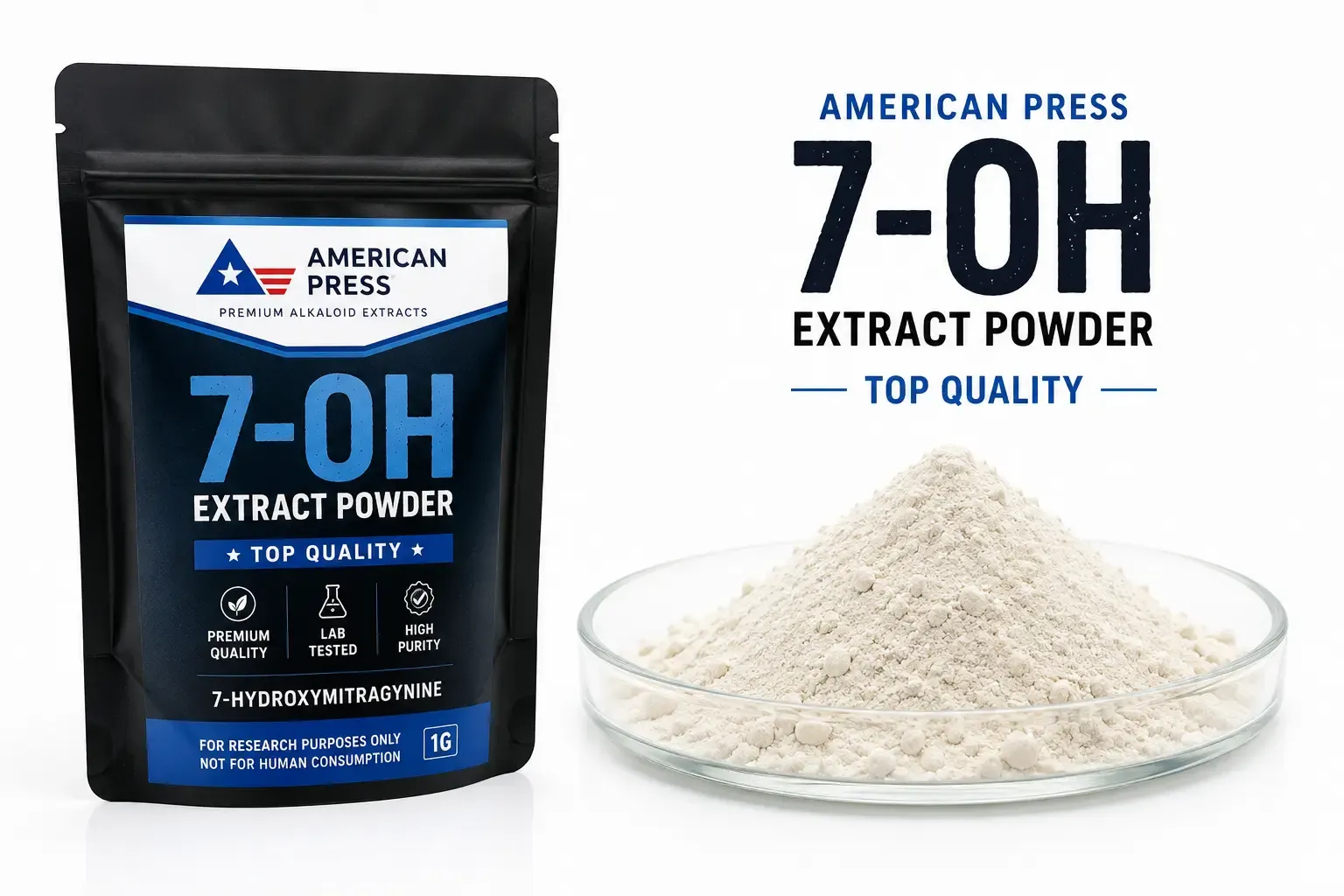
7-hydroxymitragynine, commonly called 7-OH, is a naturally occurring alkaloid associated with Mitragyna speciosa, the plant commonly known as kratom. Although 7-OH is naturally present in kratom, it normally occurs at relatively low concentrations compared with mitragynine, the plant's primary alkaloid.
The appearance of concentrated 7-OH products has created a new area of interest for researchers. Vaping adds another layer of complexity because the chemical composition of a formulation can change when it is heated and converted into an aerosol.
Understanding 7-OH vapes therefore requires looking beyond the product label and considering the chemistry of the alkaloid, formulation ingredients, heating process, and resulting aerosol.
What Is 7-Hydroxymitragynine?
7-OH is one of the many alkaloids identified in kratom. In natural kratom leaf, it is considered a minor constituent, while mitragynine is generally present at much higher concentrations. The FDA's scientific assessment reports that naturally occurring 7-OH generally represents less than 2% of kratom's total alkaloid content.
7-OH has received substantial scientific attention because of its activity at the mu-opioid receptor. This pharmacological property distinguishes it from many of the other compounds found in kratom.
It is important, however, to distinguish naturally occurring 7-OH from concentrated products specifically formulated around the compound.
What Makes a Vape Chemically Different?
A traditional kratom product may contain dried botanical material, powder, capsules, tea, or an extract. A vape formulation is different because it is designed to produce an aerosol through heating.
This creates two chemical environments:
- The original formulation inside the device
- The aerosol produced during heating
The compounds present in the liquid or formulation may not necessarily remain unchanged during aerosol generation.
Research on vaping chemistry more broadly has demonstrated that heating can produce chemical transformations and potentially harmful byproducts from some vape formulation components.
For 7-OH specifically, however, detailed research on commercial vape formulations remains limited.
What Can a 7-OH Vape Contain?
The exact composition depends on the individual formulation.
Potential components can include 7-OH itself, other kratom-associated alkaloids, carrier materials, flavoring compounds, and additional ingredients.
This is important because the term "7-OH vape" describes a product category rather than a standardized chemical formula.
Two products using similar terminology could potentially have different concentrations, ingredients, or chemical profiles.
Recent research examining commercial 7-OH products has found substantial variation between products and discrepancies between labeled and measured quantities. Researchers have also identified additional oxidation-related compounds in some products.
The Role of Concentration
Concentration is one of the most important chemical characteristics to consider.
Natural kratom generally contains relatively small amounts of 7-OH. By contrast, some commercial products are specifically formulated to contain substantially enhanced concentrations.
A 2026 analytical study found that more than 98% of 7-OH-labeled products analyzed appeared to have a semisynthetic origin and identified inconsistencies between some labeled and measured amounts.
Another study examining products marketed as kratom extracts found unusually high 7-OH concentrations that were inconsistent with authentic kratom leaf profiles.
These findings demonstrate why chemical analysis is important when evaluating concentrated products.
Heating and Chemical Stability
Temperature is particularly relevant to vape chemistry.
A formulation that remains relatively stable during storage may behave differently when exposed to the elevated temperatures involved in aerosol generation.
Earlier research examining mitragynine and several related alkaloids found that their stability was affected by temperature and pH. In that study, 7-OH was the least stable of the compounds examined, with significant loss observed at temperatures of 40°C and above during the experimental conditions.
This does not directly establish what happens to 7-OH inside a commercial vape device, because actual device temperatures and exposure conditions can differ substantially from laboratory experiments.
Nevertheless, the findings demonstrate why thermal stability deserves specific investigation.
From Liquid to Aerosol
The transformation from a formulation into an aerosol is an important part of vape chemistry.
During this process, researchers may need to examine:
- Temperature exposure
- Heating duration
- Aerosol particle characteristics
- 7-OH concentration
- Potential degradation products
- Carrier-material changes
- Flavoring-related compounds
Testing only the original liquid may not reveal the complete chemical profile of the inhaled aerosol.
Analytical methods such as gas chromatography-mass spectrometry and liquid chromatography-mass spectrometry can help researchers identify compounds in e-liquids and aerosols. Studies of other vaping products have demonstrated the usefulness of these techniques for identifying both expected ingredients and compounds formed during vaping.
Why Formulation Matters
The chemistry of a vape depends on more than its primary active compound.
Carrier materials, flavoring compounds, and other additives can influence viscosity, aerosol formation, thermal behavior, and the chemicals produced during heating.
Research involving common vape diluents has shown that heating certain formulations can result in chemical changes and the formation of compounds such as carbonyls and other potentially toxic substances.
These findings come from vaping research involving other formulations and should not be interpreted as proof that the same compounds are produced by every 7-OH vape. They do, however, demonstrate why formulation-specific aerosol testing is necessary.
Vaping and Inhaled Exposure
Vaping also changes the route of exposure.
Oral 7-OH products are processed through the gastrointestinal system, whereas vaping introduces an aerosol through the respiratory tract.
This difference can affect absorption, distribution, metabolism, and exposure levels.
Research specifically examining the pharmacokinetics of inhaled 7-OH remains limited. Consequently, results from studies involving oral 7-OH or traditional kratom cannot automatically be applied to vaping.
More controlled research is needed to establish how inhaled exposure compares with other routes.
What Current Research Says About Safety
The available evidence has raised significant concerns about concentrated 7-OH products.
The FDA has stated that concentrated 7-OH products have not been demonstrated to be safe or effective for any use and has reported adverse effects associated with 7-OH products, including addiction, withdrawal symptoms, anxiety, depression, gastrointestinal distress, insomnia, and seizures.
For vaping products, there is an additional question concerning the safety of inhaling the aerosol and its complete chemical composition.
It is therefore important not to treat a laboratory measurement of 7-OH concentration as a complete safety assessment.
Why Independent Testing Matters
Independent analytical testing can provide information that cannot be established from a product name alone.
A comprehensive analysis might examine:
- 7-OH concentration
- Mitragynine and other kratom alkaloids
- Additional active compounds
- Carrier ingredients
- Flavoring compounds
- Contaminants
- Degradation products
- Chemical changes following heating
This approach can help researchers determine whether the original formulation and resulting aerosol have substantially different chemical profiles.
A Certificate of Analysis may provide useful batch-specific information, but a purity result does not establish that a product is safe for inhalation.
Regulatory Context
The chemistry of concentrated 7-OH products has also become relevant to regulatory discussions.
In July 2026, the FDA reported that the DEA had begun a temporary scheduling process concerning 7-OH above a proposed threshold, as well as several synthetic kratom-related compounds. The FDA also emphasized the distinction between concentrated 7-OH products and ordinary kratom leaf containing naturally occurring trace amounts.
Because regulations can change, the legal status of a specific 7-OH vape should always be evaluated using current federal, state, and local requirements.
Research Gaps
Despite growing interest in 7-OH, several questions remain unanswered.
Researchers need more information about the thermal stability of 7-OH under actual vaping conditions, the composition of aerosols generated by different devices, potential degradation products, inhalation pharmacokinetics, and long-term respiratory exposure.
Product consistency is another important issue. If commercial formulations vary significantly in concentration or ingredients, researchers must characterize those differences before making broad conclusions about the category.
Final Thoughts
The chemistry of a 7-OH vape is more complicated than simply identifying 7-hydroxymitragynine as the primary ingredient.
The complete picture includes alkaloid concentration, formulation ingredients, thermal stability, device characteristics, aerosol chemistry, and inhalation exposure.
Current research shows that concentrated 7-OH products can differ substantially from traditional kratom leaf and that some commercial products have demonstrated inconsistencies between labeled and measured composition.
At the same time, research specifically focused on 7-OH vaping remains limited. More product-specific analytical studies and controlled toxicological and pharmacokinetic research are needed to determine how heating and inhalation affect this emerging product format.
For researchers and readers, the most useful approach is to distinguish what is established about 7-OH itself from what remains uncertain about its use in vaping formulations.