How Watercolor Artists Capture Light: A Look Behind the Brush
By Casanova12
7 Views
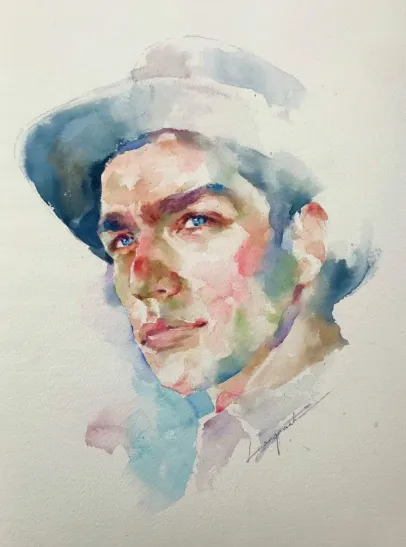
Light is the thing most people respond to in a watercolor painting, even when they cannot name why. A morning scene feels calm, a late afternoon piece feels warm, and a coastal view seems to hold the glow of the day. None of that happens by accident. Watercolor artists spend years learning how to make light sit on paper, and the methods they use are worth a closer look.
Why Light Matters So Much in Watercolor
Watercolor behaves in a way that no other paint does. The pigment stays thin, and the white of the paper shows through every wash. In most paintings, an artist adds white paint to show a bright spot. In watercolor, the brightness comes from the paper itself. The artist has to leave those areas untouched from the start, because once they are covered, the light is gone.
This changes how a watercolor artist plans a piece. They look at a scene and decide early where the light will fall. Those spots stay blank while the rest of the painting builds up around them. The glow you see later is really just clean paper framed by color.
The Methods Behind the Light
A few core approaches come up again and again when artists talk about capturing light.
Working From Light to Dark
Watercolor artists build a painting in the opposite order from what you might expect. They start with the palest washes and slowly move toward the darker tones. A sky might begin as a faint wash, then gain depth near the top as more layers go down. This order protects the light areas, since it is far easier to darken a spot than to lighten one.
Leaving the Paper Bare
The simplest tool a watercolor artist has is restraint. By leaving small areas of paper untouched, they create highlights that read as sunlight on water, the edge of a petal, or the top of a cloud. These gaps take planning, because the artist must picture the finished piece before the first wash goes down.
Letting Colors Settle
When two washes meet while the paper is still damp, they drift into each other and form soft edges. A skilled artist uses this to show how light fades across a sky or spreads over a field. The gentle gradients that result are hard to fake with any other method.
Reading a Watercolor for Its Light
Once you know what to look for, you start to notice these choices in finished work. Take a floral piece by a watercolor artist such as Joan Wuischpard, where the brightest petals are often the parts of the paper that were never painted at all. The color sits around them, and the eye reads the gap as light. The same idea shows up in coastal and pond scenes, where a thin strip of bare paper can stand in for sun on the surface of the water.
This is part of what gives original watercolor paintings their presence in a room. The light in them shifts slightly as the light in the room changes, since the paper and pigment respond to what falls on them.
The Role of Timing & Patience
Capturing light in watercolor is as much about timing as technique. The paint dries at its own pace, and an artist has to work with that pace rather than against it. A wash added too soon runs and blurs. A wash added too late sits flat and loses its glow. Much of a watercolor artist's skill lives in knowing the right moment to lay down the next layer and the right moment to stop.
Patience matters just as much. Some pieces call for the artist to wait between layers, letting each one dry fully so the next one stays crisp. Rushing this step is one of the most common ways a painting loses its sense of light.
Why This Craft Is Worth Noticing
For anyone who enjoys art, learning how watercolor artists handle light adds a new way to look at their work. A painting stops being a flat image and becomes a record of dozens of small decisions about where to hold back and where to let the color go.
Artists who keep a steady daily practice, as Joan Wuischpard does from her studio in Tampa, tend to develop a feel for this over time. The sense of light in their later work often comes from years of watching how the paint and paper behave together.
The next time a watercolor painting draws you in, look for the bright spots and ask where the paper is showing through. That quiet gap is usually the place where the whole piece came to life, and it is the clearest sign of an artist who knows how to let light do the work.
Related Reading
Top 10 Hidden Secrets About Business & Finance You Need to Know
Welcome to our in-depth exploration of Business & Finance. In an era defined...
Why Business & Finance is Transforming the Global Industry Landscape
Welcome to our in-depth exploration of Business & Finance. In an era defined...