How to Schedule More Sales Meetings and Close More Deals
By Hafsa Tariq
68 Views
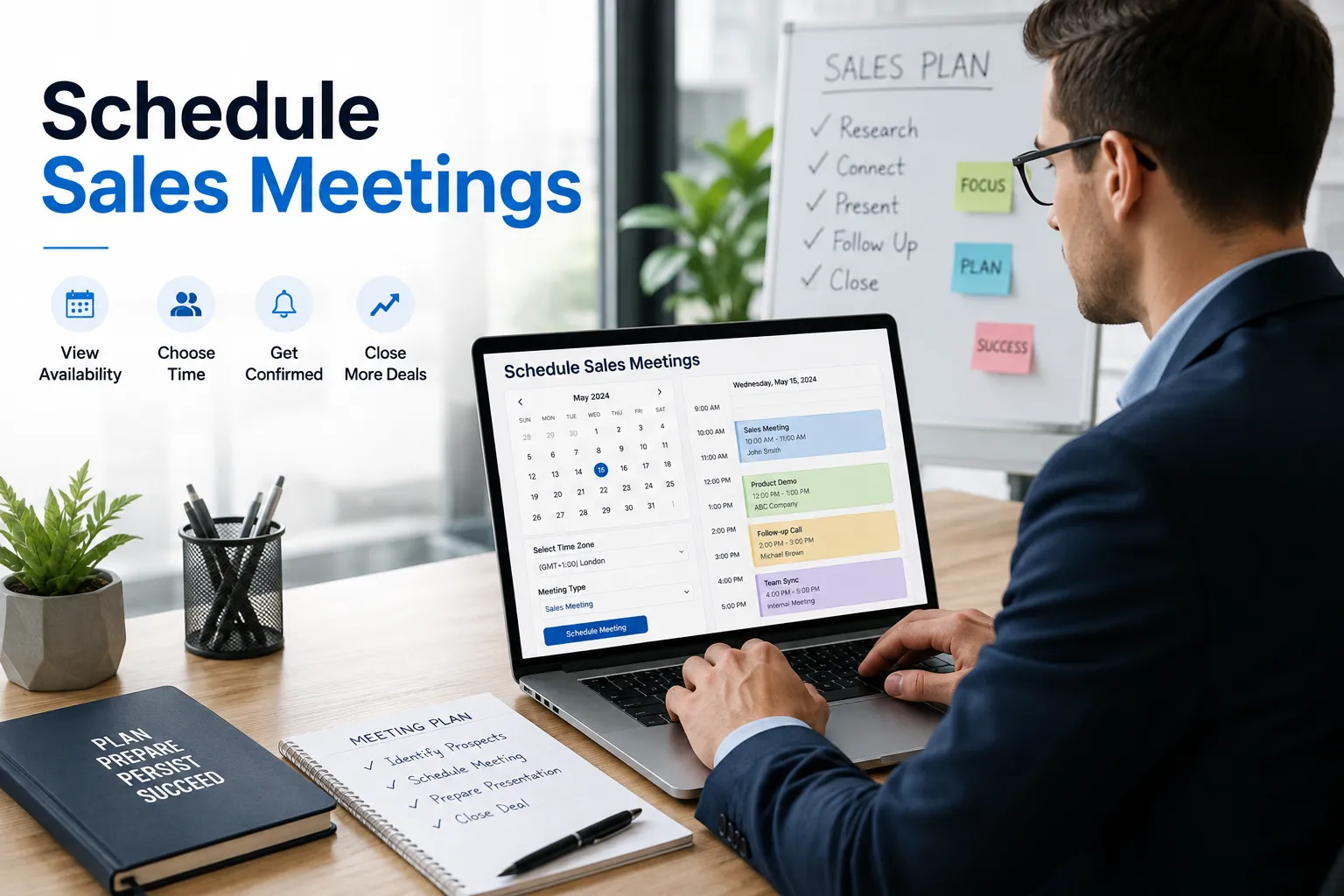
For B2B sales teams, the path from prospecting to revenue often begins with one important step: getting the right buyer into a sales conversation.
Sales representatives can spend hours researching prospects, sending emails, making calls, and following up. But if those activities do not result in qualified sales meetings, the pipeline can quickly become inconsistent.
At the same time, scheduling more meetings does not necessarily mean closing more deals. A calendar filled with unqualified prospects can consume valuable selling time without producing meaningful opportunities.
The real objective is to schedule more qualified sales meetings and turn those conversations into opportunities and closed deals.
Here are practical strategies your sales team can use to improve both meeting volume and deal conversion.
1. Start With the Right Prospects
The first step to scheduling more productive sales meetings is identifying the people and companies most likely to become customers.
Your sales team should have a clear ideal customer profile (ICP). This profile can include company size, industry, revenue, location, business model, job role, and common challenges.
When sales representatives target prospects that closely match the ICP, their outreach becomes more relevant and their chances of booking meaningful meetings increase.
Instead of trying to contact everyone, focus resources on prospects with the strongest potential fit.
2. Research Before Reaching Out
Effective prospecting requires more than collecting names and email addresses.
Before contacting a prospect, research the company and understand what may be happening in its business. Look for information such as company growth, leadership changes, new initiatives, technology investments, market expansion, or other potential buying triggers.
This research allows sales representatives to create outreach that feels relevant rather than generic.
A prospect is more likely to respond when the salesperson demonstrates an understanding of their business situation.
3. Create Outreach That Focuses on the Buyer
One of the biggest mistakes in sales outreach is talking too much about the product.
Prospects are usually more interested in solving their problems than hearing a list of features.
Instead of leading with everything your company offers, connect your message to a challenge the prospect may be experiencing.
Explain the potential business outcome and give the prospect a reason to continue the conversation.
The purpose of the initial message is not necessarily to sell the entire solution. It is to create enough relevance and interest to earn a conversation.
4. Use Multiple Outreach Channels
Relying on a single communication channel can limit your ability to reach prospects.
Depending on your target audience, a sales development strategy may combine:
- Phone calls
- Personalized video
- Industry events
- Referrals
- Follow-up campaigns
A multichannel approach gives sales representatives more opportunities to connect with prospects.
However, effective outreach is not about contacting someone on every possible platform repeatedly. Each interaction should have a clear purpose and provide additional value.
5. Make the Meeting Easy to Book
Once a prospect shows interest, avoid unnecessary friction.
Make it simple for the prospect to choose a meeting time. Online scheduling tools can allow prospects to view available times and book directly on the salesperson's calendar.
The scheduling process should be quick and straightforward.
You can also offer a few suggested times when communicating directly with a prospect. This reduces the amount of back-and-forth required to find a suitable appointment.
The easier it is to schedule a conversation, the less likely interested prospects are to disappear before the meeting is booked.
6. Qualify Before Scheduling
More meetings are not always better.
Sales teams should qualify prospects before putting them on a salesperson's calendar. The qualification process can determine whether the prospect has a relevant problem, fits the target market, and has a realistic opportunity to purchase.
Useful qualification questions may explore:
- What problem are they trying to solve?
- How important is the problem?
- What is the impact on the business?
- Who is involved in the decision?
- Is there a timeline for solving the problem?
- What happens if nothing changes?
Qualification protects sales representatives from spending too much time on conversations that have little chance of progressing.
7. Prepare Prospects Before the Meeting
Getting a prospect to attend the meeting is only the beginning.
Before the appointment, provide a clear explanation of what the meeting will cover and what the prospect can expect.
A confirmation message can include the meeting agenda, expected duration, participants, and any information that would be useful to prepare.
This creates a more professional experience and helps the salesperson start the conversation with context.
It can also reduce no-shows because the prospect understands the purpose of the meeting.
8. Focus the Sales Conversation on Discovery
Once the meeting begins, avoid turning it immediately into a product presentation.
Use the conversation to understand the prospect's situation.
Effective discovery questions can uncover:
- Current processes
- Business challenges
- Desired outcomes
- Existing solutions
- Consequences of the problem
- Decision-making processes
- Budget considerations
- Implementation timelines
The more clearly the salesperson understands the prospect's situation, the easier it becomes to determine whether the solution is genuinely relevant.
9. Connect Your Solution to Business Outcomes
After understanding the prospect's needs, explain how your solution can help.
Avoid simply repeating product features. Connect those features to outcomes that matter to the buyer.
For example, instead of saying that a platform has automated reporting, explain how automation could reduce manual work, improve visibility, or help leadership make faster decisions.
Business-focused conversations help prospects understand why the solution matters and can make the next step more compelling.
10. Follow Up With a Clear Next Step
A successful sales meeting should not end with an uncertain “we'll be in touch.”
Before ending the conversation, establish what happens next.
The next step could involve:
- A product demonstration
- Technical evaluation
- Proposal
- Additional stakeholder meeting
- Pricing discussion
- Trial or proof of concept
- Follow-up discovery call
Send a follow-up message summarizing the key points and agreed-upon actions.
Clear next steps keep opportunities moving through the pipeline and reduce the risk of deals becoming inactive.
11. Train Your Sales Team
Sales meeting scheduling and closing performance depend heavily on the skills of your sales representatives.
Even a strong prospecting process can underperform if reps struggle with qualification, discovery, objection handling, or value communication.
Consistent sales training can help representatives improve their ability to:
- Identify qualified prospects
- Write stronger outreach
- Ask better discovery questions
- Handle objections
- Communicate value
- Navigate buying processes
- Advance opportunities
Training should be practical and connected to the situations salespeople encounter every day.
12. Measure What Actually Drives Revenue
To improve sales performance, track more than the number of meetings scheduled.
Important metrics include:
- Meetings booked
- Meeting attendance rate
- Qualified meeting rate
- Opportunity conversion rate
- Pipeline generated
- Win rate
- Average deal size
- Sales cycle length
- Revenue generated
These metrics show whether increased meeting activity is actually contributing to business growth.
If meeting volume rises but opportunity conversion falls, your team may need to improve qualification. If meetings are strong but deals are not closing, discovery, value communication, or objection handling may need attention.
Conclusion
Scheduling more sales meetings is only part of the equation. The real goal is to create qualified conversations that move buyers toward a purchasing decision.
By targeting the right prospects, personalizing outreach, using multiple channels, simplifying scheduling, qualifying leads, and preparing buyers for meetings, sales teams can improve both meeting quality and pipeline performance.
Once the meeting happens, effective discovery, outcome-focused conversations, clear next steps, and strong follow-up help turn those conversations into opportunities.
Ultimately, companies that combine effective sales meeting scheduling with strong sales skills and consistent training can create a healthier pipeline and improve their ability to close more deals.
More meetings can create more opportunities, but the right meetings, handled the right way, are what create revenue.
Related Reading
Top 10 Hidden Secrets About Business & Finance You Need to Know
Welcome to our in-depth exploration of Business & Finance. In an era defined...
Why Business & Finance is Transforming the Global Industry Landscape
Welcome to our in-depth exploration of Business & Finance. In an era defined...