How to Protect Your Products from Packing Bench to Delivery
6 Views
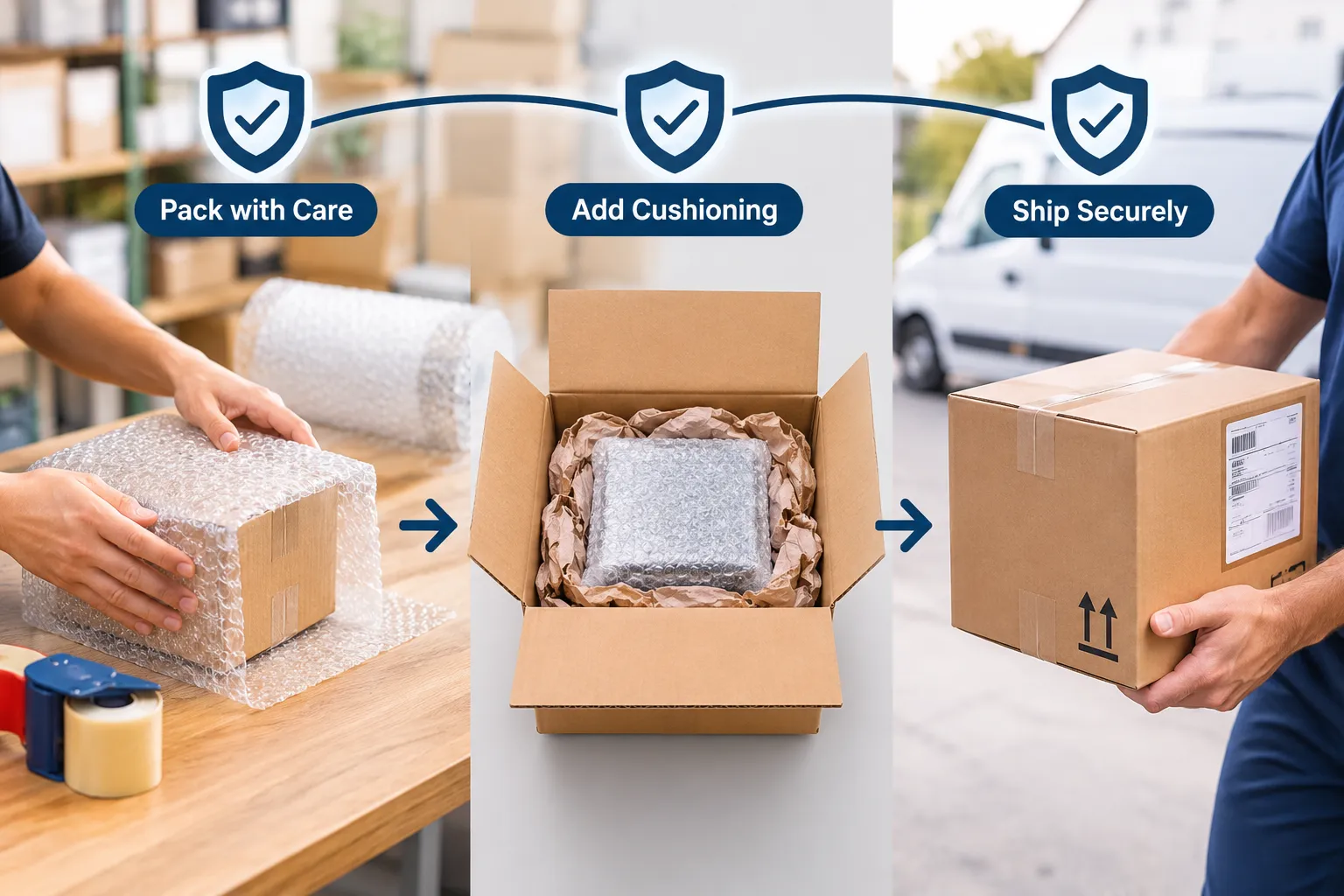
You've spent ages making, picking, and checking an order, only for it to land on the customer's doorstep with a crushed corner. Frustrating, right? It's a pain for you and for them. The truth is that most damage doesn't come from one big drop. It builds up through small gaps, weak seals, and rough handling at every step between your packing bench and the delivery van. The good news is you can stop most of it with a few smart choices. In this guide, we'll show you where products usually get damaged, what packaging protects them at each stage, and how to match your setup to your industry so every parcel arrives looking exactly how you packed it.
Quick Summary
- Most damage comes from movement inside the box, so fill the gaps
- Pick a box strong enough for the weight and the journey
- A good seal matters just as much as a good carton
- Pallets and outer layers need protection too
- Match your packaging to what you actually sell
Where Do Products Get Damaged on the Way to the Customer?
Think of a parcel's journey as a series of small shocks. It gets stacked at your bench, dropped on a conveyor, squashed under heavier cartons in a van, and tossed on a doorstep. Each knock is tiny, but they add up. Knowing which stage hurts your product most helps you spend money where it matters instead of overpacking everything.
|
Stage |
Common Problem |
Quick Fix |
|
Packing Bench |
Loose items rattling |
Add void fill or dividers |
|
Sealing |
Tape lifting at the edges |
Use the right tape width and press firmly |
|
Warehouse |
Stacking pressure |
Use stronger cartons |
|
Delivery |
Drops and vibration |
Cushion all six sides |
Which Packaging Types Protect Your Products Best?
Boxes That Fit the Product
A box that's too big lets your product slide about, and one that's too small bulges at the seams. If you order carton boxes wholesale, you can stock a few sizes that suit your best sellers and save money per unit.
- Single wall boxes suit light everyday items
- Double wall boxes handle heavy or stacked loads
- Right-sized boxes cut void fill and shipping costs
- Printed or labelled boxes help handlers spot fragile goods
Inner Protection That Stops Movement
Once the product is in the box, your next job is keeping it still. Think of it as a snug bed rather than a loose pile of padding. For example, a ceramics shop will wrap each piece individually before it goes anywhere near the carton.
- Bubble wrap cushions delicate surfaces
- Paper void fill stops items sliding about
- Corrugated dividers keep bottles and jars apart
- Foam suits electronics and sensitive parts
Tape That Seals Properly
A weak seal can ruin a perfectly good carton. Reliable vibac tape suppliers usually stock a few types, and acrylic tape is popular because it pulls off the roll more quietly, which helps in busy packing areas.
- Use tape wide enough to cover the seam fully
- Add a second strip along the edges of heavy cartons
- Check the temperature range if you store goods in cold or hot spaces
- Press the tape down firmly so it grips the flaps
Pallet and Outer Protection
If your goods travel in bulk, the outside layer matters as much as the inside. A trade counter sending plasterboard fixings or tiles out on pallets needs loads that won't shift on the road.
- Stretch film holds cartons together as one unit
- Strapping adds strength to tall or heavy stacks
- Corner protectors stop edges from getting crushed
- Top sheets keep rain and dust off the load
How Do You Match Packaging to Your Industry?
Not every business needs the same set-up, so here's a quick guide to what usually works.
|
Industry |
Main Risk |
Best Approach |
|
Online Retail |
Crushed corners |
Right-sized cartons and paper fill |
|
Ceramics and Glass |
Impact breakage |
Double wall boxes and wrapped items |
|
Auto Parts |
Heavy weight and sharp edges |
Strong cartons and extra taping |
|
Food and Drink |
Leaks and bottle clashes |
Dividers and sealed outer cartons |
If you're based nearby, sourcing packing boxes in the West Midlands means shorter lead times and easier top-ups when orders spike. Pair that with trusted vibac tape suppliers, and you've covered two of the biggest weak spots.
What Should You Take Away from All This?
Protecting your products doesn't mean wrapping everything in layers. It means choosing the right box, filling the gaps, sealing it well, and thinking about the whole journey. If you buy carton boxes wholesale, you'll keep costs steady, and choosing packing boxes in the West Midlands keeps restocking quick. Keep your packing bench tidy and consistent, and your team will make fewer mistakes. Start small, test one product, and tweak as you go. Need a hand choosing the right mix? Just get in touch, and we'll point you in the right direction.
FAQs
1. How do I stop products moving inside the box?
Fill every gap with paper, bubble wrap, or dividers until you can shake the box and feel nothing shift. Cushion all six sides, not just the bottom.
2. Is double wall cardboard worth the extra cost?
For heavy, fragile, or stacked goods, yes. It resists crushing far better, and a single damaged order usually costs more than the upgrade. If you buy carton boxes wholesale, the per-box price drops too.
3. How much tape should I use to seal a carton?
Run one strip along the centre seam and extend it down both sides, then add extra strips on heavy parcels. Good vibac tape suppliers can advise on the right width and type for your cartons.
4. Does the type of tape really matter?
Yes. Some tapes lose grip in cold or hot conditions, and some are noisy on busy benches. Check the temperature range and adhesive type before you order in bulk.
5. Where can I find packaging close to me?
Look for local trade suppliers with next-day delivery and good stock levels. Searching for packing boxes in the West Midlands is a good start if you're in the area, and most suppliers will happily help you pick sizes.
Related Reading
Expert Insights: Navigating the Complex World of Home Improvement
Welcome to our in-depth exploration of Home Improvement. In an era defined by ra...
Why Home Improvement is Transforming the Global Industry Landscape
Welcome to our in-depth exploration of Home Improvement. In an era defined by ra...