How to Find the Right Game Developers in Oman for Your Project
By Knick Global
35 Views
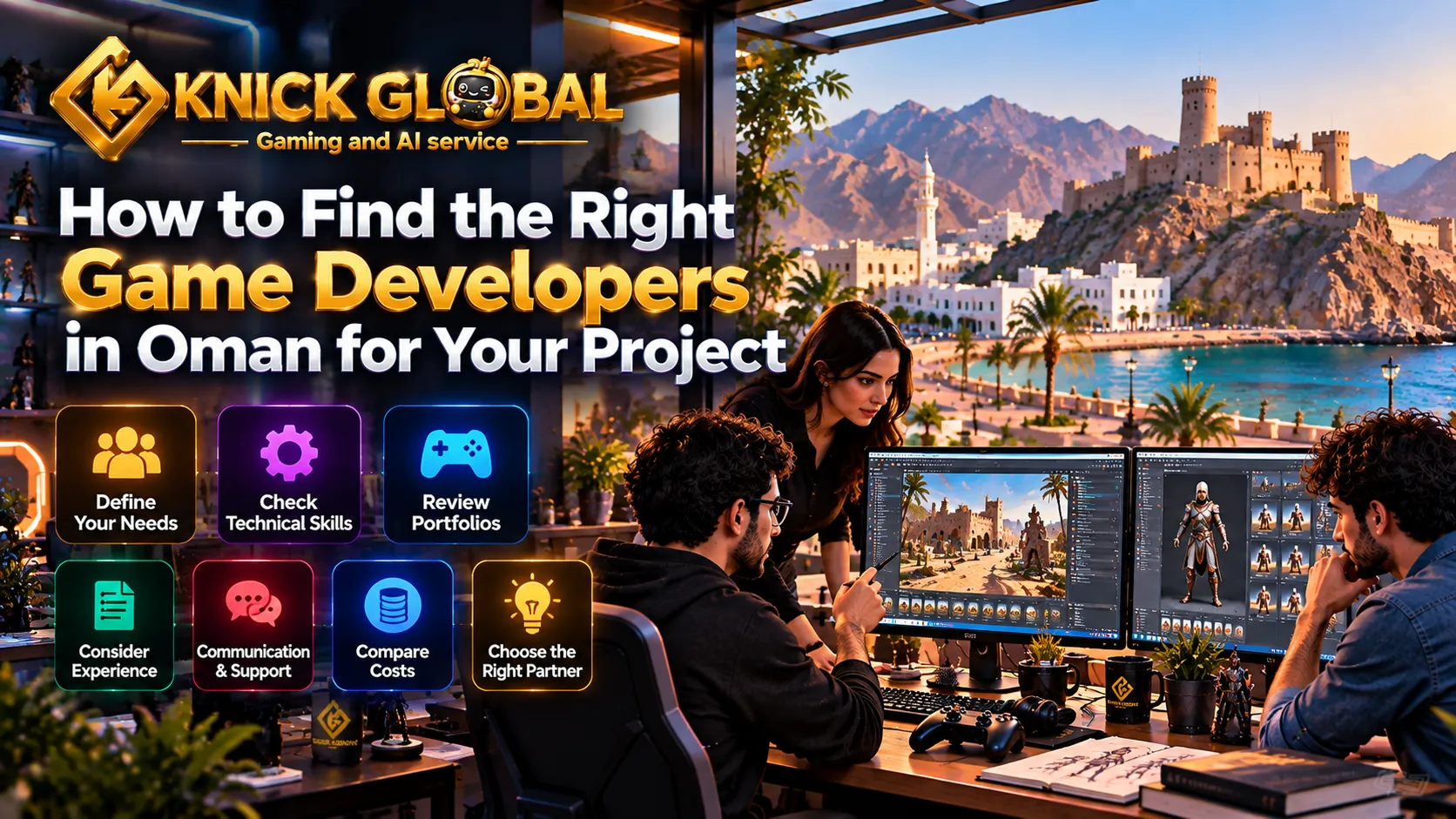
A promising game idea can lose its potential when the development team lacks the right skills, planning, or understanding of the target audience. Choosing suitable developers is one of the most important decisions a business makes before investing in game production. In Oman, businesses considering mobile games, multiplayer platforms, educational games, or immersive 3D experiences need to look beyond attractive portfolios and competitive prices.
Knowing how to Hire Game Developers in Oman helps businesses evaluate technical expertise, estimate realistic costs, and select a team that understands their goals. From reviewing past projects to checking post-launch support, a structured approach can reduce costly mistakes and create a stronger foundation for a successful game.
1. Define the Game Before Searching for Developers
The search for a development team becomes easier when the project has a clear direction. Without defined requirements, businesses may receive proposals that differ significantly in scope, cost, and delivery time.
A detailed project brief doesn't need to contain every technical decision. It should explain the game's purpose, intended audience, core features, and expected outcome.
Before approaching a game development company in Oman, businesses should identify the following details:
-
Game genre: Decide whether the project involves puzzles, racing, strategy, role-playing, simulation, or another format.
-
Target audience: Establish the intended age group, player interests, language preferences, and gaming habits.
-
Target platforms: Determine whether the game will run on Android, iOS, PC, consoles, or web browsers.
-
Core gameplay: Outline the main actions players will perform and the features that make the game engaging.
-
Business model: Consider paid downloads, advertising, in-app purchases, subscriptions, or a free-to-play structure.
-
Launch objectives: Set measurable goals, such as user acquisition, engagement, revenue, or educational outcomes.
For instance, a business planning a mobile learning game may prioritize simple navigation, progress tracking, and age-appropriate content. A competitive multiplayer game will require more attention to matchmaking, server infrastructure, and network performance.
Knick Global can be considered as part of the wider evaluation of game development providers, with the project's requirements serving as the basis for comparison.
A clear brief helps developers estimate the work more accurately. It also gives businesses a consistent way to compare proposals and identify teams that understand the project's purpose.
2. Look for Skills That Match the Game's Complexity
Game development involves several disciplines. Programming, animation, interface design, sound production, quality assurance, and backend engineering all contribute to the finished product.
However, not every project requires a large team or an extensive technology stack. The right choice depends on the features, visual style, and technical demands of the game.
When evaluating candidates to Hire Game Developers in Oman, businesses should check whether their experience aligns with the proposed project.
Important skills to assess include:
-
Game programming: Developers should understand gameplay systems, physics, controls, and performance optimization.
-
2D and 3D design: The team should have relevant experience creating characters, environments, animations, and visual effects.
-
Multiplayer development: Online games may require networking, matchmaking, synchronized gameplay, and server management.
-
Mobile optimization: Mobile projects need efficient memory usage, responsive interfaces, and reasonable battery consumption.
-
Backend engineering: Account management, cloud saves, leaderboards, and payment processing may require server-side development.
-
Testing and debugging: Developers should have a process for identifying defects and verifying that features work as intended.
A portfolio can provide useful evidence, but screenshots alone aren't enough. Playable demonstrations reveal more about controls, loading times, responsiveness, and overall usability.
Businesses should also ask about the team's role in each previous project. A developer who contributed to a small part of a successful game may have different capabilities from a team that managed the entire production cycle.
The strongest candidate isn't necessarily the one with the longest portfolio. It's the one whose demonstrated experience fits the project's actual needs.
3. Compare Development Engines and Technical Capabilities
The technology behind a game affects production time, visual quality, platform compatibility, and future maintenance. Choosing a development team without understanding its technical approach can create unnecessary limitations.
Unity and Unreal Engine are common options, but the choice should depend on the game's requirements rather than popularity alone.
Unity is frequently used for 2D games, mobile experiences, and projects that need support across multiple platforms. Unreal Engine is often considered for visually demanding 3D games and advanced rendering. Other frameworks or custom solutions may suit simpler projects.
A game development company in Oman should be able to explain its technology choices in straightforward terms.
Businesses should ask:
-
Which game engine best suits the intended gameplay and target devices?
-
Can the game support additional platforms without extensive redevelopment?
-
How will player accounts, saved progress, and online features be managed?
-
What measures will keep performance stable on lower-powered devices?
-
How will analytics, advertisements, or payment systems be integrated?
-
Who will maintain the source code and technical documentation?
The answers should connect directly to the project's needs. A technically impressive architecture may be unnecessary for a simple casual game, while a basic setup could struggle with a large multiplayer environment.
Businesses comparing regional providers should apply the same standards. A game development company in Qatar may be suitable for a project requiring comparable expertise, provided its technical approach, portfolio, and delivery process meet the agreed requirements.
The aim is to select technology that supports the intended experience without adding complexity that the game doesn't need.
4. Establish a Realistic Budget and Delivery Schedule
Development costs depend on more than the number of programming hours. Art production, animation, multiplayer infrastructure, testing, platform requirements, and post-launch maintenance can all affect the final budget.
A useful quotation explains what the price covers and which expenses may arise later.
Before signing an agreement, businesses should request a breakdown covering:
-
Planning and design: Concept development, gameplay documentation, wireframes, and prototypes.
-
Production: Programming, visual assets, animations, audio, and feature implementation.
-
Testing: Compatibility checks, performance testing, debugging, and user acceptance testing.
-
Infrastructure: Hosting, databases, online services, and other recurring technical expenses.
-
Publishing: Store preparation, platform requirements, and release-related tasks.
-
Maintenance: Bug fixes, operating system updates, new content, and technical support.
The schedule deserves equal attention. A development plan should include milestones for concept approval, prototype testing, core production, quality assurance, and launch preparation.
Businesses planning to Hire Game Developers in Oman should be cautious of proposals that promise complex games in unusually short periods without explaining the workload. A compressed schedule may result in rushed testing, unfinished features, or additional costs.
A fixed-price contract can work well when requirements are stable. A time-and-materials arrangement may suit projects where features are likely to change. In either case, payment milestones and approval procedures should be documented.
It's also sensible to reserve part of the budget for unexpected issues. New requirements, third-party integration problems, and performance fixes can arise during production.
A realistic financial plan considers the full lifecycle of the game, not just the cost of getting the first version built.
5. Make Sure the Game Fits Oman's Audience
A technically sound game still needs to connect with its intended players. Audience research helps businesses make informed decisions about language, visual design, gameplay, and monetization.
Oman's gaming audience includes people with different interests, ages, and preferred platforms. Some may enjoy casual mobile games, while others prefer competitive multiplayer experiences, sports games, or narrative-driven adventures.
Localization should be considered early, especially when a game targets Arabic-speaking players.
Key areas include:
-
Arabic language support: Ensure menus, dialogue, instructions, and notifications display correctly.
-
Right-to-left layouts: Check text alignment, navigation flow, and interface behavior in Arabic.
-
Cultural suitability: Review characters, clothing, storylines, symbols, and dialogue for relevance to the intended audience.
-
Player accessibility: Consider readable text, adjustable audio, clear instructions, and accessible controls.
-
Payment options: Evaluate monetization methods supported by the intended platforms and markets.
-
Local playtesting: Gather feedback from people who reflect the target audience before the full release.
A game development company in Bahrain or a game development company in Saudi Arabia may also have experience with regional projects. However, familiarity with the Gulf market shouldn't replace direct research into Omani player preferences.
For instance, a family-oriented game may benefit from clear Arabic instructions and simple progression systems. A multiplayer title may need reliable connections, fair matchmaking, and social features that support its intended community.
Localization involves more than translating words. It affects how players understand instructions, interact with menus, and respond to the overall experience.
By considering these details during the planning stage, businesses can avoid expensive interface changes and make the final game more accessible to its intended audience.
6. Evaluate Communication Through the Actual Workflow
Good communication helps prevent misunderstandings, missed deadlines, and disagreements about what the finished game should include.
Before selecting a development partner, businesses should understand how progress will be reported and how decisions will be made. This is especially important when developers and stakeholders work remotely.
A dependable workflow usually includes:
-
Regular progress meetings: Updates should cover completed work, upcoming tasks, and potential risks.
-
Project management tools: Shared task boards help track responsibilities, deadlines, and unresolved issues.
-
Playable builds: Working versions allow stakeholders to test features before approving major milestones.
-
Documented feedback: Design changes and technical decisions should be recorded rather than left to informal conversations.
-
Clear responsibilities: Each party should know who approves assets, features, budgets, and release decisions.
-
Change management: The contract should explain how new features affect cost, delivery time, and existing work.
Businesses should also assess how the team responds to difficult questions. Developers should be able to explain technical limitations, identify risks, and suggest practical alternatives.
A provider that communicates clearly during the proposal stage is more likely to establish realistic expectations throughout production, although ongoing performance must still be monitored.
Companies considering Hire Game Developers in Kuwait may face similar decisions when comparing regional and remote teams. Geography can affect meeting schedules and collaboration, but clear documentation and consistent reporting remain essential regardless of location.
Before committing, businesses can request a sample project timeline or ask the team to explain how it would handle a delayed feature. These discussions reveal more about working practices than a polished sales presentation.
7. Protect Ownership and Plan for Life After Launch
A game needs attention after release. Players may report bugs, operating systems may change, and new features may become necessary as the audience grows.
The development agreement should therefore cover ownership, maintenance, and access to project files.
Important details include:
-
Source code ownership: Confirm who owns the code and when the complete files will be delivered.
-
Intellectual property: Define ownership rights for original artwork, animations, music, characters, and documentation.
-
Third-party licences: Identify restrictions involving game engines, plugins, fonts, audio, and other licensed assets.
-
Bug-fix policy: Specify the warranty period, covered defects, and response expectations.
-
Ongoing maintenance: Clarify the costs and responsibilities associated with updates and technical support.
-
Account access: Establish who controls publishing accounts, hosting services, analytics, and related systems.
-
Future scalability: Determine whether the architecture can support new levels, features, platforms, or increased player activity.
Businesses comparing a game development company in Oman with providers in other GCC markets should review these contractual details carefully. A game development company in Qatar, for instance, should be assessed against the same ownership and support requirements as any other candidate.
The agreement should also explain how the project will be handed over if the working relationship ends. Complete documentation and access to essential accounts reduce the risk of becoming dependent on one provider.
Knick Global may form part of a wider shortlist of development providers, but any final decision should rest on documented capabilities, clear contractual terms, and the project's long-term needs.
A successful launch is an important milestone. Reliable ownership arrangements and ongoing support help protect the investment that made it possible.
Conclusion: Choose Developers Who Fit the Project
Finding the right team requires a clear project brief, relevant technical skills, realistic budgeting, effective communication, and dependable post-launch support. Businesses planning to Hire Game Developers in Oman should compare portfolios and working methods against specific project goals. The right decision can reduce production risks and create a game that suits its intended audience. As gaming opportunities grow across the GCC, reviewing proposals carefully and agreeing on clear deliverables provides a practical foundation for long-term success.