How to Find the Perfect Hat Fit Using Your Head Measurement
6 Views
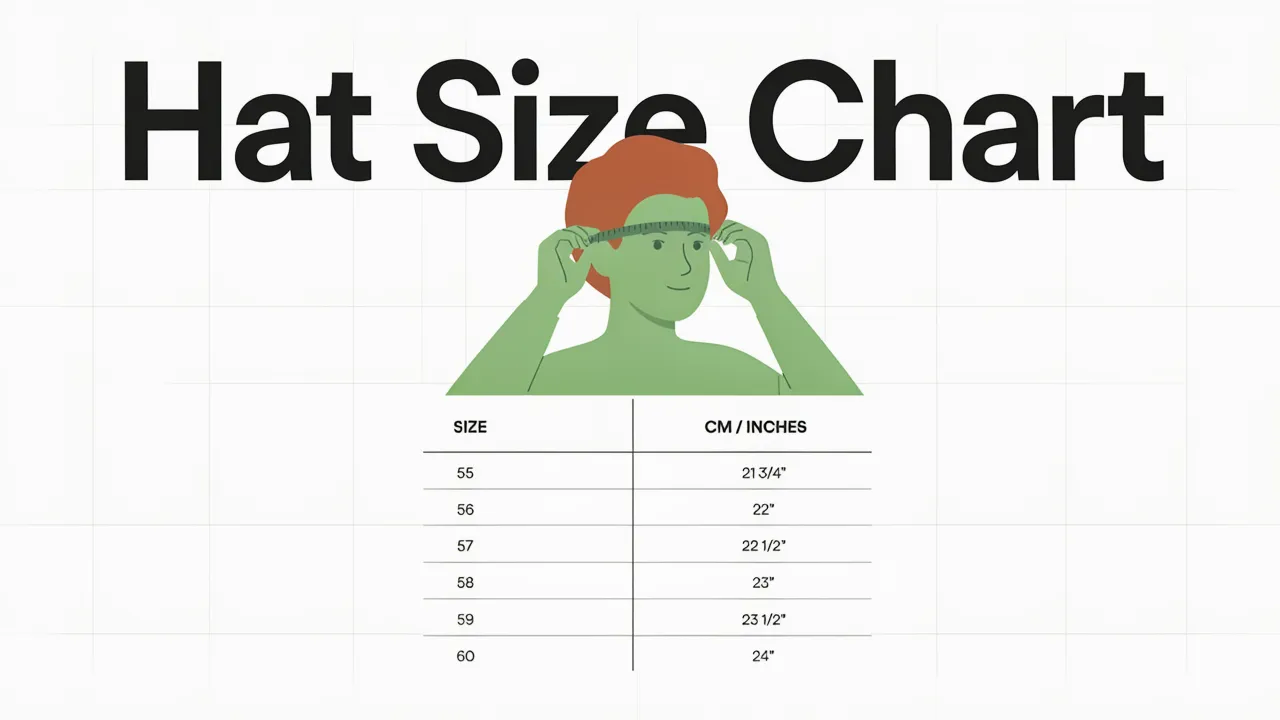
Finding a hat that looks great is only half the job—the real challenge is finding one that feels comfortable and stays securely in place. A hat that is too tight can create uncomfortable pressure, while one that is too loose may slip, tilt, or move whenever you walk outside.
The good news is that finding your correct size does not require guesswork. With one accurate head measurement for hat fitting, you can compare your measurement with a brand's size chart and confidently find your ideal hat size.
This hat fitting size guide explains how to measure your head correctly, understand different hat sizing systems, avoid common measuring mistakes, and check the fit once your hat arrives.
1. Why Accurate Head Measurement Matters
Hat sizing is based primarily on the circumference of your head—the distance around the area where the hat's inner band will sit. Unlike clothing, where several body measurements may be needed, a properly taken head circumference provides a reliable starting point for most hats.
The important detail is where you measure. The tape should follow the natural position where the hat will rest, generally across the middle of the forehead and above the ears, passing around the fullest part of the back of the head.
Even a small measuring error can make a noticeable difference with fitted hats. If you measure too high, too low, or pull the tape too tightly, you may select a size that feels uncomfortable.
That is why measuring your head before shopping is especially useful when buying hats online. Instead of relying on your previous hat size, you have a current measurement to compare against the seller's chart.
2. How to Measure Your Head for a Hat
You only need a flexible measuring tape. If you do not have one, a piece of non-stretch string and a ruler can work just as well.
Follow these steps:
Step 1: Position the tape.
Place the tape around your head at approximately the level where you want the hat to sit. Keep it above your ears and across the middle of your forehead.
Step 2: Keep it level.
Bring the tape around the fullest part of the back of your head. Use a mirror or ask someone to help make sure the tape has not slipped upward or downward.
Step 3: Keep it comfortably snug.
The tape should touch your head without digging into your skin. Do not pull it tightly because that can produce a measurement smaller than your actual comfortable fit.
Step 4: Record the measurement.
Read the number where the tape overlaps. Record it in centimeters, inches, or both.
Step 5: Measure again.
Take a second measurement to confirm the result. If your readings differ, check the tape's position and measure again.
If using string, wrap it around your head in exactly the same position, mark the overlap, then lay the string against a ruler to determine the circumference.
3. Understanding Hat Sizes in Inches and Centimeters
Once you have your head circumference, the next step is understanding how retailers express hat sizes.
Many international hat charts use centimeters because they provide a straightforward measurement. For example, a head circumference of approximately 58 cm may correspond to an EU size 58 and a fitted size around US 7¼, although exact sizing can vary between manufacturers.
Here is a useful general reference:
| Head Circumference | Approx. Inches | Common Fitted Size |
|---|---|---|
| 54 cm | 21¼ in | 6¾ |
| 55 cm | 21⅝ in | 6⅞ |
| 56 cm | 22 in | 7 |
| 57 cm | 22⅜ in | 7⅛ |
| 58 cm | 22¾ in | 7¼ |
| 59 cm | 23⅛ in | 7⅜ |
| 60 cm | 23½ in | 7½ |
| 61 cm | 24 in | 7⅝ |
| 62 cm | 24⅜ in | 7¾ |
These figures should be treated as a general guide rather than a universal standard. Hat manufacturers can use slightly different sizing conventions, so the individual brand's chart should always be your final reference.
4. How to Find Your Ideal Hat Size Between Sizes
Sometimes your measurement falls between two available sizes. This is particularly common because many fitted hats are sold in specific increments rather than every possible measurement.
For example, suppose your head measures about 58.5 cm while the available choices are 58 cm and 59 cm. In a fitted hat, choosing the larger option is often the more practical starting point because a slightly loose hat can usually be adjusted with sizing tape or an internal sizing strip, while a hat that is too small is much harder to make comfortable.
However, do not automatically size up without checking the manufacturer's recommendations. Some brands offer half sizes, stretch materials, adjustable sweatbands, or specific fitting systems.
For adjustable caps, the exact measurement is less critical because the strap, snap, buckle, or hook-and-loop closure provides additional flexibility. Stretch-fit hats can also accommodate a small range of head sizes.
5. Your Head Shape Can Affect Hat Comfort
Head circumference is the most important measurement, but it is not the only factor that influences comfort.
Two people can have exactly the same circumference but different head shapes. One person may have a longer, narrower head, while another may have a rounder shape. A hat can therefore be technically the correct circumference but still feel tight at the temples or loose in other areas.
If you repeatedly experience pressure at the sides of your head despite choosing the correct measured size, consider looking for brands or styles designed around different head shapes. The shape of the crown and construction of the hat can significantly influence how the same nominal size feels.
The style of the hat also matters. A structured fitted cap, soft beanie, wide-brimmed hat, and formal felt hat may all sit differently on the head. Measure according to where the particular hat is intended to rest rather than assuming every hat should be worn at exactly the same height.
6. Check the Fit After Your Hat Arrives
Your measurement gets you close, but the final test is how the hat actually feels when worn.
A properly fitting hat should feel secure without creating uncomfortable pressure. It should stay reasonably stable when you move your head, but it should not leave a deep indentation around your forehead.
Try wearing the hat for several minutes rather than judging it immediately. Walk around, look down, and move your head from side to side. Pay attention to pressure around your forehead and temples.
If the hat constantly slides down or moves excessively, it may be too large or have the wrong shape. If you experience persistent pressure or a tight band around your forehead, it may be too small.
Most importantly, check the retailer's return and sizing policies before ordering. Brand sizing can differ, so your measurement should always be matched with the specific product's chart.
Getting the right hat size is much easier once you stop guessing and start measuring. Take your head circumference carefully, record it in centimeters and inches, compare it with the manufacturer's chart, and consider the hat's construction and shape. With this simple approach, you can find your ideal hat size with much greater confidence—whether you are buying a fitted cap, casual hat, beanie, or formal style online.