How to Choose Presentation Proofreading and Editing in India
37 Views
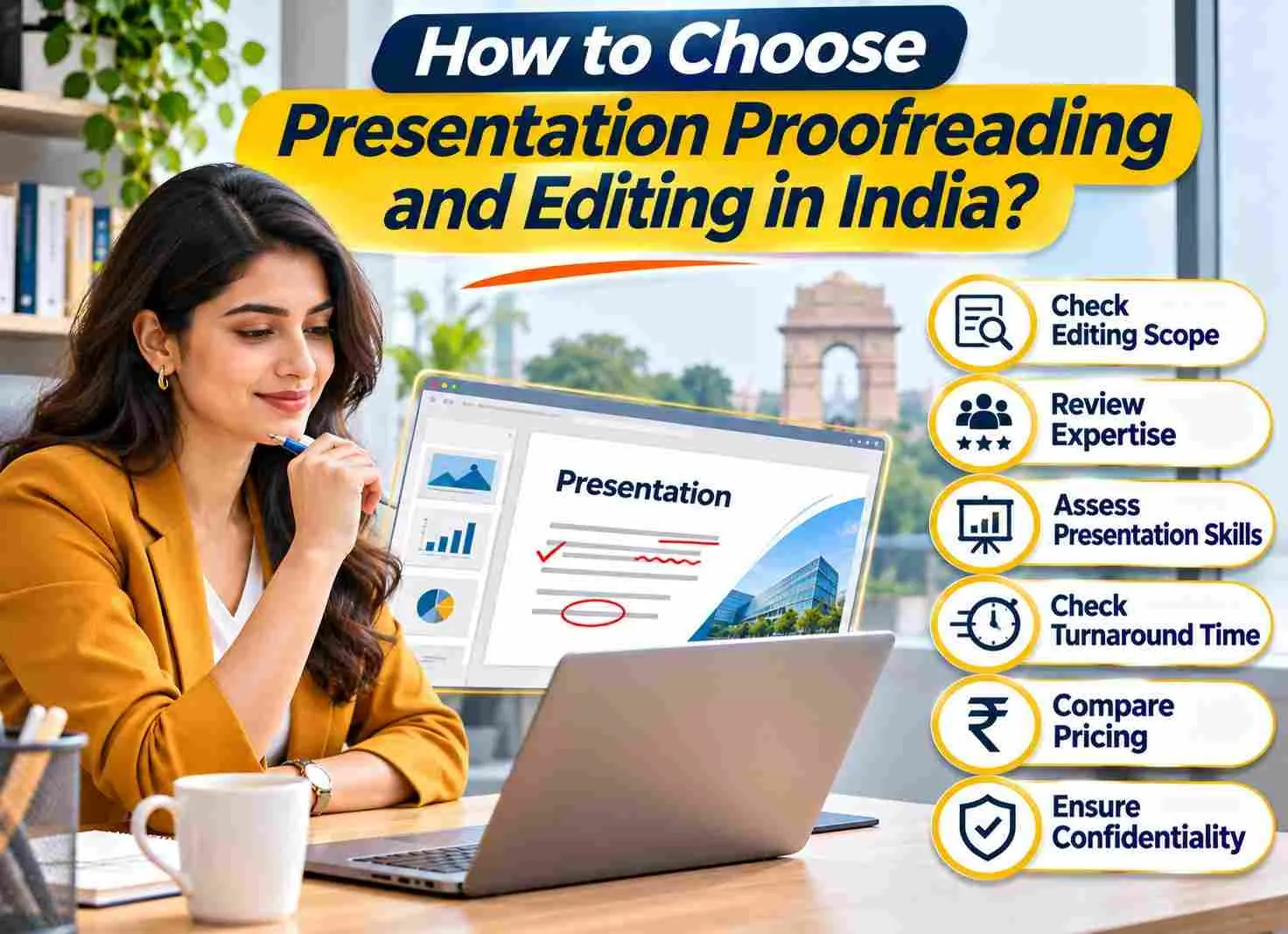
Professionals often prepare presentations under tight deadlines, with figures, conclusions, and audience expectations competing for attention. One inaccurate heading or inconsistent financial label can distract from an otherwise sound argument. Choosing suitable editing support therefore requires more than checking spelling credentials. Businesses should compare editorial scope, presentation expertise, safeguards for sensitive material, and final delivery practices. A reliable provider makes language precise without changing the intended message or disrupting the slides that carry it.
Define the Level of Editing Your Presentation Needs
Start by identifying what requires attention. A nearly finished board deck may need a final language check, while a sales presentation with scattered arguments may require structural improvements. Before choosing a professional professional proofreading and editing services India, define your expected outcomes, audience, file format, and acceptable level of editorial intervention.
Proofreading corrects surface errors
Proofreading targets spelling, punctuation, grammar, capitalisation, typographical slips, and inconsistent presentation conventions. The proofreader checks slide titles, bullet points, abbreviations, numbers, and speaker notes within the agreed scope. This stage suits a deck whose message, structure, and language already work. It should not introduce avoidable rewriting or alter specialist terminology merely for stylistic preference.
Copyediting improves expression
Copyediting addresses awkward sentences, word choice, grammatical parallelism, repetition, and readability. An editor might turn an overloaded bullet into two concise statements or make a heading describe its accompanying evidence more accurately. Good copyediting preserves the author's meaning and respects the limited space on each slide. Confirm whether the quotation covers comments, speaker notes, and chart captions.
Substantive editing examines the argument
Substantive editing assesses sequence, emphasis, transitions, audience relevance, and the relationship between findings and recommendations. It may involve moving slides, recommending new headings, or questioning whether evidence supports a conclusion. Such work needs closer client involvement because structural changes affect presentation strategy. Do not pay for this level when straightforward corrections will suffice.
Choose Editors Who Know How Slides Communicate
A presentation does more than divide a report into smaller pages. Audiences scan headings, follow graphics, and listen to a speaker simultaneously. Editors therefore need the judgement to shorten language while keeping distinctions that matter. Ask how candidates handle fragments, dense bullets, duplicated claims, and transitions between slides.
Examine language competence and subject familiarity
Strong grammar alone does not establish suitability. Editors should demonstrate clear business writing, consistent terminology, and familiarity with the deck's subject. A financial editor must distinguish revenue from profit; a technical editor should recognise when two apparently similar terms refer to different processes. Relevant qualifications may support an application, but a careful sample reveals more about actual editorial decisions.
Assess a potential editor through a practical set of questions:
-
Can they explain changes without dismissing your preferred terminology?
-
Have they handled slides, charts, and accompanying speaker notes?
-
Will they follow a supplied glossary or house style?
-
Who conducts the final review if several editors contribute?
Specify the audience's language conventions
Indian and British English generally favour forms such as “organisation” and “analyse”, whereas American English commonly uses “organization” and “analyze”. Neither convention automatically suits every audience. Set spelling preferences, formality, regional terminology, and abbreviations before editing begins. Keep recognised product names, statutory terms, and internal labels unchanged unless the client authorises revisions.
Match Editorial Decisions to the Presentation's Purpose
Editors should assess the message against the people who will receive it. An investor meeting, research seminar, staff training session, and government briefing demand different levels of explanation. The right choice depends on the audience's prior knowledge, the consequences of ambiguity, and the presentation's objective.
Business and investor decks
Sales slides need direct value propositions, consistent product descriptions, and claims that match supporting evidence. Investor and board presentations require particular care with forecasts, dates, assumptions, and performance indicators. Editors can flag unclear statements or contradictory labels, but the relevant business owner must approve financial interpretations and verify underlying figures.
Academic, technical, and training decks
Research presentations need disciplined terminology, accurate references to methods, and captions that identify what a graphic demonstrates. Technical decks often contain units, specifications, and abbreviations that cannot tolerate casual substitutions. Training materials benefit from clear instructions, parallel bullet structures, and consistent names for tools or procedures. Conference presentations may need even shorter onscreen wording because audiences cannot reread every slide.
Regulatory and executive communication
Government submissions and compliance briefings call for measured phrasing and careful treatment of defined terms. Executive presentations need concise decisions, risks, owners, and next steps rather than decorative language. An editor should identify vague recommendations, not create fresh legal claims or promise regulatory outcomes. Require subject specialists to sign off on any consequential wording changes.
Inspect Slide Details Beyond Ordinary Grammar
Editing quality appears in small elements as much as in paragraphs. Short headings must communicate a point quickly; chart labels must identify what the numbers represent; notes must support what the speaker says. Ask providers to inspect the whole presentation rather than extracting its body text without context.
Check consistency across visible and hidden text
The agreed review should address:
-
Slide headings, section titles, and capitalisation patterns.
-
Parallel grammar, punctuation, and indentation across bullets.
-
Acronyms at first use and terminology throughout the deck.
-
Chart legends, axis labels, units, footnotes, and table headings.
-
Dates, slide numbering, references within the deck, and speaker notes.
A slide may contain perfectly correct individual sentences but still confuse viewers when a heading contradicts its chart. Editors should comment on these relationships rather than silently rewriting technical statements.
Clarify where formatting work ends
Language changes can create text overflow, uneven spacing, broken line wraps, or inconsistent visual hierarchy. Ask whether the provider checks such consequences in the original presentation file. Basic visual inspection differs from redesigning layouts, choosing graphics, or rebuilding diagrams. If you need both services, define responsibilities and pricing separately.
Protect Meaning, Evidence, and Technical Accuracy
A polished sentence can still communicate the wrong fact. The safest editors treat numbers and specialised terms as controlled content, not stylistic material. They raise questions when a statement looks inconsistent and seek approval before changing anything that affects interpretation.
Separate editorial checks from factual verification
Editors can compare repeated percentages, review the format of dates, identify mismatched units, and flag conflicting chart captions. They cannot independently authenticate projections, scientific results, contracts, or source datasets without a separately agreed verification assignment. Specify which numbers and claims require the originating team's approval.
For example, replacing “up to 15%” with “15%” changes a qualified claim into an apparently fixed result. Similarly, confusing percentage points with percentages can misrepresent performance. Track substantive changes and record questions for the appropriate owner rather than making silent assumptions.
Build a terminology and approval record
Supply preferred spellings, brand vocabulary, technical abbreviations, names of departments, and any language that must remain exact. Identify people authorised to approve commercial, financial, scientific, or legal revisions. A short decision log can prevent repeated queries when a presentation passes through several stakeholder reviews.
Test the Provider's Workflow Before Committing
A dependable process makes responsibilities visible. Ask what happens when the editor finds a questionable number, an unclear slide, or a missing source. The response should identify who asks questions, who approves changes, and how the final version reaches the client.
Request a representative editing sample
Where available, provide a few slides containing titles, bullets, graphics, and specialist content. Evaluate the sample against specific criteria:
-
Corrections solve actual problems rather than replace every phrase.
-
Edits retain the intended meaning and established terminology.
-
Shortened text still fits the slide's argument and visual context.
-
Comments explain major changes or unresolved ambiguities.
-
Presentation conventions remain consistent from slide to slide.
One sample cannot guarantee an entire project, but it can expose overediting, weak subject judgement, or poor communication.
Confirm each quality assurance stage
A sound workflow normally moves from requirement assessment and file review through editing, clarification, consistency checking, and final inspection. Ask whether a second reviewer checks high-risk material, how the editor handles client responses, and whether the final check includes opened slides rather than text alone. Clarify the number of revision rounds before signing off.
Examine Confidentiality and File Handling
Unpublished financial results, client records, research findings, and strategic plans may appear in ordinary presentation files. Before sharing sensitive decks, verify the provider's practical controls rather than accepting a broad assurance of confidentiality. Different organisations may face different contractual and data protection obligations.
Ask how the provider controls access
Discuss secure file transfer, restricted permissions, authorised reviewers, storage arrangements, and deletion or retention periods. A confidentiality agreement can establish contractual duties, but it does not replace secure handling. Ask whether subcontractors or automated processing tools will access the materials, and obtain suitable approval before sharing restricted information.
Agree on the editable files and deliverables
Confirm whether editors work directly in PPTX, review a PDF, or extract text into another document. A PDF may allow comments without providing an easy route to edit slide layouts. Decide whether delivery should include a marked version, a clean deck, a list of queries, or all three. Reopen the returned file to check fonts, charts, embedded objects, and speaker notes.
Compare Pricing, Deadlines, and Service Boundaries
A useful quotation shows exactly what the client will receive. Costs can vary with slide count, word volume, subject complexity, editing depth, file condition, language requirements, and deadline pressure. Compare scopes rather than judging providers by a single headline price.
Make estimates comparable
Send the same sample and requirements to each candidate. Ask whether their quotation includes chart labels, notes, formatting checks, clarification calls, and revision rounds. Establish how they charge for major content changes after work begins. A lower fee may simply exclude tasks that another proposal includes.
Plan around the real approval deadline
Give editors the presentation date and the earlier point when stakeholders need the final deck. Complex technical slides, late content additions, or multiple approvers can expand the schedule. Obtain an explicit delivery commitment and clarify urgent-work arrangements. Leave time for internal fact checking and a final visual review; editorial delivery alone does not complete approval.
Make the Final Selection and Inspect the Returned Deck
A provider should meet your actual presentation requirements, not merely offer polished marketing language. Before awarding work, establish the scope, editorial lead, delivery format, confidentiality measures, turnaround commitment, and procedure for resolving questions. Assign one internal contact to consolidate stakeholder instructions.
Avoid predictable selection mistakes
Price-only comparisons miss differences in checking depth. Vague briefs create disputes about whether a provider should rewrite content or correct grammar. Ignoring notes, chart labels, and file compatibility leaves visible or spoken mistakes untouched. Equally, accepting an elegant rewrite without technical review can change claims. Prevent these problems through clear instructions and approval responsibilities.
Use a final acceptance check
Open the edited deck in the software and environment you will use for presenting. Check that slide order, headings, bullets, chart captions, figures, notes, and links within the deck remain intact. Resolve editor queries, compare changes affecting meaning, and confirm that no revised text overflows. Keep a clean approved version alongside the marked copy for accountability.
Conclusion
Choose presentation editors by matching the depth of their work to the deck's purpose and risk. Strong language skills matter, but slide judgement, subject familiarity, confidentiality controls, and visible quality checks matter just as much. Ask for clear deliverables and an approval process that protects technical meaning. The most suitable provider corrects communication problems without assuming ownership of your facts or decisions.
FAQs
1. What do presentation proofreading services usually cover?
They generally correct spelling, grammar, punctuation, capitalisation, typographical mistakes, and inconsistent terminology. Clients should check whether the agreed scope includes slide titles, bullet points, chart labels, footnotes, and speaker notes. Providers may charge separately for rewriting, structural improvements, or layout adjustments, so request a written description of deliverables.
2. How does proofreading differ from presentation editing?
Proofreading targets remaining surface mistakes in an otherwise finished deck. Copyediting improves phrasing, consistency, and sentence clarity. Substantive editing examines the order and strength of ideas. Choose the level according to the deck's condition, then specify whether the editor may change headings, rearrange content, or only correct language.
3. Why might a business presentation need specialist editing?
Business slides combine brief statements, visual evidence, and spoken explanations. An editor familiar with this format checks whether headings accurately frame charts and whether bullets communicate distinct points. Such editing can reduce ambiguity, although it does not replace commercial fact checking or guarantee that audiences will accept the presentation's conclusions.
4. Which qualifications matter when hiring a presentation editor?
Look for strong language proficiency, careful editorial judgement, familiarity with the presentation's subject, and competence with its file format. Relevant training can help, but request evidence through a representative sample. Editors should explain substantial changes, follow a style sheet, and recognise when technical questions require a specialist's decision.
5. Can an editor improve a highly technical presentation?
Yes, an editor can simplify awkward wording, standardise abbreviations, and clarify captions while preserving specialised terminology. However, clients should identify controlled terms, source figures, and statements that require expert approval. Unless the assignment explicitly includes independent verification, the editor should flag uncertain technical claims instead of treating them as proven facts.
6. How much does presentation proofreading cost in India?
Pricing depends on the number of slides, total text, editing depth, technical complexity, turnaround, and requested deliverables. Some projects require more time for charts or speaker notes than their word count suggests. Request an itemised quotation that states revision allowances and exclusions rather than comparing fees without matching service scopes.
7. How quickly can editors finish a slide deck?
Turnaround depends on deck length, editing level, content complexity, file condition, and editor availability. Rush requests may involve additional costs or narrower review options. Share the final presentation date, specify when stakeholders need the edited version, and reserve time for internal approvals and a last visual inspection.
8. Will proofreading include charts and speaker notes?
Not automatically. Some providers review only text visible on slides, while others include chart labels, footnotes, tables, and presenter notes. Ask for these elements in the written scope. Also clarify whether the editor will flag contradictory numbers and unclear visuals or merely correct the wording that accompanies them.
9. How should companies protect confidential presentation files?
Use agreed transfer methods, restrict access to authorised reviewers, and confirm the provider's storage and retention practices. Consider appropriate confidentiality terms and ask about subcontracting or automated tools. Share only information the editor needs. Internal legal or security teams should assess any additional obligations that apply to particularly sensitive material.
10. What should clients verify before approving the final deck?
Review changes that affect technical or commercial meaning, resolve outstanding questions, and check names, numbers, and terminology against authorised sources. Open the presentation to inspect layout, fonts, charts, and notes. Confirm that the editor supplied the agreed clean and marked files, then retain the approved version for presentation use.