How to Buy Bridal Jewellery in Jammu (Without the Guesswork)
By Shaadinama
34 Views
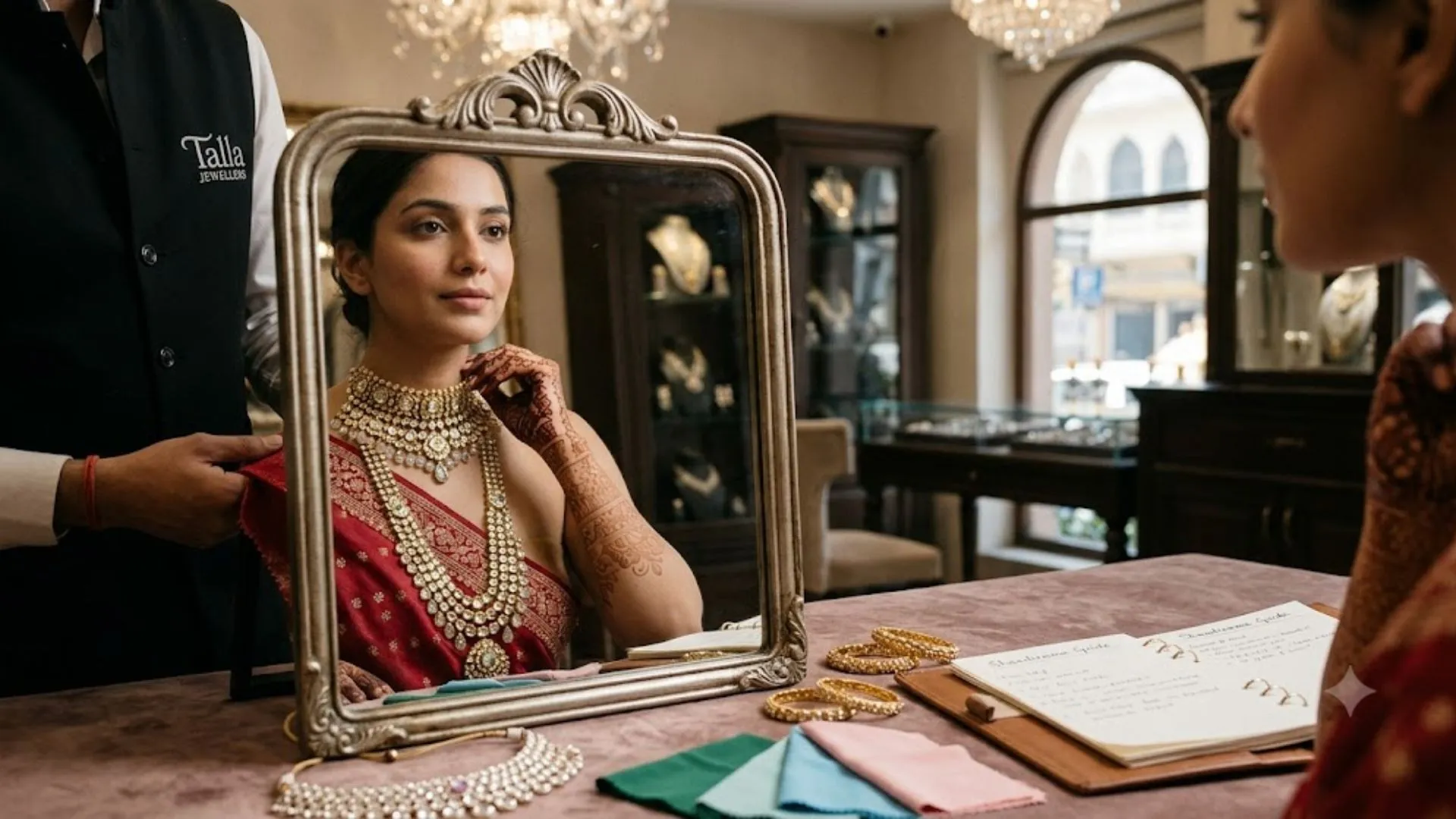
Most brides buy their bridal jewellary backwards. They fall in love with a heavy piece in a velvet box, buy it, and pray it works with their wedding day lehenga.
That is exactly how you end up with a mismatched neckline and a necklace that drowns your face. Buying wedding jewellery in Jammu requires strategy, a clear budget hierarchy, and a strict understanding of your own skin undertones. Here is how to curate your pieces systematically.
Map the Jewellery to Your Anatomy
You cannot copy a look from Instagram. A bridal kundan choker that looks stunning on a tall model will completely swallow a shorter neck. If you have a round face, stacking heavy horizontal chokers makes your face look wider. You need V-shaped or U-shaped necklaces to draw the eye downward and create length. Oval faces handle tight chokers beautifully.
Before you look at a single gemstone, identify your Style ID. This means mapping your face shape, height, shoulder line, and skin undertone. This rule applies to your entire family. The mother of the bride and the groom need their own Style ID mapping so the family looks coordinated in photographs without clashing metal tones.
Skin tone dictates your metal and stone colors. Yellow gold and rich rubies dominate on warm skin. Cool undertones demand something entirely different. They pop against a diamond necklace set or polki finished in crisp white rhodium. If you have a neutral undertone, you have the flexibility to mix metals or wear rose gold.
Walk into a store and watch the staff. If they immediately push their heaviest sets without asking about your neckline or fabric swatches, walk out.
Color Harmony and Fabric Testing
You cannot buy jewelry from memory. The exact shade of your red or pastel pink lehenga changes under showroom lights versus outdoor sunlight.
You must bring fabric swatches to the store. A heavily embroidered gold zardozi outfit requires high contrast. If you pair it with a dense gold necklace, the jewelry disappears into the fabric. You need stones like emeralds or rubies to break the visual plane. Conversely, a minimalist pastel lehenga supports a massive, intricate bridal temple long set because the plain fabric provides a quiet canvas.
Lock in your final combinations only after validating the stones against your actual wedding day fabrics.
Building the Function-Wise Lookbook
Before you spend a single rupee, you need a lookbook. Each function demands a different visual weight.
For day events like the Haldi and Mehendi, keep the jewelry palette lighter. These events involve movement, turmeric pastes, and henna application. Heavy gold bangles get in the way. Opt for lightweight choker pieces or statement maang tikkas that photograph beautifully in daylight but do not restrict your movement.
The Sangeet is a high-energy night event. This is where you pull out bold contrast. A dark cocktail lehenga pairs flawlessly with an oversized diamond necklace set or reflective polki that catches the stage lights.
The main Baraat is your anchor. This is the moment for your heaviest pieces. Layering is critical here. A snug bridal kundan choker paired with a cascading bridal temple long set creates physical depth.
Finally, the Reception requires elegance over sheer volume. Most brides pivot away from yellow gold here and embrace contemporary diamonds or sleek rhodium-finished sets to match evening gowns or modern sarees.
Decoding the Stones and Gemstones
Indian bridal jewellery for wedding functions breaks down into distinct categories. You need to know the difference to allocate your budget smartly.
Polki features uncut, unpolished diamonds set in gold. It is raw and highly reflective. Kundan uses glass stones set with pure gold foil. It offers a massive, regal look without the staggering price tag of full uncut diamonds. Both styles require careful inspection of the stone setting and finish.
Understanding precious stones and how to verify their authenticity protects your investment. Always check the clarity of the emerald drops or tourmalines attached to your pieces. If you mix a traditional temple set with a highly modern geometric diamond choker, the overall look clashes. Pick a primary aesthetic for the main event and stick to it.
Split the Budget by Function
The biggest mistake you make is spending your entire budget on the main Baraat day. You have five distinct events. Your budget requires a rigid tier system.
Tier 1 is your core investment. This covers the wedding day and reception. Allocate the bulk of your funds here for heirloom pieces. Choose what to invest in as a core set versus what to keep trendy as temporary add-ons.
Tier 2 and Tier 3 cover the Mehendi, Haldi, and Sangeet. Be ruthless with these budgets. Keep these pieces lighter and highly styled. Do not overspend on floral or semi-precious accessories you will never wear again. A smart jeweler helps you reuse key pieces across different events. You might wear your heavy bridal earrings alone for the Sangeet, ensuring the cost stays grounded while the look remains distinct.
Beware the Making Charges in Jammu
Let us talk numbers. Making charges for bridal jewellery in Jammu fluctuate wildly between 8% to 35%. You always pay a premium for handcrafted Kundan, Polki, and temple pieces because they demand intense manual labor from master craftsmen.
Never accept a flat price. Demand a complete, line-by-line breakdown of the gold weight, stone weight, and labor cost.
Always check the BIS hallmarking and HUID to confirm authenticity before committing. A store that hesitates to show the HUID is hiding something. You want pieces that hold value. Do not buy a set solely for teh photoshoot.
Stop Guessing and Use a Stylist
Shopping for a bridal jewellery set online india or hopping between twenty stores in Janipur and Channi Himat is exhausting. You do not have to do this alone.
Talla Jewellers built a 40-year legacy on eliminating this exact guesswork. They used data from over 21,000 happy brides to build the Shaadinama Guide. It completely flips the traditional showroom experience.
Instead of browsing endless glass counters, you start with a free 1:1 celebrity stylist consultation. The process is entirely mapped out.
First is the discovery call to lock in your events and budget. Second is the Style ID mapping, where the stylist analyzes your face shape and undertones. Third is shortlisting the exact pieces for the Mehendi, Sangeet, Baraat, and Reception. Fourth is the physical try-on against your outfit fabrics. Finally, you get a strict buying plan and wear-order checklist.
They handle the contrast and balance. They ensure your Haldi look feels completely different from your Reception look.
The Shaadinama method is not for every buyer. If you want to walk in and buy a generic set in ten minutes, this level of curation will annoy you. But if you want a look mapped directly to your unique proportions, this structured approach cuts months of stressful shopping down to two highly focused appointments.
Book your free Shaadinama consultation today and let an expert map out your perfect bridal look.