How to Apply for NDIS Medium Term Accommodation: Step-by-Step Guide
By john miller
103 Views
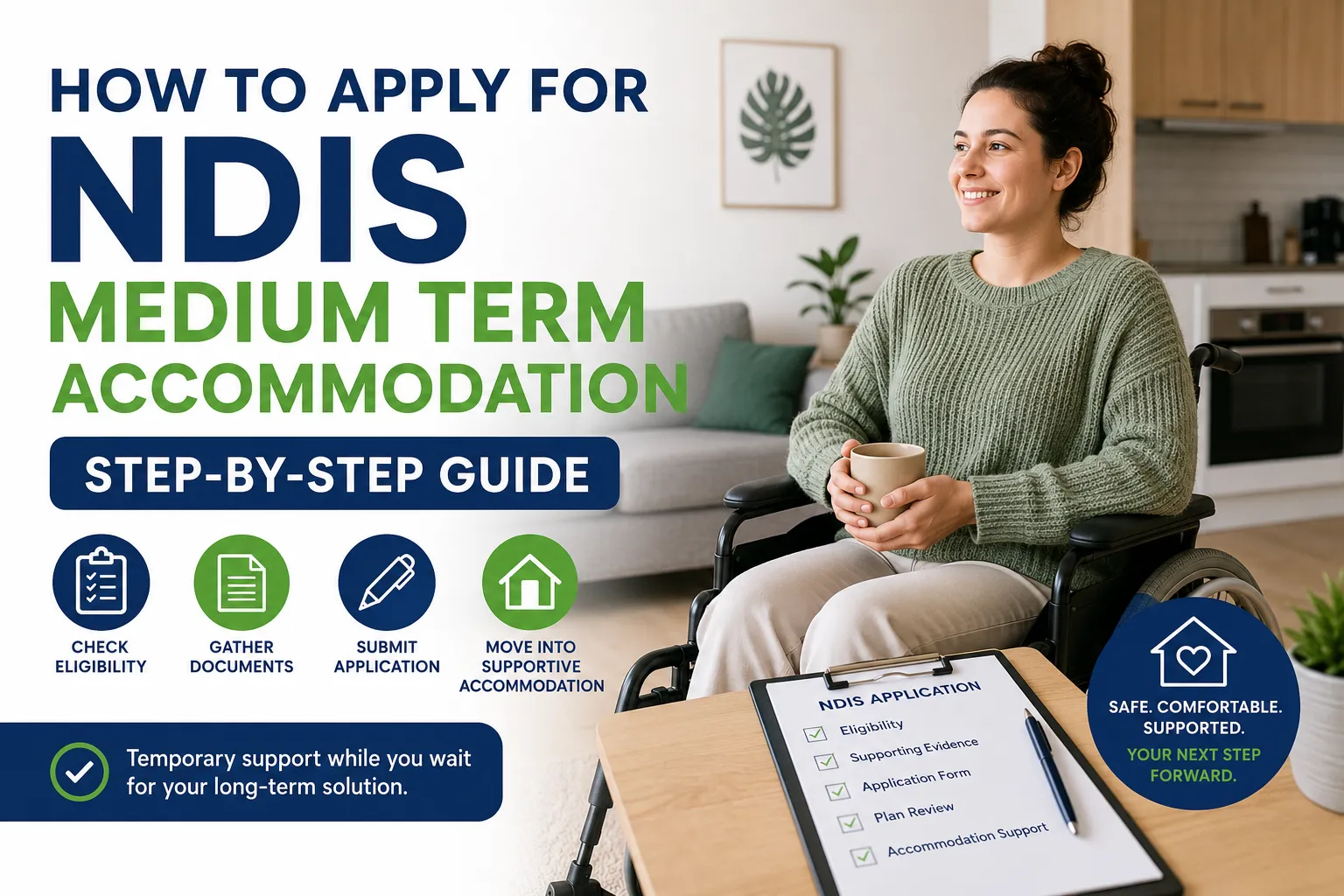
Finding suitable accommodation while waiting for a long-term housing solution can be challenging, especially for people living with disability. Fortunately, NDIS Medium Term Accommodation provides temporary housing support for eligible participants who need a safe place to stay while their permanent home is being prepared or made available.
Whether you're transitioning from hospital, waiting for Specialist Disability Accommodation (SDA), or moving into a more suitable living arrangement, understanding the application process is essential. Applying correctly can help minimise delays and improve your chances of receiving approval.
This comprehensive guide explains everything you need to know about applying for NDIS Medium Term Accommodation, including eligibility requirements, required documentation, the assessment process, and practical tips to make your application as strong as possible.
What Is NDIS Medium Term Accommodation?
NDIS Medium Term Accommodation (MTA) is temporary housing funded by the National Disability Insurance Scheme for eligible participants who are waiting for their long-term disability accommodation to become available.
Medium Term Accommodation is generally funded for up to 90 days, although individual circumstances may vary depending on your NDIS plan and support needs.
The funding covers accommodation costs but does not replace other supports already included in your NDIS plan, such as:
- Daily personal care
- Community participation
- Therapy supports
- Capacity building services
- Support coordination
- Its primary purpose is to provide participants with stable accommodation while a permanent housing solution is finalised.
Who Is Eligible for NDIS Medium Term Accommodation?
Not every NDIS participant automatically qualifies for Medium Term Accommodation funding. The NDIS assesses each application based on individual circumstances and evidence.
You may be eligible if:
- You have an active NDIS plan.
- You require temporary accommodation because your long-term housing isn't yet available.
- Your permanent disability accommodation has already been identified.
- There is a genuine gap between leaving your current accommodation and moving into your long-term home.
- Medium Term Accommodation is considered reasonable and necessary under the NDIS.
- Common situations include:
- Waiting for an SDA property to be completed
- Transitioning from hospital
- Leaving aged care
- Waiting for home modifications
- Moving between supported living arrangements
- Temporary housing following an emergency relocation
Understanding When Medium Term Accommodation Is Appropriate
The NDIS generally funds Medium Term Accommodation when there is a clear pathway to permanent housing.
For example:
- Your new accessible home is still under construction.
- Essential home modifications are underway.
- An SDA vacancy has been confirmed but isn't yet available.
- Hospital discharge requires temporary accessible accommodation.
- A supported independent living arrangement will begin shortly.
- If there isn't a confirmed long-term housing solution, your application may not meet NDIS funding requirements.
Step 1: Confirm Your Eligibility
Before applying, review your current NDIS plan with your Support Coordinator, Local Area Coordinator (LAC), or planner.
Consider questions such as:
- Why do I need temporary accommodation?
- Is my permanent accommodation already arranged?
- How long will I need temporary housing?
- Does my current plan include housing-related supports?
- Having clear answers helps build a stronger application.
Step 2: Gather Supporting Evidence
Strong evidence is one of the most important parts of a successful application.
Documents commonly required include:
Functional Assessments
Reports from occupational therapists or allied health professionals explaining why temporary accommodation is necessary.
Medical Reports
Supporting letters from:
- General Practitioners
- Specialists
- Rehabilitation teams
- Hospital discharge planners
- These reports should clearly explain your disability-related support needs.
Housing Documentation
Provide evidence such as:
- SDA approval letters
- Building completion estimates
- Home modification timelines
- Rental agreements
- Confirmation from housing providers
Support Coordinator Reports
A detailed report from your Support Coordinator outlining:
- Current circumstances
- Risks of remaining in your current accommodation
- Benefits of Medium Term Accommodation
- Planned transition to permanent housing
Step 3: Explain Why Medium Term Accommodation Is Needed
The NDIS wants to understand why temporary accommodation is the most appropriate solution.
Your application should clearly explain:
- Why your current accommodation is unsuitable.
- Why alternative informal supports are unavailable.
- Why temporary accommodation is necessary.
- How Medium Term Accommodation will improve your safety and wellbeing.
- The expected timeframe before permanent housing becomes available.
- Providing detailed explanations reduces the likelihood of requests for additional information.
Step 4: Submit a Change of Circumstances or Plan Review
If your current NDIS plan does not already include Medium Term Accommodation funding, you may need to request a plan reassessment or change of circumstances.
This process typically includes:
- Completing the relevant NDIS forms.
- Providing supporting evidence.
- Attaching professional reports.
- Explaining why additional funding is required.
- Your Support Coordinator can assist with preparing the submission.
Step 5: Participate in the NDIS Assessment Process
After receiving your application, the NDIS reviews:
- Your eligibility
- Supporting evidence
- Functional impact of your disability
- Housing circumstances
- Whether the requested support represents value for money
- Whether the support is reasonable and necessary
- The assessment timeframe varies depending on the complexity of your application and the evidence provided.
Step 6: Receive Your Funding Decision
Once the assessment is complete, the NDIS will notify you of its decision.
If approved, your plan may include funding for:
- Temporary accommodation costs
- Duration of funding
- Approved accommodation period
- Related support arrangements
- If additional information is needed, the NDIS may contact you or your Support Coordinator.
What Happens After Approval?
Once funding has been approved, you can begin arranging your temporary accommodation.
This usually involves:
- Choosing a suitable accommodation provider
- Confirming vacancy dates
- Organising support workers
- Planning your transition
- Preparing for your eventual move into permanent housing
- Working with an experienced provider can make the transition much smoother.
Common Reasons Applications Are Delayed
Many applications take longer than expected due to missing information.
Some common reasons include:
- Insufficient medical evidence
- No confirmed long-term accommodation plan
- Incomplete functional assessments
- Missing professional reports
- Lack of clear justification
- Outdated documentation
- Preparing a complete application can significantly reduce delays.
Tips for a Successful Application
To improve your chances of approval:
- Gather current professional reports.
- Clearly explain your housing situation.
- Include evidence from multiple health professionals.
- Demonstrate why the accommodation is temporary.
- Confirm your long-term housing arrangements.
- Work closely with your Support Coordinator.
- Keep copies of all submitted documents.
- Respond promptly to any NDIS requests for additional information.
Benefits of NDIS Medium Term Accommodation
Temporary accommodation provides much more than a place to stay.
Safe Living Environment
Participants can live in accessible accommodation suited to their disability-related needs.
Reduced Stress
Knowing there is secure housing while waiting for permanent accommodation provides peace of mind.
Continuity of Supports
Participants continue receiving their daily supports without unnecessary disruption.
Better Transition Planning
Temporary accommodation allows enough time to prepare for a successful move into permanent housing.
Improved Independence
Participants can maintain routines while working towards their long-term living goals.
Choosing the Right Accommodation Provider
Selecting the right provider can greatly influence your overall experience.
Look for providers that offer:
- Accessible accommodation
- Experienced disability support staff
- Flexible support options
- Safe environments
- Clear communication
- Person-centred care
- Assistance with transition planning
- Providers should also understand NDIS funding requirements and be able to coordinate effectively with your support network.
How EasAbility Can Support Your Journey
Navigating the NDIS housing system can sometimes feel overwhelming. Working with an experienced provider like EasAbility can help simplify the process by offering personalised guidance, quality accommodation options, and support throughout your transition to permanent housing.
Frequently Asked Questions
How long can NDIS Medium Term Accommodation be funded?
Funding is generally available for up to 90 days while waiting for your long-term housing solution, although approval depends on your individual circumstances.
Does Medium Term Accommodation include personal care?
No. Accommodation funding covers the cost of the property, while personal care and other disability supports are funded separately within your NDIS plan.
Can I apply if I'm waiting for home modifications?
Yes. Many participants receive Medium Term Accommodation while essential accessibility modifications are being completed.
Do I need evidence from health professionals?
Yes. Professional reports help demonstrate why temporary accommodation is reasonable and necessary.
Can my Support Coordinator help with the application?
Absolutely. A Support Coordinator can assist with gathering evidence, preparing documentation, and communicating with the NDIS throughout the application process.
Final Thoughts
Applying for NDIS Medium Term Accommodation doesn't have to be complicated when you understand the process. By confirming your eligibility, gathering strong supporting evidence, and clearly demonstrating your temporary housing needs, you can submit a well-prepared application that aligns with NDIS requirements.
Whether you're transitioning from hospital, waiting for Specialist Disability Accommodation, or preparing for home modifications, Medium Term Accommodation provides a valuable bridge to more permanent housing. With careful planning and the right support, you can continue living safely, maintain your independence, and move confidently towards your long-term accommodation goals.