How Routine Janitorial Services Keep Commercial Workplaces Ready Every Day
By emmyjohn
3 Views
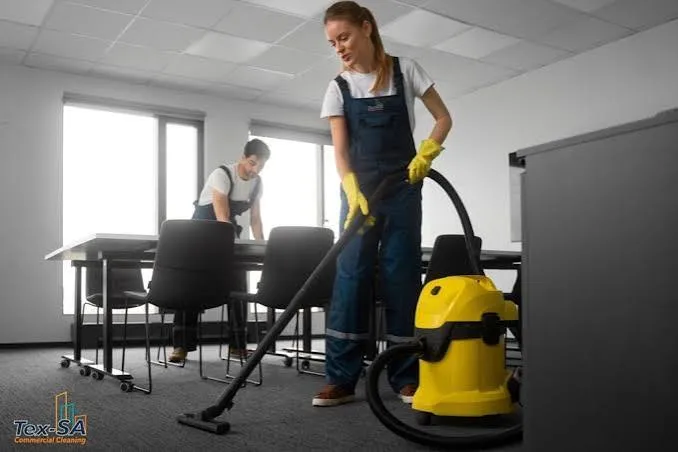
A commercial workplace can become untidy surprisingly quickly. Employees move between rooms, visitors enter and leave, shared spaces stay in constant use, and waste accumulates throughout the day. Even when a building looks clean in the morning, its condition can change significantly by the afternoon.
That is why businesses need more than occasional deep cleaning. Consistent upkeep helps maintain everyday standards and prevents minor cleanliness issues from becoming noticeable problems.
For many businesses, routine janitorial services provide the structure needed to keep commercial spaces clean, organized, and ready for daily activity. The value comes from consistency rather than simply cleaning more often.
What Routine Janitorial Work Actually Covers
Janitorial work is often associated with simple tasks such as emptying trash or cleaning floors. In a commercial setting, however, the scope can be much broader.
Depending on the property, routine janitorial work may include cleaning restrooms, common areas, offices, break rooms, entrances, and other frequently used spaces. It can also involve dusting, vacuuming, surface cleaning, waste removal, and maintaining supplies.
The exact schedule should depend on the facility.
A small office with limited traffic may need a different routine from a busy corporate building, retail property, educational facility, or industrial site.
The important thing is to establish a service plan that reflects how the building is actually used.
Why Consistency Matters More Than Occasional Cleaning
One deep cleaning session can make a building look noticeably better, but that improvement will not last if everyday cleaning is neglected.
Dust returns. Floors collect dirt. Restrooms need attention. Waste continues to accumulate.
A regular schedule helps manage these issues before they become more difficult to address.
This is particularly useful for businesses with predictable daily activity. Instead of waiting for employees or visitors to complain about a problem, facility teams can maintain a planned routine that addresses common needs in advance.
Consistency also makes cleaning easier to manage because everyone understands when and how specific tasks should be completed.
Start With the Areas People Use Most
Not every part of a commercial property receives the same amount of traffic.
Reception areas, hallways, elevators, restrooms, kitchens, break rooms, and entrances usually experience more activity than private offices or storage rooms.
These high-use areas should therefore receive appropriate attention.
A facility manager can review traffic patterns and determine where cleaning needs to happen most frequently. This prevents resources from being distributed evenly when the building itself clearly has areas with greater demand.
It can also improve the visitor experience because the spaces people notice most remain presentable throughout the day.
Restrooms Require a Reliable Routine
Few areas influence perceptions of cleanliness as quickly as a commercial restroom.
Restrooms need regular cleaning, waste removal, replenishment of essential supplies, and attention to frequently touched surfaces.
The required frequency depends on occupancy and usage.
A busy office or public facility may require several checks during operating hours, while a smaller workplace may have different needs.
The important point is to avoid treating restroom cleaning as a task that only happens at the end of the day. When usage is high, conditions can change quickly.
Break Rooms and Shared Kitchens Need Attention Too
Employees often share kitchens, coffee stations, dining areas, and break rooms.
These spaces can accumulate food residue, spills, packaging, and waste during normal working hours.
Because employees may eat and prepare drinks in these areas, cleanliness becomes particularly noticeable.
A useful janitorial schedule should identify when these spaces experience the most activity and plan cleaning accordingly.
Regular attention can help prevent small spills and waste from remaining in place for long periods.
Floors Tell a Story About the Building
People notice floors even when they do not consciously think about them.
Dirty entryways, visible debris, stained carpet, or neglected hard flooring can make an otherwise professional property appear poorly maintained.
Routine cleaning helps manage everyday dirt, but flooring may also require specialized treatment from time to time.
Businesses should distinguish between regular maintenance and deeper floor care. Routine vacuuming and mopping support everyday cleanliness, while more intensive services may be appropriate when flooring shows accumulated wear.
This approach can help protect the appearance of the property without expecting routine janitorial work to solve every flooring problem.
Windows Are Part of Overall Cleanliness
Clean interiors can lose some of their impact when windows are visibly dirty.
Glass collects fingerprints, dust, water marks, and environmental residue. In commercial buildings with large windows or glass entrances, this buildup can become particularly noticeable.
Regular window washing can complement interior janitorial work by keeping glass surfaces clear and presentable.
The frequency will depend on the building, location, weather exposure, and amount of traffic around the windows.
Businesses do not necessarily need the same schedule for every surface. A practical plan considers which areas are most visible and how quickly they become dirty.
Cleaning Schedules Should Match Business Hours
The timing of janitorial work matters almost as much as the work itself.
Some businesses prefer cleaning after employees leave. Others operate across multiple shifts and need cleaning during the day.
There is no universally correct schedule.
Facility managers should consider when spaces are empty, when traffic is highest, and when cleaning would create the least disruption.
For example, cleaning a conference room immediately before a scheduled meeting may be inconvenient. Cleaning it during an unused period may achieve the same result with less disruption.
Good scheduling requires coordination with the people who use the building.
Different Workplaces Have Different Requirements
A routine that works for an office may not work for every commercial environment.
Corporate Offices
Offices often require attention to work areas, meeting rooms, kitchens, restrooms, and reception spaces.
Retail Properties
Retail facilities may need greater attention to entrances, customer areas, floors, displays, and high-touch surfaces because of constant public traffic.
Educational Facilities
Schools and training environments have shared spaces that can experience substantial daily use, requiring carefully planned cleaning schedules.
Industrial Properties
Industrial environments may have larger floor areas, specialized work zones, equipment areas, and different types of debris.
Healthcare Environments
Healthcare facilities can have more specific cleaning requirements and should follow applicable procedures and standards for their environment.
The provider should understand the type of facility before creating the service schedule.
What Makes a Good Janitorial Plan?
A useful cleaning plan should answer several practical questions.
What needs to be cleaned?
List the areas and surfaces that require routine attention.
How often should each area be serviced?
Frequency should reflect actual use rather than an arbitrary schedule.
When should cleaning happen?
Consider operating hours and periods of high activity.
Who is responsible?
Clear responsibility prevents tasks from being overlooked.
How will quality be checked?
Inspections and feedback can help confirm whether expected standards are being met.
These details turn a general cleaning arrangement into a manageable system.
Quality Control Should Be Ongoing
A cleaning schedule is only useful when the work is performed consistently.
Facility managers should have a way to identify missed tasks or recurring problems. This might involve inspections, checklists, supervisor reviews, or regular communication with the cleaning provider.
Recurring issues deserve particular attention.
If the same restroom repeatedly requires additional cleaning, for example, the solution may be a higher service frequency rather than repeatedly correcting the same complaint.
Quality control should focus on identifying patterns and improving the process.
Supplies Matter More Than They Seem
Routine janitorial work also involves maintaining basic supplies.
Restrooms and shared spaces can quickly become inconvenient when essential items are unavailable. Facility teams should determine who monitors supplies and how replenishment is handled.
This can include items such as restroom products, waste liners, and cleaning materials.
Clear responsibility prevents situations where a clean facility still feels poorly managed because basic supplies have run out.
Employee Cooperation Can Support Cleanliness
Professional cleaning does most of the work, but employees also influence workplace conditions.
Simple habits can make a difference.
Employees can dispose of waste properly, clean up personal spills when appropriate, keep shared areas organized, and report maintenance or cleanliness problems.
This does not replace professional cleaning. Instead, it helps prevent avoidable messes from becoming larger issues.
Businesses can also make reporting easy. If employees know exactly how to report a spill, damaged surface, or supply shortage, facility teams can respond more efficiently.
How to Choose a Janitorial Provider
Businesses should evaluate providers based on more than price.
Ask about their experience with similar commercial facilities, staffing, supervision, cleaning schedules, quality-control procedures, and communication process.
It is also useful to determine how flexible the provider can be.
Business needs can change. A company may expand, renovate an area, increase occupancy, or change operating hours. A service provider should be able to discuss reasonable adjustments when those changes occur.
The goal is to establish a dependable relationship rather than simply purchase a fixed number of cleaning visits.
When Routine Cleaning Needs Additional Support
Routine janitorial work handles everyday cleanliness, but commercial properties occasionally require specialized services.
A business may need deeper floor treatment, exterior cleaning, emergency response, post-construction cleanup, or assistance after an unexpected incident.
These situations should be viewed as separate layers of facility care.
The routine schedule maintains normal conditions. Specialized services address needs that fall outside everyday cleaning.
Understanding this distinction helps facility managers avoid expecting one service to solve every type of property problem.
Review the Cleaning Plan Regularly
A cleaning plan should not remain unchanged forever.
Facility usage can change as businesses grow or reorganize. Seasonal conditions can also affect entrances, windows, floors, and common areas.
Facility managers should periodically review whether the existing schedule still matches actual needs.
Ask:
- Are some areas consistently under-serviced?
- Are other areas receiving unnecessary attention?
- Have occupancy levels changed?
- Are complaints concentrated in one location?
- Are operating hours different from when the plan was created?
- Are additional services needed during certain periods?
Small adjustments can make a cleaning program more efficient without completely changing it.
The Business Value of a Well-Maintained Workplace
Routine cleaning may seem like a basic operational responsibility, but its effects reach further.
A well-maintained workplace can create a more comfortable environment for employees and visitors. It can also support a professional appearance and help facility teams manage daily operations with fewer avoidable disruptions.
The benefit is not about making every surface spotless at every moment.
It is about establishing reasonable standards and maintaining them consistently.
Final Thoughts
Commercial cleanliness is an ongoing responsibility. Buildings experience traffic every day, and their condition naturally changes as people work, meet, eat, travel through common areas, and use shared facilities.
A thoughtful janitorial program gives businesses a practical way to stay ahead of those changes.
The most effective approach combines the right cleaning frequency, appropriate scheduling, clear responsibilities, quality checks, and flexibility when facility needs change. Additional services can then be introduced when a property requires more specialized attention.
For businesses seeking structured commercial cleaning and facility support, About CFS can help address the day-to-day needs of demanding commercial environments.
Ultimately, good janitorial care is not about reacting to visible messes. It is about creating a reliable system that keeps the workplace ready before cleanliness becomes a problem.
Related Reading
Top 10 Hidden Secrets About Business & Finance You Need to Know
Welcome to our in-depth exploration of Business & Finance. In an era defined...
Why Business & Finance is Transforming the Global Industry Landscape
Welcome to our in-depth exploration of Business & Finance. In an era defined...