How Real-Time Inventory Visibility Helps Businesses Improve Warehouse Efficiency
18 Views
Managing inventory across multiple warehouses can become challenging as businesses expand their product ranges, customer base, and distribution networks. When stock information is scattered across spreadsheets, disconnected applications, or delayed reports, teams may struggle to identify available products, plan replenishment, and fulfil customer orders efficiently.
Real-time inventory visibility helps businesses develop a clearer understanding of their stock position. By connecting inventory records with purchasing, sales, and warehouse operations, companies can make more informed decisions and reduce unnecessary manual work.
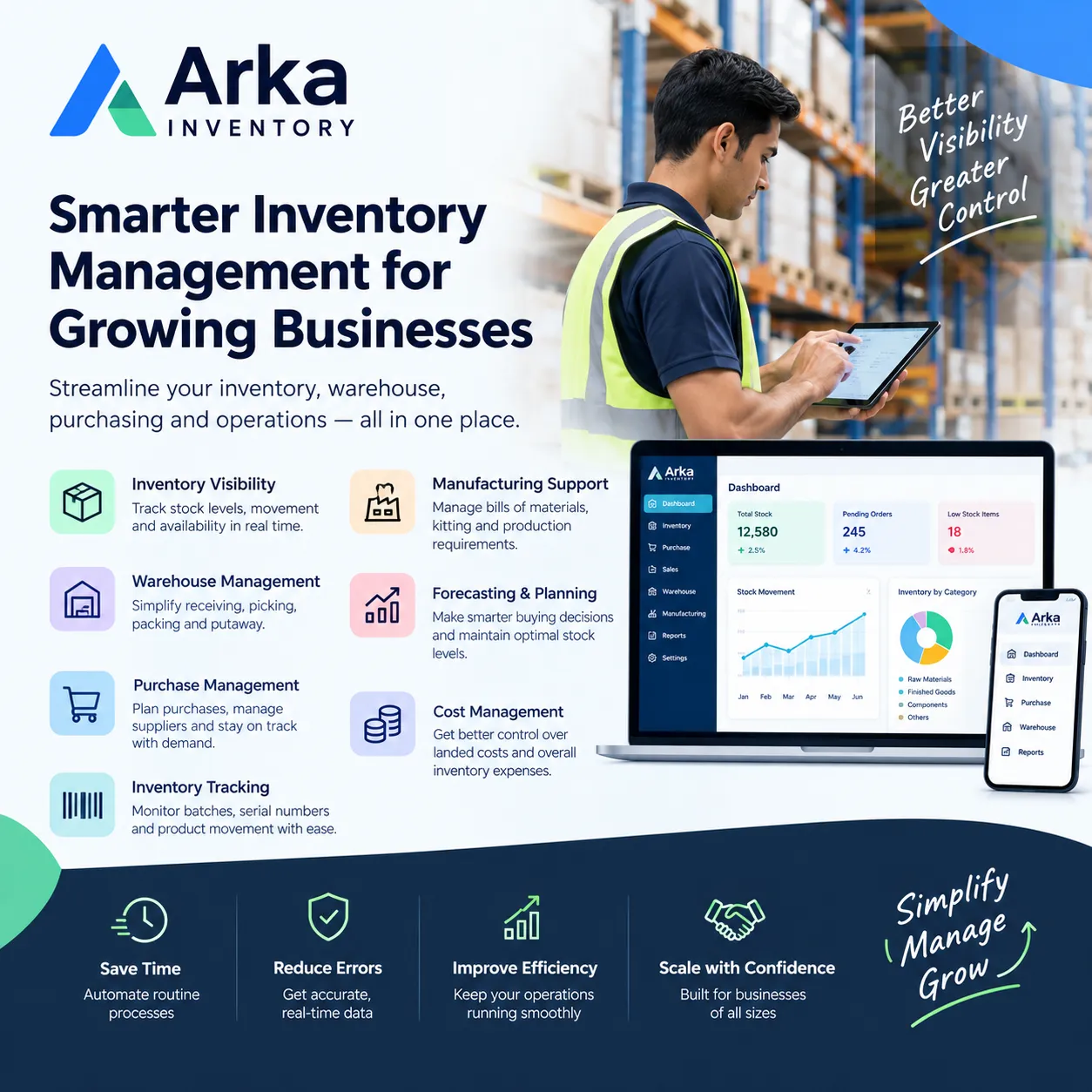
For organizations seeking a more connected approach to stock management, Arka Inventory offers Salesforce-based inventory capabilities designed to support operational visibility and reporting.
Why Inventory Visibility Matters for Growing Businesses
Inventory visibility means having reliable information about stock quantities, locations, movements, and availability. It helps teams understand not only how much inventory exists but also where it is stored and whether it is ready for use or fulfilment.
Without a consistent view, a product recorded as available may already be committed to another customer, awaiting inspection, or located in a warehouse that cannot fulfil the order within the required timeframe.
These gaps can lead to delayed shipments, unnecessary purchasing, additional transfers, and avoidable communication between departments.
A connected inventory management system can help bring important stock information into a shared operational workflow, allowing teams to work with more consistent records.
Connecting Warehouse Operations With Sales Activity
Sales and warehouse teams depend on one another to deliver accurate customer commitments. Sales representatives need dependable availability information before confirming an order, while warehouse teams need clear instructions about what to pick, pack, and dispatch.
When these processes operate separately, order information may become outdated before warehouse staff begin fulfilment.
An integrated workflow can connect sales orders with inventory records and warehouse activities. As orders progress, teams can monitor relevant status changes and identify issues that require attention.
For example, if an order requires products from two warehouse locations, the business can review available quantities and determine an appropriate fulfilment approach. Depending on its policies and system configuration, it may choose a split shipment, an internal transfer, or a backorder.
The objective is to ensure that customer commitments reflect operational reality rather than an isolated stock figure.
Improving Multi-Warehouse Stock Management
Businesses with several storage locations need to understand inventory at both the overall and warehouse levels. A company may have sufficient stock across its network while still experiencing a shortage at the location responsible for fulfilling a particular order.
Effective multi-warehouse management requires clear records of stock by location, consistent transfer procedures, and visibility into incoming and outgoing movements.
Teams should be able to distinguish between physical stock, reserved quantities, items awaiting inspection, and inventory that is available for new orders. This distinction helps reduce the risk of duplicate commitments and incorrect availability calculations.
With Salesforce inventory management, businesses can explore ways to connect inventory information and operational workflows within their existing business environment.
Making Replenishment Decisions With Better Data
Inventory shortages and excess stock often result from purchasing decisions made without a complete understanding of demand and supply.
Reliable inventory records can help purchasing teams identify fast-moving products, review consumption patterns, monitor incoming orders, and evaluate replenishment requirements.
For example, if a product repeatedly approaches its minimum stock level, the team can investigate its demand pattern and supplier lead time before deciding when to reorder. If another product remains unused for an extended period, purchasing managers can review future demand before placing additional orders.
Replenishment decisions should also account for supplier reliability, minimum order quantities, seasonal changes, and the business's inventory policies.
Using inventory reporting and analytics can help organizations turn stock records into practical information for purchasing and planning.
The Importance of Accurate Inventory Records
Technology can improve visibility, but the quality of the information still depends on accurate operational records. Incorrect receipts, delayed transaction updates, duplicate entries, and unrecorded stock movements can create discrepancies between system quantities and physical inventory.
Businesses should establish standard procedures for receiving goods, recording transfers, processing returns, adjusting quantities, and conducting stock counts.
Where products require additional controls, organizations may also need lot or serial tracking and clear records of inventory status. These controls can help teams trace specific items and investigate discrepancies more effectively.
Regular reconciliation between physical stock and system records is important for maintaining confidence in inventory reports.
Using Dashboards to Identify Operational Problems
Inventory dashboards should do more than display total stock. They should help managers identify problems that require action.
Useful reports may include:
-
Stock availability: Quantities available, reserved, held, or awaiting inspection.
-
Warehouse distribution: Inventory levels across individual storage locations.
-
Order fulfilment: Orders awaiting allocation, picking, packing, or dispatch.
-
Replenishment requirements: Products approaching defined reorder thresholds.
-
Inventory ageing: Products that have remained in stock beyond a chosen period.
-
Stock discrepancies: Differences between recorded quantities and physical counts.
-
Transfer monitoring: Movements awaiting approval, dispatch, or receipt.
Businesses can use these reports to identify recurring bottlenecks, prioritize corrective action, and improve coordination between sales, purchasing, and warehouse teams.
The most useful dashboards reflect the organization's actual workflows and provide enough detail for staff to understand why an exception occurred.
Practical Steps for Improving Warehouse Efficiency
Improving warehouse performance does not always require replacing every existing process. Businesses can begin by identifying the areas where information gaps create the greatest delays.
First, map how inventory moves from supplier receipt to storage, reservation, picking, shipment, and returns. Next, identify which system records each transaction and who is responsible for updating it.
Then, establish consistent rules for stock availability, reservation, transfers, and inventory adjustments. Test these rules using common scenarios, including partial orders, damaged goods, delayed receipts, and products distributed across multiple locations.
Finally, monitor operational indicators such as order fulfilment time, inventory accuracy, stockout frequency, and the number of orders requiring manual intervention.
This step-by-step approach helps businesses identify meaningful improvements before expanding their technology or changing established workflows.
How Arka Inventory Supports Connected Inventory Operations
Arka Inventory provides Salesforce-based inventory management capabilities for businesses looking to connect stock information with sales and warehouse activities. Its offerings include inventory visibility, sales order workflows, multi-warehouse management, and custom reporting.
Organizations can explore Arka Inventory to understand how its capabilities may align with their operational requirements.
Before selecting an inventory solution, businesses should assess their current processes, integration requirements, reporting needs, product-tracking requirements, and expected transaction volumes. A practical demonstration using real operational scenarios can help determine whether the proposed system supports the workflows that matter most.
Conclusion
Real-time inventory visibility can help businesses improve warehouse coordination, make better replenishment decisions, and provide more reliable information to sales and purchasing teams.
The greatest benefits come when technology is supported by accurate records, consistent procedures, and clearly defined responsibilities. By connecting inventory data with everyday operational decisions, growing businesses can build a more organized and responsive stock management process.
Frequently Asked Questions (FAQs)
1. What is real-time inventory visibility?
Real-time inventory visibility refers to having timely information about stock quantities, locations, movements, reservations, and availability to support operational decisions.
2. How does inventory visibility improve warehouse efficiency?
It helps warehouse teams identify available stock, prioritize fulfilment activities, monitor inventory movements, and reduce delays caused by incomplete or outdated information.
3. Why is multi-warehouse inventory management important?
Multi-warehouse management helps businesses monitor stock across different locations, coordinate transfers, identify local shortages, and select suitable fulfilment options.
4. How can businesses improve inventory accuracy?
Businesses can establish consistent receiving and dispatch procedures, record stock movements promptly, conduct regular physical counts, and investigate discrepancies between recorded and actual quantities.
5. What should an inventory management dashboard include?
A useful dashboard may show stock availability, warehouse-level quantities, pending orders, replenishment requirements, ageing inventory, transfer status, and stock discrepancies.
6. Can inventory software help businesses make better purchasing decisions?
Yes. Reliable inventory records and reports can help purchasing teams evaluate demand, monitor stock levels, review incoming supply, and plan replenishment according to business requirements.
7. What should businesses consider before choosing inventory software?
Businesses should review warehouse complexity, integrations, reporting needs, stock-tracking requirements, order workflows, scalability, and the system's ability to support their operational policies.
8. Where can businesses learn more about Salesforce-based inventory management?
Businesses can visit Arka Inventory to explore its inventory management capabilities and assess whether they suit their sales, warehouse, and reporting requirements.
Related Reading
Top 10 Hidden Secrets About Business & Finance You Need to Know
Welcome to our in-depth exploration of Business & Finance. In an era defined...
Why Business & Finance is Transforming the Global Industry Landscape
Welcome to our in-depth exploration of Business & Finance. In an era defined...