How Much Screen Time Is Healthy for Kids?
By Luminous Learning Minds School
19 Views
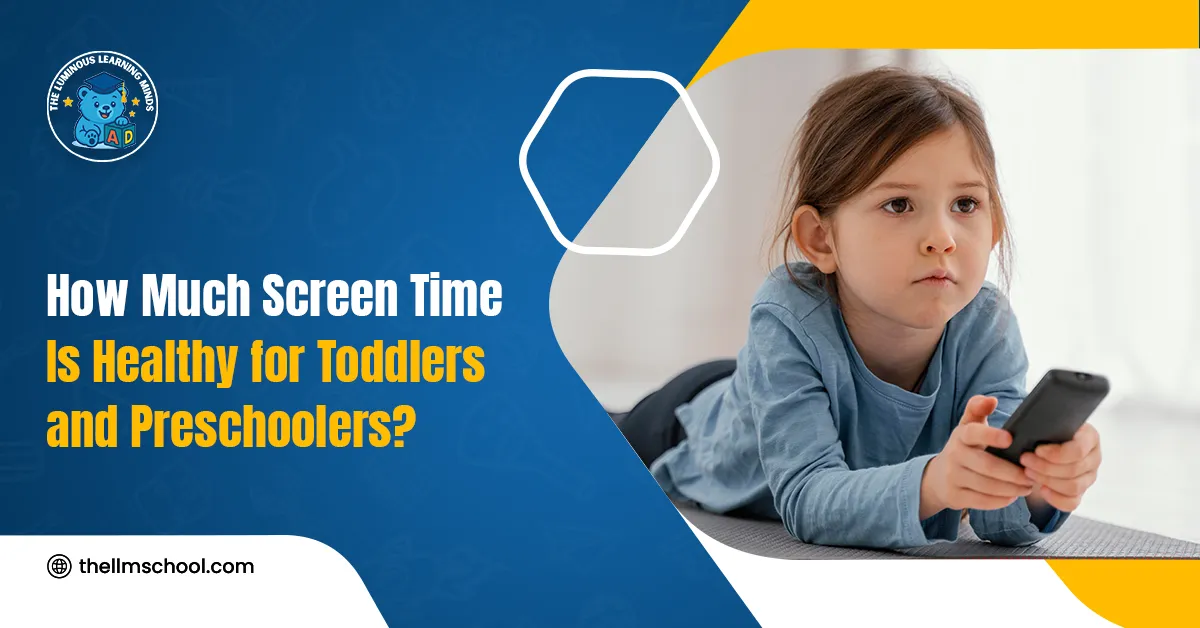
Toddlers and preschoolers aged 2–5 years should generally have no more than one hour of screen time per day, with less being better. For younger children, the recommendations differ by age. While screens can sometimes be part of everyday family life, they shouldn't replace sleep, physical activity, hands-on play, or meaningful interactions. For parents in Monroe, WA, finding the right balance starts with understanding their child's needs and building healthy daily routines.
At The LLM School, we believe young children learn best when they have opportunities to explore, move, create, and interact with others. Through hands-on activities, creative play, and social experiences, children can develop important skills while discovering the world around them. These everyday learning experiences are an important part of creating a supportive toddler learning environment.
In this guide, we'll explore how screen time can affect early childhood development, how parents can set healthy screen time limits, and which simple screen-free activities can keep toddlers and preschoolers engaged at home and beyond.
Why Is Excessive Screen Time An Issue For Early Childhood?
Life goes by quickly in the early years. A child's brain develops connections between 12 months and 6 years old with sensory input, repetition, and real-world interaction. Those activities are replaced by watching passively and silently, with the use of screens replacing conversations and moving around. Play and conversation are missing when screens take their place, leaving language, motor skills, and emotional regulation time-starved.
Excess Screens – Core Developmental Trade-Offs
-
Language Practice: Passive viewing is an alternative to the give-and-take of communication that toddlers and preschoolers require in order to develop vocabulary and communication skills.
-
Physical Movement: Sitting for extended periods of time decreases the active play that helps develop healthy gross motor strength, balance, and coordination.
-
Independent Play: Constant screens reduce the independent exploration and learning of young children that involves them thinking, problem-solving, and focusing.
-
Sleep Routines: Growing children whose evening use of devices is impacting their predictable sleep patterns are affected in their mood, memory, and learning the following day.
How Does Screen Time Affect Toddler and Preschooler Development?
Nearly all areas of early growth are affected by screen time. Content delivered at a high speed can overstimulate the young brain, and viewing alone won't allow for the human interaction that children need for learning. Over time, the effects are reflected in speech, concentration, sleep patterns, mood, and activity.
Key Areas Screens Influence Most
-
Communication Skills: With less communication, there are fewer opportunities to develop vocabulary and to read facial expressions and listen during critical developmental periods.
-
Attention Span: Shorter, fast-paced content with lots of rewards reduces attention span and makes slower tasks in the real world frustrating for many young children.
-
Emotional Growth: Less time spent with peers to practice sharing, waiting, and empathy in a natural setting.
-
Physical Health: During shows, more sitting and snacking, which take the place of movement and routine that help toddlers develop their physical health.
How Do Parents Know When Screen Time is Too Much?
Generally, warning signs appear within the family, prior to the parent noticing a pattern. When behavior starts to change, sleep problems arise, and interest in toys decreases, it's time to recalibrate device usage and bring it down.
Signs Of Screen Habits That Need Adjusting
-
Frequent Meltdowns: When the screen shuts off, they show extreme resistance or tantrums; it is likely this is because they are becoming too dependent on devices.
-
Decreased Play Interest: If a child does not play with toys, books, or pretend play, they may be overly dependent on electronic entertainment.
-
The bedtime struggle: Difficulty falling asleep often goes hand in hand with stimulating use of screens close to bedtime.
-
Constant Requests: Requests for a phone or tablet throughout the day indicate that screens are a habit.
How To Set Healthy Screen Time Limits Without The Battles In Family Life?
Rules and predictability win out over power struggles every time. If kids understand why we're limiting screen time, it becomes a regular, not punitive, behavior. The consistency, clear boundaries, and adult modeling do the heavy lifting.
Strategies that Make Limits Stick
-
Predictable Rules: Establish consistent times each day that media is on and off so children know when media is and is not present.
-
Screen-Free Zones: No devices at meals or in bedrooms to preserve family time and good sleep habits.
-
Smooth Transitions: Give timers and warnings before screens go out, then have the next activity ready to go to help the transition.
-
Model The Habit: Children mimic adult phone use, and thoughtful phone usage at home is an effective example.
What Are The Best Activities For Preschoolers That Do Not Involve A Screen?
Preschoolers require play to stimulate their developing minds. Open-ended activities develop problem-solving and social skills while preparing them for school. Build days in the Earth Room and Star Room are centered on just this type of discovery.
Activities To Help Build Skills For Preschoolers
-
Pretend Play: Using role play and dress-up to encourage children to be creative, empathetic, and to start to tell stories as they act out real social situations together.
-
Building Challenges: Blocks and simple STEAM challenges build spatial reasoning, persistence, and early math thinking through trial and error.
-
Open-Ended Art: Painting and crafting allow children to express themselves, develop fine motor skills, and gain confidence in their art while offering no right or wrong.
-
Outdoor Exploration: Scavenger hunts and nature walks develop curiosity, observation skills, and gross motor skills to support attention and balance.
How Does a Play-Based Preschool Environment Help Reduce Screen Dependence?
A child's attention will be captured by real-world learning, which screens cannot. Tactile, social, and meaningful activities keep kids engaged without digital entertainment. Caring teachers and structured routines are what make the difference.
Why Hands-On Classrooms Win Attention
-
Tactile Engagement: Physical resources and sensorial experiences naturally stimulate curiosity, lessening the temptation to passive digital entertainment for young children.
-
Guided Routines: Children develop secure and stable classroom habits that help them concentrate, transition, and regulate themselves in a predictable sequence of classroom routines.
-
Rich Conversation: Teacher-led talk and peer interaction go beyond any screen to enrich growing minds.
-
Social Learning: Group play fosters sharing, empathy, and co-operation through real connection between players that devices can't replicate.
How Does The LLM School Support Healthy, Screen-Light Early Learning?
The LLM School is designed day by day to be a discovery, movement, and conversation, rather than a screen. It's Montessori + STEAM, cultivating concentration and independence naturally for your family, and ideal as a model of a strong toddler learning environment. A standout early childhood program, Monroe WA families trust; its four classrooms grow alongside each child.
How Development Is Supported In Each Classroom
-
Moon Room: Toddlers develop curiosity, trust, and early independence with gentle schedules and sensory exploration in a calm room.
-
Earth Room: This child-led Preschool Program in Monroe, WA promotes focus and social skills through art, music, and play in Earth Room.
-
Star Room: Creative challenges and early academics build problem-solving skills and confidence in children getting ready for kindergarten and beyond.
-
Sun Room: Together with teamwork, Enrichment and beginning writing create the independence and preparedness that establish it as the best preschool in Monroe, WA.
Looking for a toddler preschool near me or a well-organized toddler program in Monroe, WA? Families will find interactive learning that brings children what screens cannot: relationships, movement, and happiness.
Ready to see a screen-light, hands-on toddler learning environment in action? Visit The LLM School in Monroe, WA, and discover how play-based learning helps children grow with confidence.
Related Reading
Expert Insights: Navigating the Complex World of Education & Learning
Welcome to our in-depth exploration of Education & Learning. In an era defin...
Why Education & Learning is Transforming the Global Industry Landscape
Welcome to our in-depth exploration of Education & Learning. In an era defin...