How Long Does Smoke Damage Last in a Home?
By Pure Restoration & Cleaning
20 Views
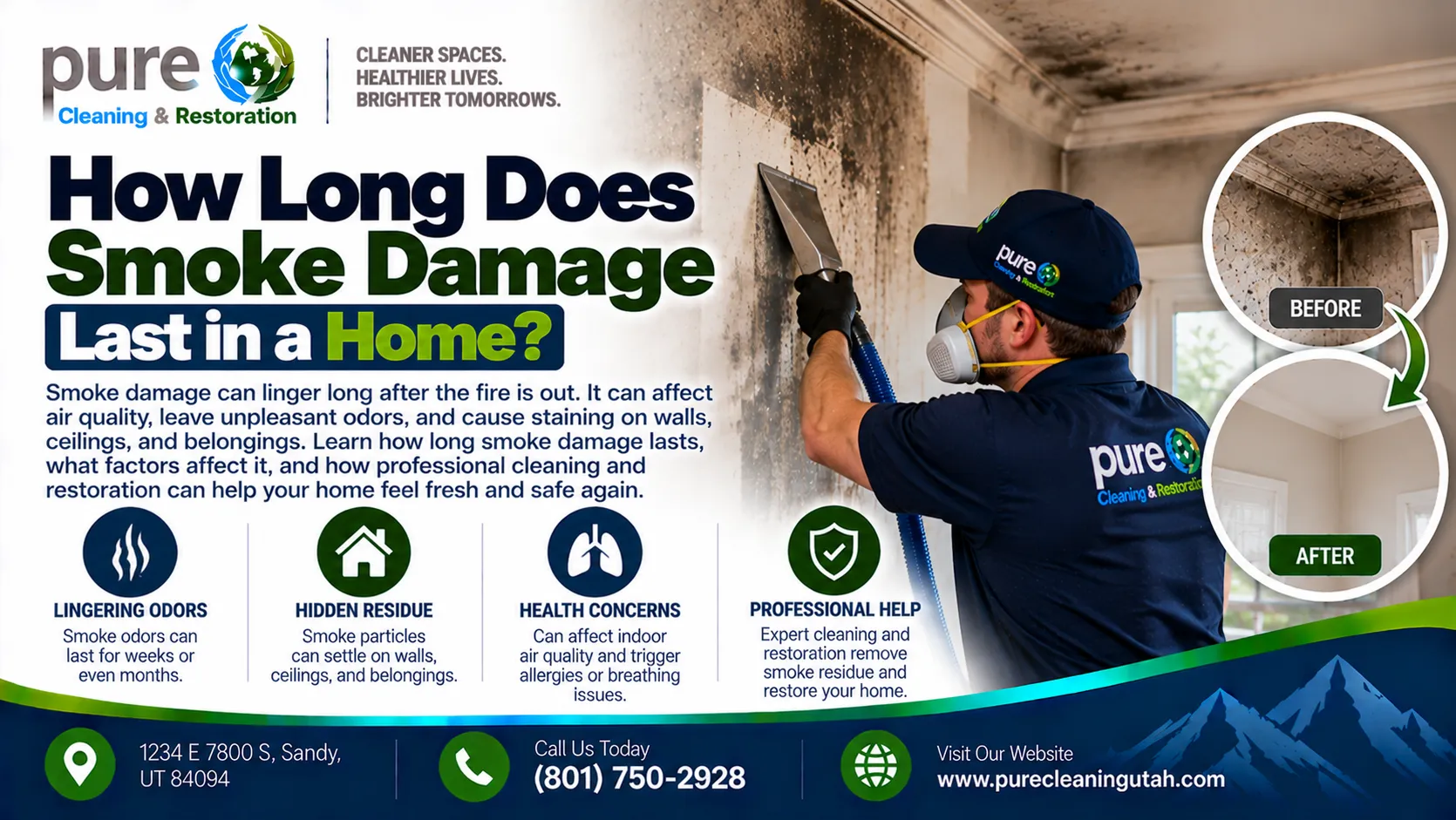
A fire can be frightening, even when it does not destroy the entire house. After the flames are gone, homeowners often face another problem: smoke damage. Dark stains, unpleasant odors, and soot-covered surfaces can make a home feel far from normal.
One of the most common questions after a fire is how long smoke damage will last. The answer depends on the size of the fire, the materials burned, how far the smoke traveled, and how quickly cleanup begins.
In some cases, smoke damage can be cleaned within a few days. In others, stubborn odors and residue may remain for weeks or longer if the affected areas are not treated properly.
Understanding what affects the recovery timeline can help homeowners make better decisions after a fire.
What Determines How Long Smoke Damage Lasts?
Smoke damage does not affect every home in the same way. A small kitchen fire may leave residue in one room, while a larger fire can spread smoke throughout the house.
Several factors influence how long the damage remains.
1. The Size of the Fire
A small fire may produce limited smoke damage, but even a brief fire can leave soot on nearby walls, ceilings, cabinets, and furniture.
Larger fires usually create more extensive damage and may require detailed cleaning and repairs throughout the property.
2. The Materials That Burned
Different materials produce different types of smoke and residue. Burning plastic, wood, fabrics, and other household materials can leave residues that vary in texture, color, and odor.
Some residues are easier to clean than others. Certain materials may also release smoke odors that settle into porous surfaces.
3. How Quickly Cleanup Begins
Time matters after a fire. Soot and smoke residue can settle onto surfaces, and improper cleaning may spread the residue or make stains more difficult to remove.
Prompt assessment helps determine which surfaces need cleaning, which materials may be salvageable, and whether hidden areas require attention.
4. The Areas Affected
Smoke can travel through hallways, ventilation systems, doorways, and small openings. Even rooms that were not directly affected by flames may contain soot or odors.
The more areas smoke reaches, the more work may be needed to restore the home.
Can Smoke Damage Last for Months?
Yes. Smoke damage can last for months if it is not properly addressed. This is especially possible when smoke residue remains inside porous materials or when odors have penetrated carpets, upholstery, insulation, or other materials.
Opening windows or using air fresheners may make the smell less noticeable for a short time, but these steps do not remove the underlying residue.
Smoke odors may also return when indoor temperatures or humidity levels change. This can happen when odor-causing particles remain trapped in materials.
A proper assessment can help identify the source of lingering odors and determine the most suitable cleaning or restoration method.
How Long Does Smoke Odor Last?
Smoke odor can linger long after the visible soot has been removed. The duration depends on the fire's intensity, the materials affected, and the cleaning methods used.
For example, a small amount of smoke near a kitchen stove may be easier to address than smoke that has spread through several rooms.
Odors can remain in:
-
Carpets and rugs
-
Upholstered furniture
-
Curtains and bedding
-
Drywall and ceilings
-
Wooden cabinets
-
Insulation and other porous materials
-
Heating and cooling system components
If the odor continues after ordinary cleaning, the source may be deeper than the visible surface. Professional cleaning and odor treatment may be needed.
Why DIY Smoke Cleanup Can Make Things Worse
After a fire, many homeowners want to start cleaning immediately. While this is understandable, using the wrong cleaning method can spread soot or damage surfaces.
For example, rubbing dry soot with an ordinary cloth may push it deeper into painted walls. Some household cleaners can also react poorly with certain surfaces or leave additional residue.
Before beginning cleanup, consider the following:
-
Avoid touching soot-covered surfaces unnecessarily.
-
Do not use ordinary household vacuums to collect fine soot unless the equipment is specifically suitable.
-
Avoid painting over smoke stains before the surface has been properly cleaned and prepared.
-
Do not use strong fragrances to mask persistent smoke odors.
-
Stay away from areas with structural damage or possible electrical hazards.
If the fire was significant, wait for the property to be assessed and confirmed safe before attempting extensive cleanup.
When Should You Call a Restoration Professional?
Some minor smoke residue may be manageable with appropriate cleaning. However, widespread soot, strong odors, damage to several rooms, or smoke inside ventilation systems can require professional assistance.
Homeowners seeking Utah disaster restoration services should look for a provider that can assess the full extent of the damage and explain the cleanup and recovery process.
Professional restoration may include soot removal, cleaning of affected surfaces, odor treatment, air filtration, and repairs where necessary. The exact approach depends on the fire and the condition of the property.
Getting an assessment early can help prevent cleaning mistakes and make it easier to plan the next steps.
What Happens During Smoke Damage Restoration?
Smoke damage restoration usually involves several stages. Not every property requires every step, but the process generally focuses on safety, cleaning, odor control, and repairs.
Step 1: Property Assessment
The affected areas are inspected to identify visible soot, smoke residue, odors, and materials that may have been damaged.
Step 2: Soot Removal
Appropriate cleaning methods are selected for different surfaces. Walls, ceilings, furniture, and other materials may require different treatments.
Step 3: Cleaning and Odor Treatment
Affected surfaces and belongings are cleaned as appropriate. Specialized odor-control methods may be needed when smoke has penetrated porous materials.
Step 4: HVAC and Hidden-Area Checks
If smoke entered the heating or cooling system, the affected components may need professional inspection and cleaning. Hidden areas may also require attention.
Step 5: Repairs and Restoration
Materials that cannot be safely or effectively restored may need to be repaired or replaced. The timeline depends on the amount of damage and the availability of materials.
A careful restoration process addresses both visible damage and the source of lingering smoke odors.
Emergency Restoration in Sandy, Utah
After a fire, homeowners may be unsure what to do first. Safety should always come before cleanup. If the property has structural damage, damaged electrical systems, or other hazards, stay out until the appropriate authorities confirm it is safe.
For homeowners who need an emergency restoration service Sandy UT, it is important to ask about response availability, the inspection process, and the services needed for the specific type of damage.
A restoration professional can help determine whether the home needs immediate soot removal, odor treatment, water removal from firefighting efforts, or more extensive repairs.
Prompt action does not guarantee that every item can be saved, but it can help identify problems early and reduce avoidable delays.
Can Smoke-Damaged Belongings Be Saved?
Some belongings can be restored after smoke exposure, while others may be too heavily damaged.
Hard, nonporous items may be easier to clean than items that absorb smoke, such as pillows, mattresses, upholstered furniture, and certain fabrics.
Before throwing belongings away, consider having heavily affected items assessed by a restoration professional. The decision depends on the material, the amount of residue, the type of smoke, and whether safe cleaning is possible.
Photograph damaged belongings and keep records if you plan to discuss the loss with your insurance company.
How to Prevent Smoke Damage From Becoming a Bigger Problem
Although you cannot reverse a fire, you can take steps to make recovery more manageable.
-
Contact emergency services if the fire is ongoing or the property is unsafe.
-
Avoid entering areas with structural or electrical hazards.
-
Arrange an assessment when smoke damage is extensive.
-
Avoid using untested cleaning products on soot-covered surfaces.
-
Document visible damage when it is safe to do so.
-
Contact your insurer to understand the documentation and claims process.
-
Follow professional advice about cleaning, ventilation, and repairs.
These steps can help you avoid common mistakes while the restoration process is being planned.
Frequently Asked Questions
How long does smoke damage last in a house?
Minor smoke damage may be cleaned within a few days. More extensive damage can take weeks or longer, especially if odors have penetrated porous materials or repairs are needed.
Does smoke smell eventually disappear on its own?
Sometimes a light odor fades with time, but persistent smoke odor often means residue remains on surfaces or inside materials. Cleaning and appropriate odor treatment may be necessary.
Can smoke damage affect rooms that were not burned?
Yes. Smoke can travel through doorways, hallways, ventilation systems, and other openings. Rooms away from the fire may still have residue or odors.
Can I paint over smoke stains?
Painting over stains without proper preparation may allow discoloration or odors to return. The surface should be assessed and cleaned appropriately before repainting.
Does homeowners insurance cover smoke damage?
Coverage depends on the policy, the circumstances of the fire, and any applicable exclusions. Contact your insurance provider and document the damage before discarding affected belongings.
When should I contact a smoke damage restoration company?
Seek professional advice when soot covers multiple surfaces, smoke odor persists, ventilation systems may be affected, or the fire has caused significant damage. For any immediate safety risk, contact emergency services first.
Conclusion
Smoke damage can last much longer than the fire itself. While minor residue may be cleaned relatively quickly, smoke that reaches walls, furniture, carpets, insulation, or ventilation systems can create lingering odors and require more extensive work.
The key is to assess the damage carefully, avoid cleaning methods that could make it worse, and address both visible soot and hidden residue. For Utah homeowners, professional restoration can help identify the work required and provide a clearer path toward recovery.
With the right approach, many affected surfaces and belongings may be restored, helping the home move closer to a clean and comfortable living space again.
Related Reading
Top 10 Hidden Secrets About Business & Finance You Need to Know
Welcome to our in-depth exploration of Business & Finance. In an era defined...
Why Business & Finance is Transforming the Global Industry Landscape
Welcome to our in-depth exploration of Business & Finance. In an era defined...