How LED Lighting Supports UAE Buildings
22 Views
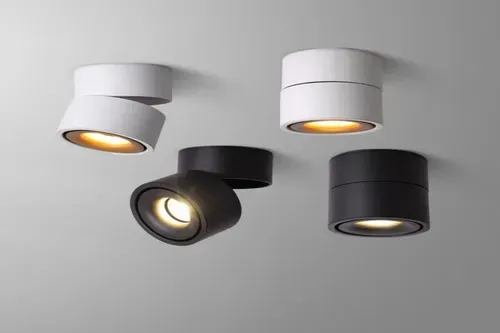
LED lighting is becoming more important in the UAE as residential towers, hotels, malls, offices, airports, hospitals, schools, warehouses, public spaces, and smart-city projects require efficient and reliable illumination. Compared with traditional lighting, LEDs can reduce energy use, support longer operating life, improve lighting control, and work with smart building systems. Their role is growing as construction, sustainability, and digital infrastructure continue expanding across the country.
A recent UAE LED lighting study by Markntel Advisor highlights demand from luminaires, indoor applications, Dubai, construction activity, and smart lighting adoption. The study values the sector at USD 1.12 billion in 2025 and projects it to grow from USD 1.29 billion in 2026 to USD 2.28 billion by 2032, reflecting a CAGR of around 9.96% during 2026–2032.
Energy Efficiency Drives Adoption
Energy efficiency is one of the main reasons LEDs are replacing older lighting systems. Buildings need lighting for long hours, especially in malls, offices, hotels, hospitals, parking areas, corridors, and public facilities. LEDs can help reduce electricity demand while improving lighting quality and control.
The UAE’s Energy Strategy 2050 aims to triple renewable energy contribution and invest AED 150–200 billion by 2030 to meet national energy needs. This wider efficiency and sustainability direction supports adoption of LED systems in new and existing buildings.
Luminaires Lead Product Demand
Luminaires accounted for nearly 64% share in 2026, according to the shared study. This category includes complete lighting fixtures used in ceilings, walls, facades, streets, landscapes, offices, retail spaces, industrial facilities, and hospitality interiors. Their strong share reflects demand for integrated lighting solutions rather than only replacement lamps.
Modern LED luminaires are designed for performance, aesthetics, thermal management, beam control, and fixture life. They can support different applications, from soft hotel lighting to high-output warehouse lighting. Designers and facility managers often select luminaires based on brightness, color temperature, glare control, efficiency, durability, and maintenance needs.
Indoor Applications Hold Strong Share
Indoor applications accounted for around 68% share in 2026, making them the leading application category in the report. This is expected because lighting is essential in homes, offices, shopping malls, hospitals, schools, restaurants, hotels, warehouses, and public buildings. Indoor LED systems support both functional visibility and interior design quality.
Indoor lighting demand is also shaped by retrofitting. Many building owners replace older fixtures to reduce energy bills, improve comfort, and support smart controls. In commercial buildings, better lighting can improve customer experience, workplace visibility, and operational efficiency when properly designed.
Dubai Leads Demand
Dubai accounted for approximately 40% share in 2026, according to the report. The emirate’s leadership is connected with high construction activity, tourism infrastructure, retail development, hospitality projects, smart city systems, and large commercial buildings. LED lighting is widely used in towers, hotels, malls, roads, public spaces, and premium interior projects.
Dubai’s Clean Energy Strategy aims to produce 100% of the emirate’s energy requirements from clean sources by 2050. This long-term direction supports greater attention to energy-efficient technologies across urban development and building operations.
Smart Lighting Gains Momentum
Smart lighting is becoming more visible in the UAE as buildings use sensors, dimming systems, timers, wireless controls, and centralized building-management platforms. These systems can adjust lighting based on occupancy, daylight, schedules, and user preferences. In large facilities, smart controls can reduce wasted energy and improve maintenance visibility.
Smart lighting is especially useful in offices, hotels, malls, airports, parking areas, and smart communities. Facility managers can monitor performance, detect faults, schedule lighting scenes, and optimize energy use. However, system design, compatibility, cybersecurity, and maintenance support are important for long-term performance.
Construction Activity Supports Growth
Construction remains a major demand driver for LED lighting because every new building requires lighting systems from the design stage. Residential projects, hospitality developments, commercial buildings, public facilities, transport infrastructure, and mixed-use communities all create demand for indoor and outdoor LED solutions.
LED lighting is often included in architectural planning, electrical design, sustainability certification, and interior fit-out decisions. Developers may prioritize products that support energy efficiency, longer service life, lower heat output, and better visual quality. As UAE cities continue developing, lighting demand remains closely tied to real estate and infrastructure pipelines.
Public Spaces Need Reliable Lighting
LED lighting also supports streets, parks, walkways, parking areas, waterfronts, public transport stations, and outdoor destinations. Public lighting must balance visibility, safety, energy use, durability, and maintenance costs. LEDs are suitable because they can provide efficient illumination with better control over direction and brightness.
Urban planning is also encouraging more connected and accessible public spaces. Dubai’s 2040 Urban Master Plan focuses on sustainable urban development, mobility, and service centers. Well-designed LED lighting supports these goals by improving safety, usability, and night-time public-space experience.
Product Quality Remains Important
LED lighting performance depends on product quality. Low-quality products may have poor heat management, reduced lifetime, color inconsistency, flicker, glare, or early failure. Buyers must consider lumen output, wattage, efficiency, warranty, certification, driver quality, and suitability for UAE temperature conditions.
Professional installation also matters. Incorrect placement, poor wiring, weak controls, or unsuitable fixtures can reduce performance. For commercial and public projects, lighting design should consider comfort, safety, maintenance access, and long-term energy use rather than only upfront cost.
Outlook for UAE LED Lighting
UAE LED lighting demand is being shaped by luminaires, indoor applications, Dubai’s strong share, energy-efficiency goals, construction growth, smart lighting, and public-space development. The report figures indicate strong growth through 2032 as buildings and infrastructure continue adopting more efficient lighting systems.
The long-term direction will depend on construction pipelines, retrofit activity, smart building adoption, product standards, sustainability targets, and facility-management practices. As the UAE continues modernizing its urban environment, LED lighting will remain important for efficient, reliable, and visually strong building performance.
Related Reading
Top 10 Hidden Secrets About Business & Finance You Need to Know
Welcome to our in-depth exploration of Business & Finance. In an era defined...
Why Business & Finance is Transforming the Global Industry Landscape
Welcome to our in-depth exploration of Business & Finance. In an era defined...